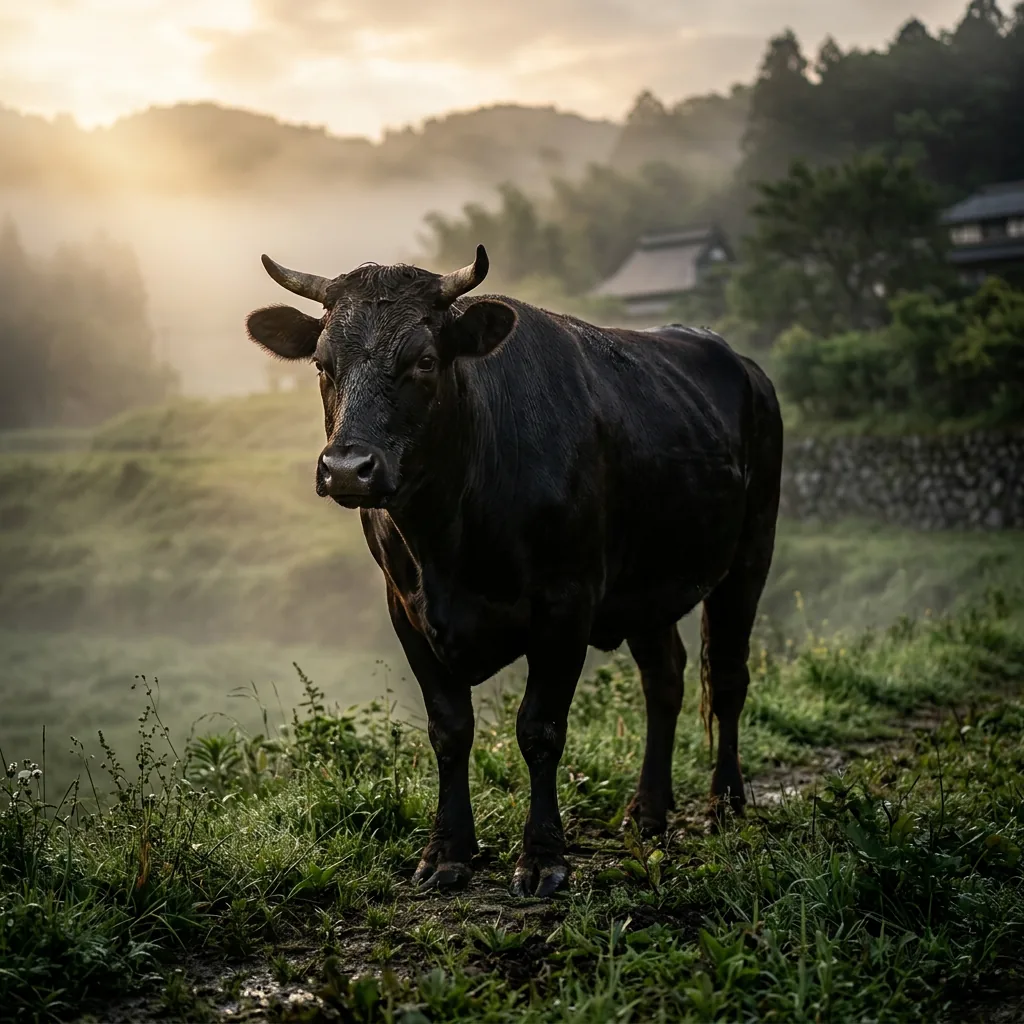
About the breed
The Japanese Black (Kuroge Washu) is the absolute pinnacle of the bovine world, celebrated by gourmets for its unparalleled snowflake marbling. As the source of the prestigious A5 grade, it represents a synthesis of genetic heritage and meticulous husbandry that produces meat unlike any other. It is not merely beef, but a luxury ingredient defined by a texture so tender it yields to the slightest pressure. For the connoisseur, it offers a profound umami experience and a buttery sweetness that lingers on the palate.
Roots & Heritage
Originating from indigenous Japanese cattle used as draft animals for centuries, these breeds remained genetically isolated until the late 19th century. The Kuroge Washu lineage was refined through the 20th century, with specific focus on the Tajima, Tottori, and Shimane bloodlines. Today, strict regional protection and the Japanese Meat Grading Association (JMGA) ensure that only the finest specimens carry the A5 designation. Prefectures such as Kagoshima, Miyazaki, and Hyogo are the historical heartlands of this craft.
Meat Profile
The defining feature is 'sashi'—extraordinary intramuscular fat that appears as a fine white lattice across the muscle. This fat has a high concentration of monounsaturated fatty acids, giving it a melting point as low as 25°C, meaning it literally dissolves at body temperature. The meat is characterized by a pale pink hue and a rich, sweet aroma often described as 'wagyuko.' Its texture is velvety and luscious, providing a concentrated burst of umami with every bite.
In the Kitchen
Preparation requires a departure from traditional steak-house methods; thin slices or small cubes are ideal to prevent the richness from becoming overwhelming. A rapid sear on a high-heat cast iron or teppanyaki grill is best, allowing the surface to caramelize while the interior fats liquefy. No additional cooking oil is necessary, as the meat bastes itself in its own rendered fat. Serve in small portions (40-60g) to appreciate the complexity, perhaps accompanied only by a touch of sea salt or fresh wasabi.