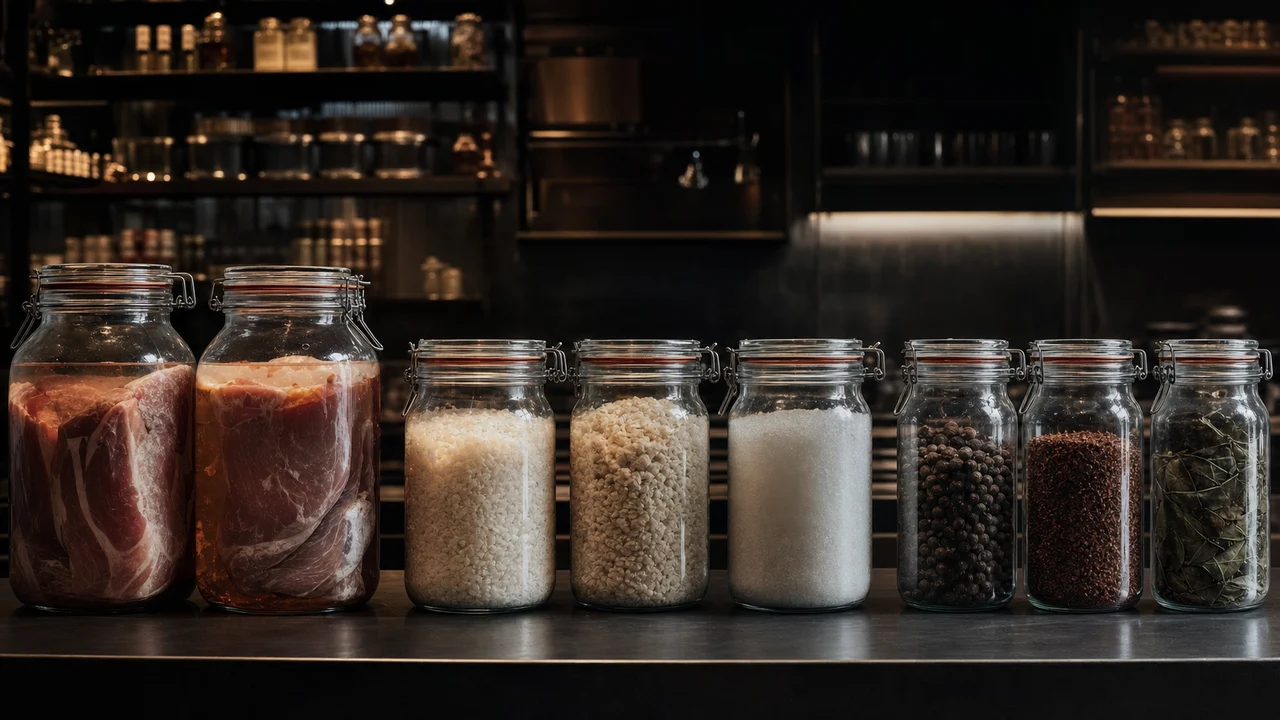
Before a single degree of heat is applied, a piece of meat can be fundamentally transformed — tenderized, seasoned to its core, flavored with amino acids that no spice rack can produce, and prepared to form a crust that surpasses anything an untreated surface could achieve. This is the domain of brining, curing, and koji: three techniques that operate on different timescales and with different mechanisms but share a common principle — the period before cooking is as important as the cooking itself. Understanding the underlying chemistry is the fastest path to mastering all three.
Why Brine? The Science of Salt and Water
Brining is the act of treating meat with salt — either dissolved in water or applied directly — to alter its internal structure before cooking. The chemistry operates through two distinct mechanisms:
Osmosis initially draws water from outside the meat toward the surface where salt concentrates. Salt ions simultaneously migrate inward through diffusion, denaturing surface proteins and creating a gel-like protein matrix that physically traps water within the muscle structure.
Protein denaturation from salt causes muscle proteins (primarily myosin) to partially unwind. This loosened protein structure has dramatically higher water-holding capacity than intact, tightly coiled proteins — a brined chicken breast retains up to 15% more moisture during roasting than an unbrined equivalent, not because more water was added but because less water can escape.
The practical result: brining is insurance against the overcooking that destroys lean proteins. A brined pork chop or poultry breast gives you a meaningful safety margin — a few degrees of overshoot doesn't send you to the cutting board searching for gravy.
Dry Brine vs. Wet Brine
Both approaches use salt as the active agent. The choice between them is a question of priorities:
| Criterion | Wet Brine | Dry Brine |
|---|---|---|
| Moisture retention | Higher (adds water) | High (retains existing moisture) |
| Flavor concentration | Diluted slightly by absorbed water | Intense; no dilution |
| Crust quality | Good; surface must be dried after | Exceptional; surface is bone-dry |
| Application ease | Requires container + space | Easy; wire rack in refrigerator |
| Professional standard | Poultry, game birds | Premium beef and large roasts |
Wet brining (meat submerged in a 3–8% salt solution by weight, typically with sugar and aromatics) excels for whole poultry, very lean pork loin, and situations where added moisture is the explicit priority. A Thanksgiving turkey is the canonical application.
Dry brining (salt applied directly to the surface, meat left uncovered on a rack) is the professional kitchen standard for premium beef and large roasts. The mechanism is elegant: salt draws surface moisture out by osmosis, dissolves in that liquid to form a concentrated brine on the surface, then this saturated solution is slowly reabsorbed over 12–48 hours, carrying salt deep into the muscle. After 24–48 hours in the refrigerator, the surface is bone-dry — ideally conditioned for Maillard browning — and the interior is evenly, deeply seasoned.
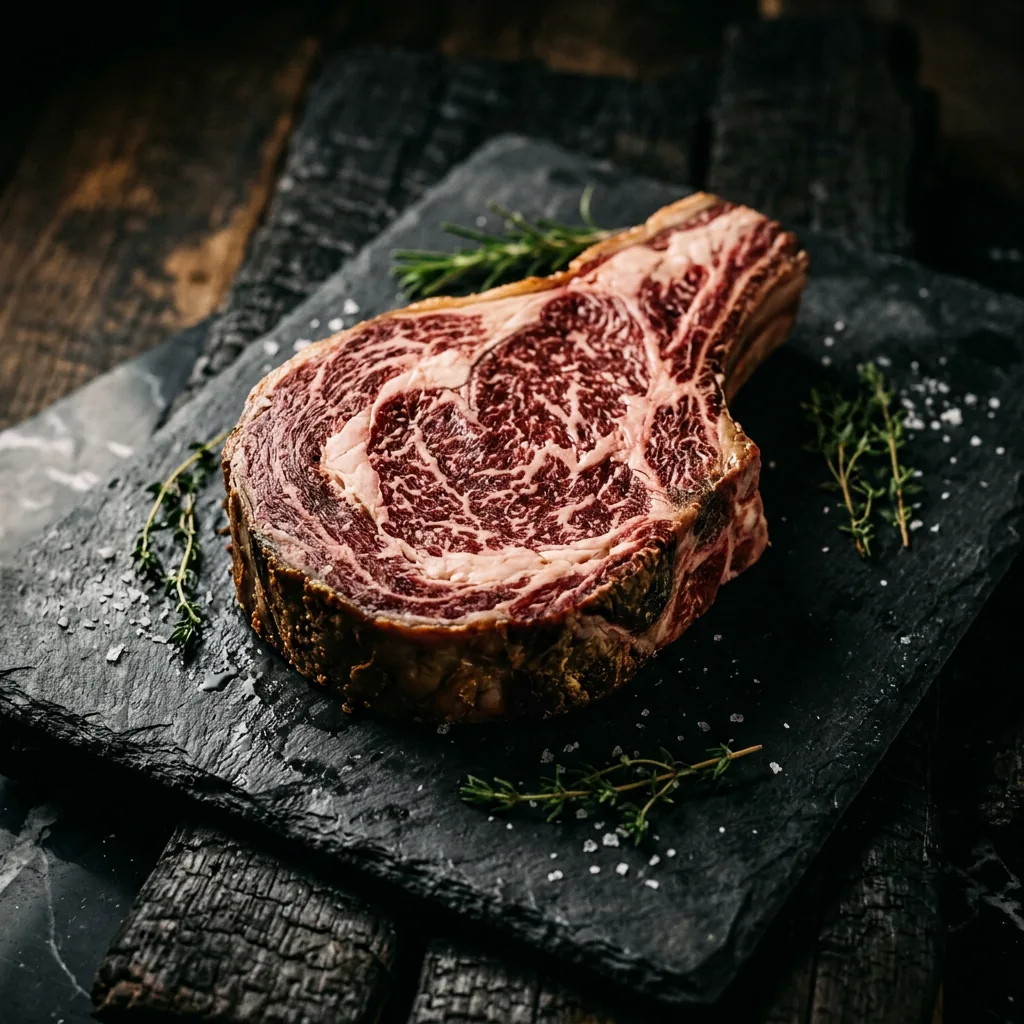
Pro tip: For a premium Ribeye or Tomahawk, dry brine with fleur de sel or coarse kosher salt at least 24 hours before cooking. The surface will look alarmingly wet at 30 minutes, alarmingly dry at 4 hours, and perfect at 24. Do not pat dry before cooking — the naturally dry surface is the ideal state for the pan.
Curing: Salt, Sugar, Nitrates, and Time
Curing is dry brining taken to its logical extreme — higher salt concentrations, longer timescales, and additional agents that fundamentally alter the meat's preservation state, color, and flavor. Charcuterie is built entirely on curing.
Traditional cure formulations contain: - Salt (NaCl) — primary preservation mechanism through water activity reduction; sufficient salt removes water available to microorganisms and halts their growth - Sugar — balances saltiness, contributes to Maillard browning in the finished product, and provides substrate for beneficial bacteria in long-fermented products like salami - Sodium nitrite (NaNO₂) / nitrate (NaNO₃) — essential for safety in products cured longer than a week; inhibits Clostridium botulinum, produces the characteristic pink-red cured color, and contributes the distinctive cured flavor
The color chemistry is striking: nitrite reacts with myoglobin to form nitrosomyoglobin, a stable cherry-red pigment that survives heat — precisely why cured products like Pork Bacon, bresaola, and pancetta retain pink coloration in ways uncured meat never can.
Equilibrium curing — applying exactly the salt and cure calculated for the desired final concentration rather than using excess — gives modern charcutiers precise control. A well-equilibrium-cured bresaola at 2.0% final salt and 150 ppm nitrite is exactly what the calculation intended; predictable, consistent, and safe.
What Is Koji — and Why Does It Transform Meat?
Koji (Aspergillus oryzae) is a filamentous mold cultivated in Japan for over a millennium as the biological engine behind sake, miso, soy sauce, and mirin. When applied to meat, koji's enzymatic arsenal performs a kind of accelerated, targeted dry aging — achieving in 48 hours what conventional dry aging approximates over 3–4 weeks.
The key enzyme classes: - Proteases — cleave peptide bonds in the structural proteins myosin and actin, releasing free amino acids including glutamic acid (the primary umami compound) and glycine (sweet notes). The result is intense savory depth that reads as aged complexity without requiring a dedicated dry-aging chamber - Amylases — convert surface glycogen and starches to simple sugars, providing dramatically more fuel for Maillard browning during the subsequent cook; koji-treated surfaces brown faster, darker, and more evenly than any untreated equivalent
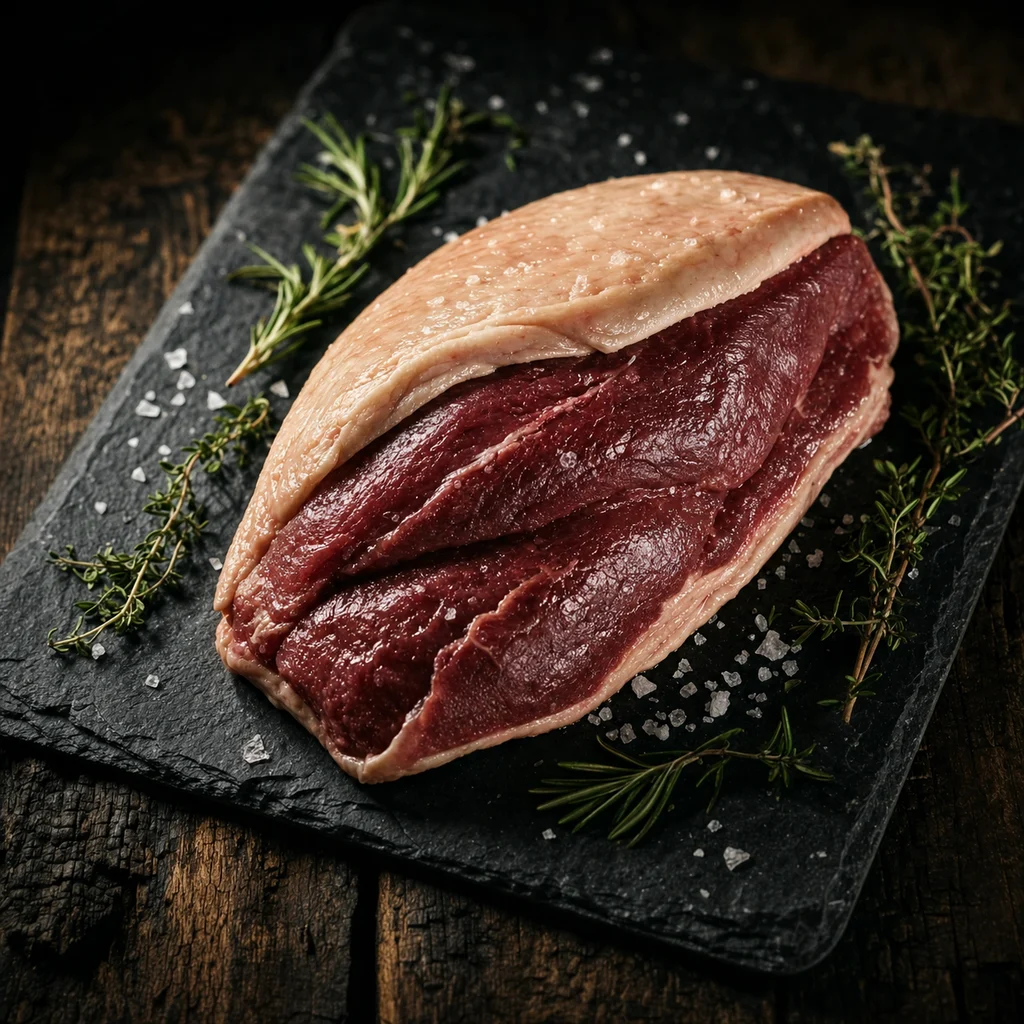
A 48-hour koji treatment produces flavor complexity broadly equivalent to 2–3 weeks of conventional dry aging. Critically, it works on cuts that couldn't survive dry aging: Brisket, Short Ribs, Duck Breast, and Ribeye sections all benefit from koji's enzymatic action without the logistical requirements of a hanging room.
Practical Koji Application
The two primary forms for meat use:
Shio koji (salt koji paste): Koji rice fermented with salt and water for 5–7 days at room temperature produces a fragrant, pale yellow paste. Applied to the meat surface in a 2–3 mm layer, wrapped or vacuum-sealed, and refrigerated for 24–72 hours. At 24 hours the effect is subtle — measurably more umami, better browning. At 48 hours it is pronounced. Beyond 72 hours on delicate proteins (fish, chicken breast), the proteolytic action can make the surface texture undesirably soft; for tough cuts like brisket or Short Ribs, 72 hours is ideal.
Koji rice direct application: Dry koji rice pressed into the surface produces a similar effect with more control over salt input. After treatment, brush or rinse off the koji, pat the surface dry, and cook normally.
Key adjustment: The amylase-generated surface sugars mean koji-treated meat browns significantly faster. Reduce initial cooking temperature by 10–15°C compared to your standard settings to avoid burning the sugar-rich surface before the interior reaches target temperature.
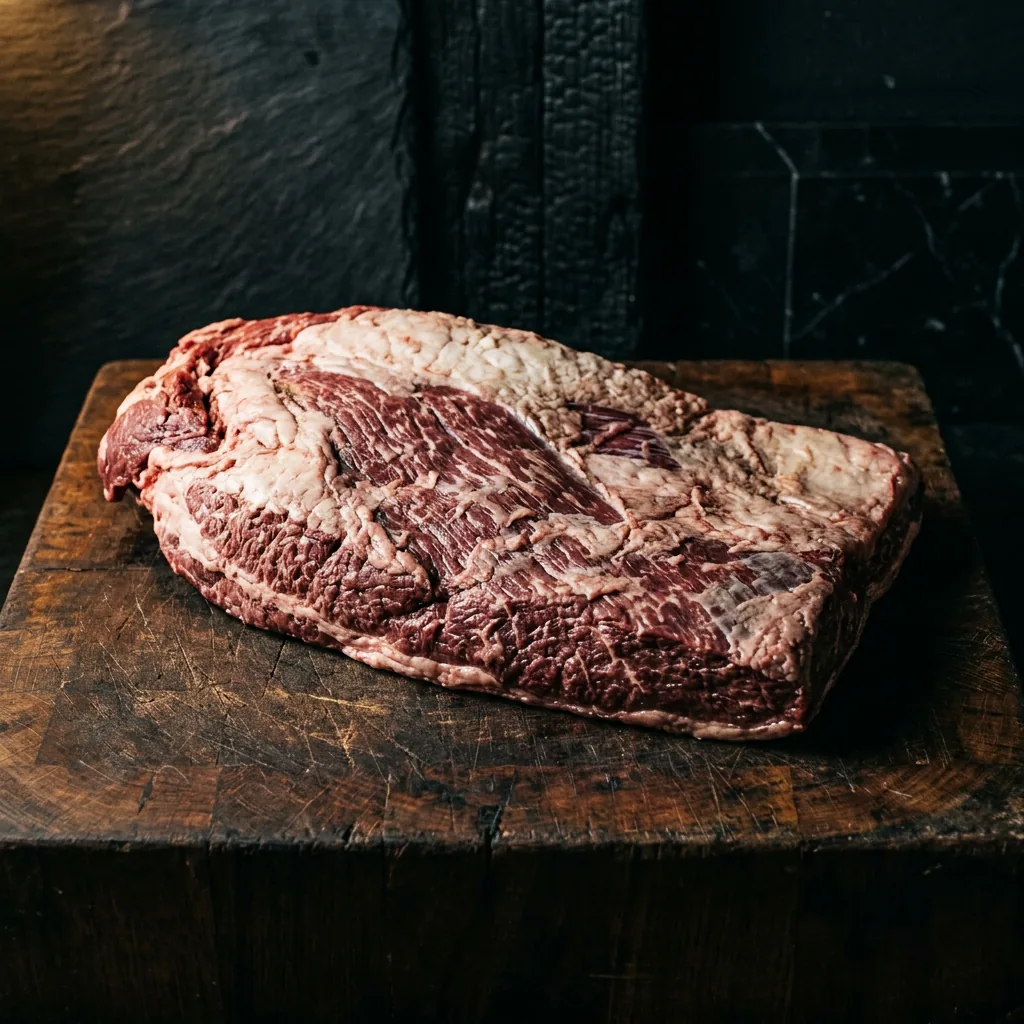
Pro tip: Koji Brisket — 48-hour shio koji treatment before a 12-hour low-and-slow smoke — produces extraordinary complexity. The koji-generated glutamates and the smoke phenols interact to create a savory depth that conventionally treated brisket simply cannot approach.
The Flavor Outcomes in Practice
Koji-treated meat delivers a specific, immediately recognizable profile:
| Flavor Element | Source Mechanism |
|---|---|
| Intense umami | Glutamic acid released by protease activity |
| Subtle sweetness | Simple sugars from amylase conversion |
| Fermented complexity | Residual koji metabolites; ghost of miso |
| Exceptional crust | Enhanced Maillard from sugar-rich surface |
| Superior moisture retention | Enzymatic softening reduces muscle fiber contraction during cooking |
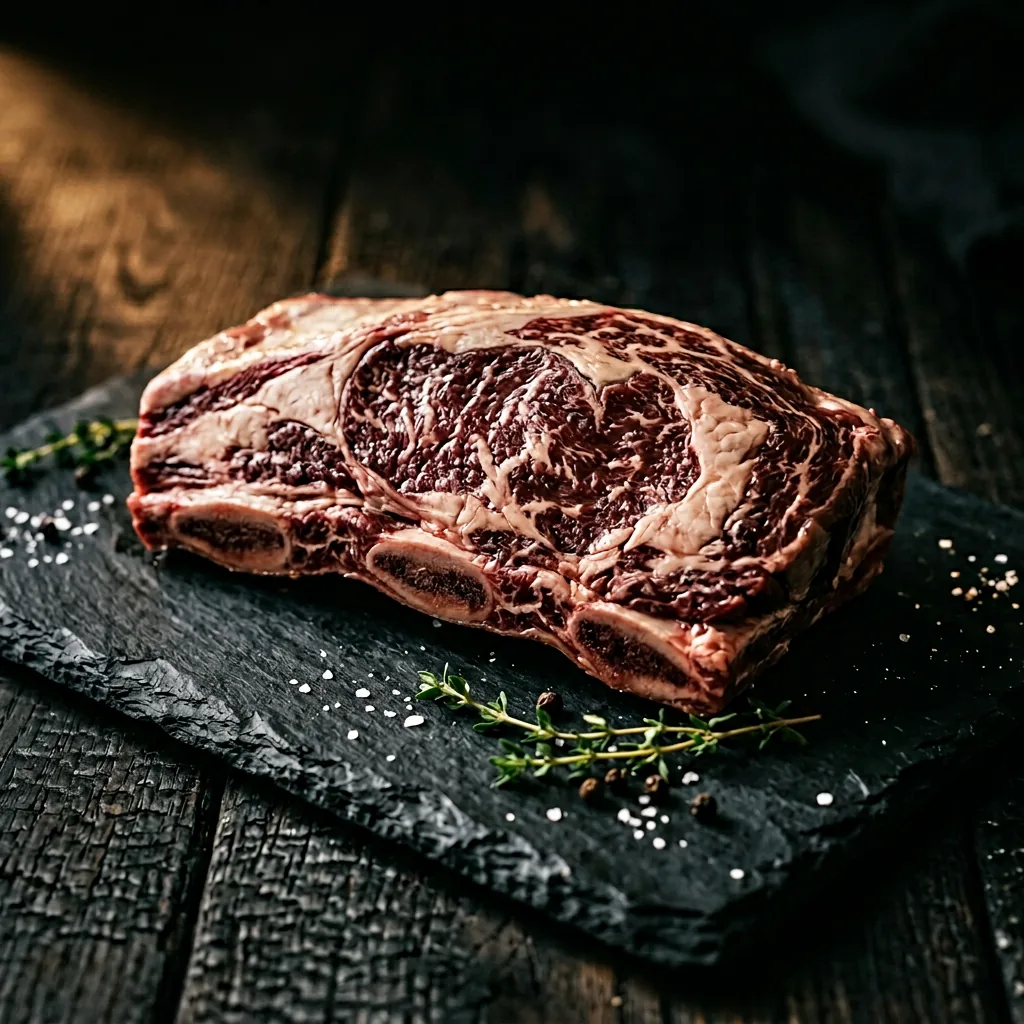
These effects are most pronounced in tougher, collagen-rich cuts where the combination of enzymatic tenderization and flavor concentration produces results that standard high-heat cooking cannot replicate. Short Ribs treated with shio koji for 48 hours and then braised or smoked emerge with a depth that makes untreated ribs taste one-dimensional in comparison.
Integrating All Three Techniques
The most sophisticated pre-cooking approach combines elements from all three domains. A dry-brined, koji-treated Ribeye receives the moisture retention of the salt treatment, the flavor amplification and browning enhancement of koji, and the ideal cooking surface of the dry brine simultaneously. Layering these techniques requires attention to timing and salt content — koji already contains salt, so account for this when combining with a dry brine — but the results represent the upper limit of what pre-cooking technique can contribute to a piece of meat.
Summary
Brining, curing, and koji represent three distinct scientific mechanisms — osmotic salting, preservation chemistry, and enzymatic transformation — all directed at the same goal: meat that is more flavorful, more tender, and more reliably excellent after cooking. The dry brine conditions the surface and seasons the interior. The cure preserves and transforms for charcuterie applications. The koji amplifies umami, builds crust potential, and tenderizes from within. Together, they demonstrate that the time before heat is as important as the time in the pan — and that the most informed meat cookery begins not at the stove, but in the refrigerator, 24 to 72 hours earlier.