The feed a cow eats writes the story of its meat — in the fat's color, its distribution, its flavor, and its nutritional profile. Understanding the difference between grass-fed and grain-fed beef is not merely an exercise in marketing literacy; it is the foundation of informed meat buying. Yet the terminology is widely abused, certification standards vary by country, and the same phrase can mean radically different things on opposite sides of a supermarket counter. This guide walks every dimension of that difference, from the biochemistry of the finishing phase through the techniques required to cook each style well.
What "Grass-Fed" and "Grain-Fed" Actually Mean
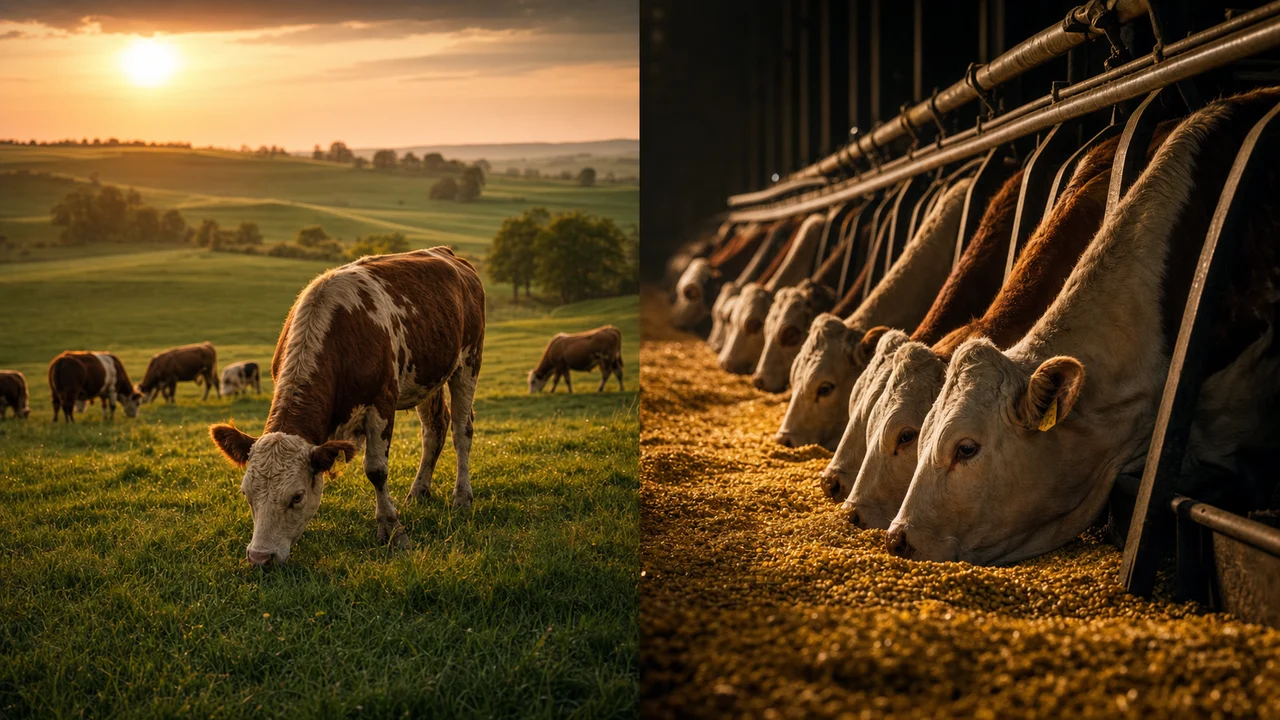
Most cattle worldwide begin life the same way: on pasture, drinking milk, eating grass. The meaningful distinction arrives at the finishing phase — the final 90–300 days before slaughter, when the animal adds the bulk of its weight and fat.
Grain-fed (feedlot) cattle are moved into concentrated animal feeding operations (CAFOs) and fed a high-energy diet of corn, soy, and supplements. The caloric density of grain promotes rapid fat deposition, particularly intramuscular fat — the marbling that commands premium prices at steakhouses worldwide.
Grass-fed (grass-finished) cattle remain on pasture for their entire lives, eating only grass, hay, and forage. They grow more slowly, are processed at an older age, and carry significantly less intramuscular fat. Watch the terminology carefully: "grass-fed" alone is often applied to animals that were raised on grass but finished on grain for 60–90 days. The only unambiguous claim is "100% grass-fed and grass-finished."
Certification markers by region: - United States: American Grassfed Association (AGA) certification is the strictest; USDA's "grass-fed" label allows grain supplementation - United Kingdom: Pasture for Life certification guarantees 100% pasture diet for the animal's entire life — the global gold standard - Australia: PCAS (Pasture-Certified Assured Sustainable) provides documented grass-finishing verification - Germany / EU: Naturland and Bioland organic standards include pasture requirements but allow supplemental feeding
Pro tip: "100% grass-fed and grass-finished" is the most precise label available. In the US, look for American Grassfed Association (AGA) certification. In the UK, Pasture for Life is the gold standard. Without a third-party audit logo, any claim is marketing, not verification.
Fat: Color, Distribution, and Mouthfeel
Stand two raw steaks side by side — one grain-fed, one grass-finished — and the differences are visible before a single bite.
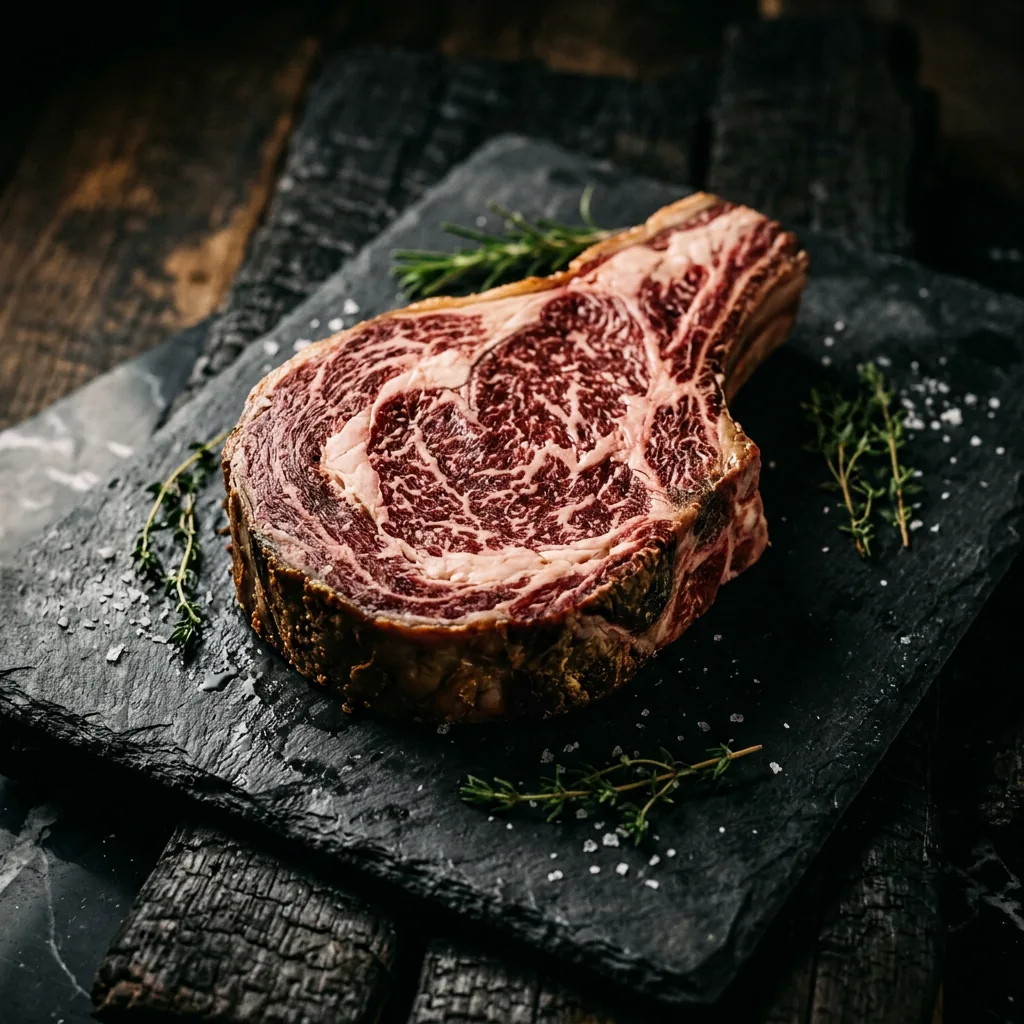
- Grain-fed fat is white or ivory, distributed in fine webs throughout the muscle, producing the characteristic marbling pattern that defines premium commercial beef
- Grass-fed fat is distinctly yellow, owing to accumulated beta-carotene from the animal's plant-rich diet — a direct dietary signature
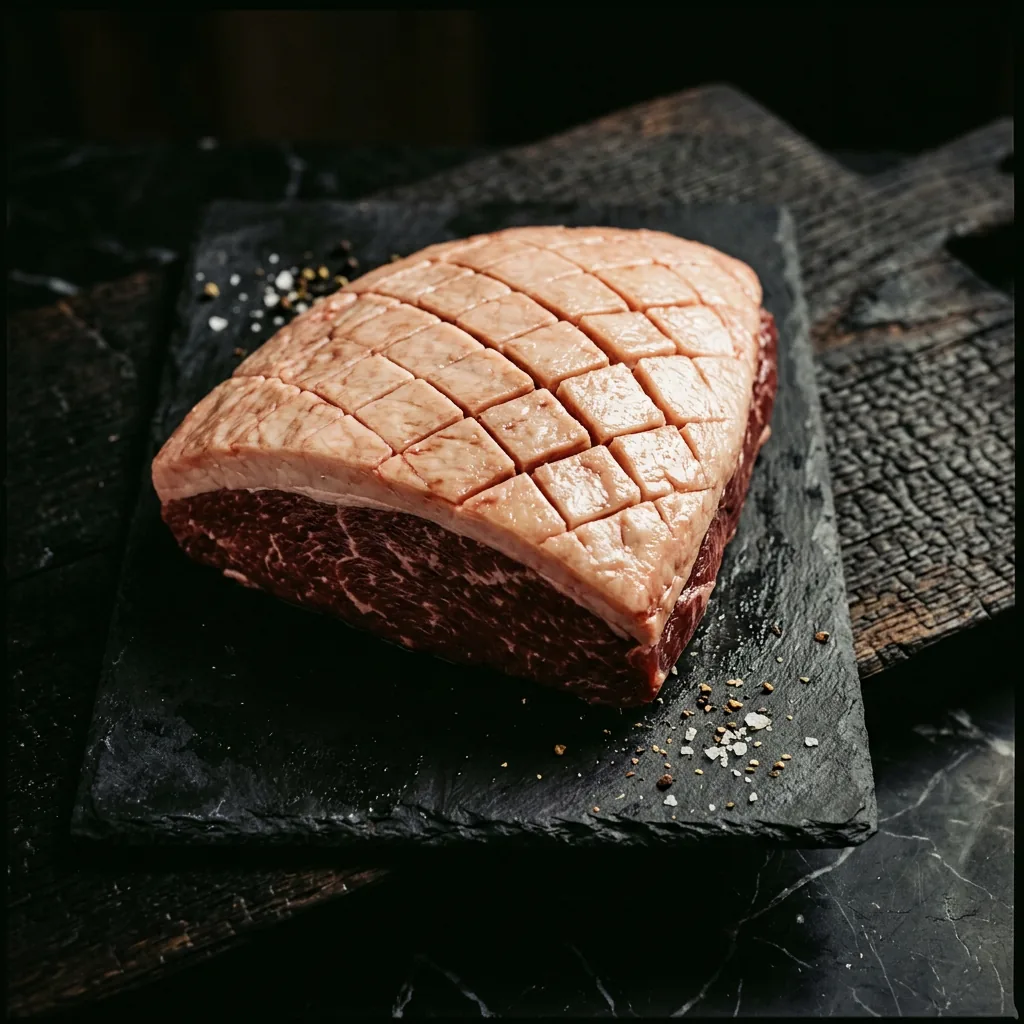
- Marbling density is dramatically higher in grain-fed beef; grass-fed steaks are leaner, with fat concentrated in the exterior cap rather than within the muscle itself
The mouthfeel reflects this anatomy: grain-fed beef melts, lubricates, and delivers richness in waves. Grass-fed beef is firmer, more textured, and chews with a more assertive, muscular presence. Neither is inferior — they are simply different expressions of the same animal under different management.
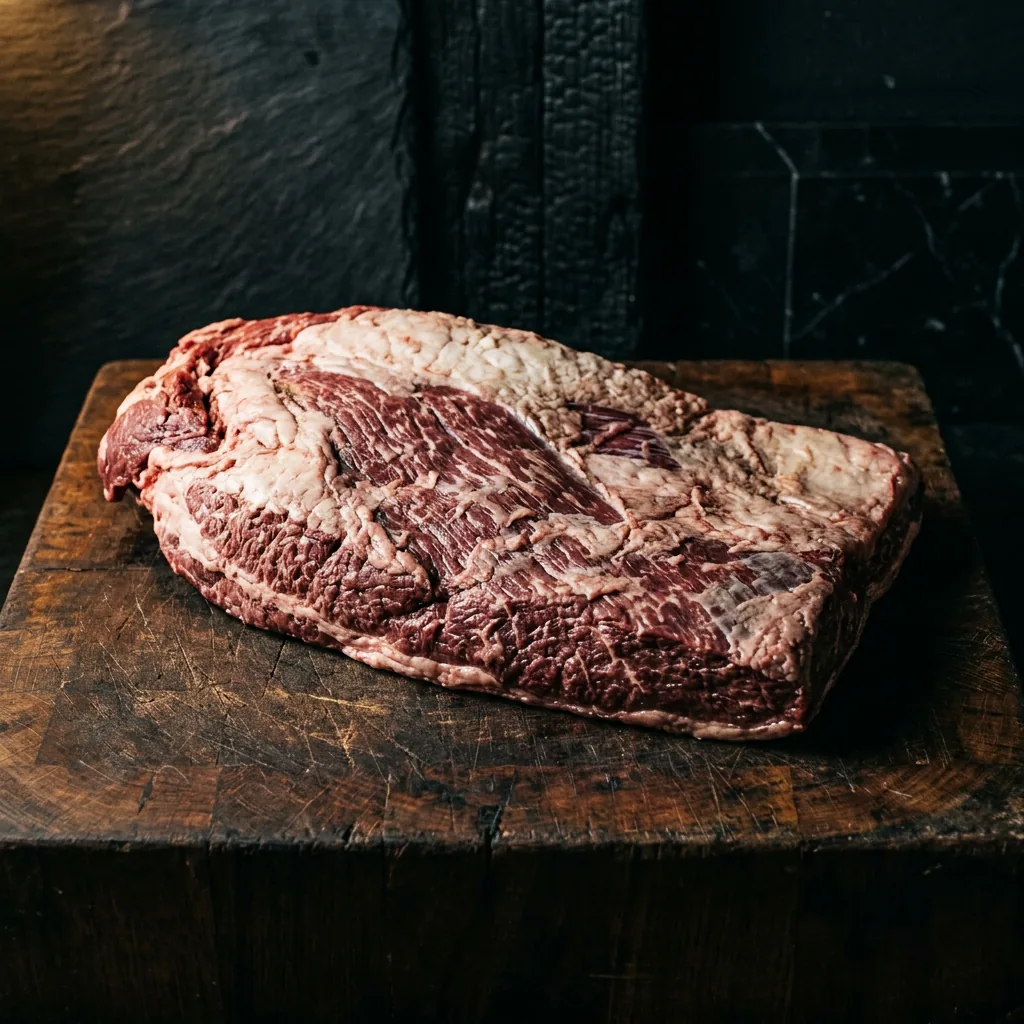
Cuts where the fat type is most noticeable: Ribeye, New York Strip, Picanha, and Brisket — all cuts where fat distribution or fat cap composition defines the eating experience.
Nutritional Differences — Where the Science Actually Stands
The most significant nutritional gap is in fatty acid composition. Consistent, peer-reviewed evidence shows that grass-fed beef contains:
| Nutrient | Grass-Fed | Grain-Fed |
|---|---|---|
| Omega-3 fatty acids (ALA) | 2–5× higher | Baseline |
| Conjugated linoleic acid (CLA) | ~2× higher | Baseline |
| Vitamin E (tocopherols) | Significantly higher | Lower |
| Beta-carotene | Visibly higher (yellow fat) | Low |
| Omega-6:Omega-3 ratio | 1.5:1 to 3:1 | 7:1 to 12:1 |
| Iron, Zinc, B12 | Equivalent | Equivalent |
| Total protein | Equivalent | Equivalent |
That said, the absolute omega-3 content of beef remains modest compared to fatty fish — context matters for the health argument. Grain-fed beef is an excellent source of bioavailable iron, zinc, B12, creatine, and complete protein. Neither system produces nutritionally inferior meat when viewed as part of a complete diet. The nutritional advantage of grass-fed is real but should not be overstated: a weekly portion of salmon provides more omega-3 than any volume of grass-fed beef.
Flavor — The Taste Dimension
Flavor is where the debate gets personal, and where terroir enters the vocabulary of meat.
Grain-fed beef delivers sweetness, richness, and creaminess that dominate the global steakhouse market. The rendered fat is buttery and mild, and the overall flavor is consistent and accessible — a product of the controlled, predictable feedlot diet.
Grass-fed beef is more assertive. Enthusiasts describe it as minerally, complex, and terroir-driven — a product that reflects where the animal lived. The fat carries green, slightly herbal notes that some find fascinating and others find challenging. The flavor varies meaningfully by region and pasture composition: Hebridean Island beef tastes different from New Zealand grass-finished beef because the pastures are different. This variability is itself a form of quality rather than a defect — it is the reason terroir-focused chefs increasingly specify not just "grass-fed" but the farm, the breed, and the pasture type.
Pro tip: When cooking grass-fed beef for the first time, use it in a preparation where its minerality can shine: a simple crust of fleur de sel, high heat, short cook. Butter basting compensates for the leaner profile and bridges any flavor gap for guests accustomed to grain-fed beef.
Environmental and Ethical Considerations
Neither system is without environmental cost, and neither is categorically superior in every dimension.
Grain feeding requires vast cereal crop production with embedded emissions from fertilizer manufacture, irrigation, transport, and land use for feed crops. Antibiotic use is more common in feedlot environments, raising legitimate concerns about antimicrobial resistance.
Grass-fed systems require more land per animal and produce more methane per kilogram of beef due to longer productive lives and ruminant fermentation. However, regeneratively managed grass-fed systems — rotational grazing, mob grazing — can sequester carbon in soil, restore degraded grasslands, and support biodiversity in ways that cropland cannot. The carbon footprint of grass-fed beef depends heavily on management quality: poorly managed continuous grazing is an environmental liability; well-managed rotational grazing can be carbon-neutral or carbon-positive over time.
Adjusting Your Cooking Technique
Grass-fed beef's lower fat content means it behaves differently under heat, and approaching it with grain-fed technique consistently disappoints.
- Cook 10–15°C cooler than grain-fed equivalents — the lean muscle overcooks faster without insulating intramuscular fat
- Use a thermometer, not time estimates — the leaner structure means a 5°C overshoot loses far more quality
- Rest longer — grass-fed muscle fibers are tighter and more prone to juice loss; rest for at least 25–30% of total cooking time
- Baste actively with tallow, butter, or bone marrow to compensate for the absence of internal fat
- Avoid well-done entirely — the leaner structure has no reserve against moisture loss beyond medium
For grass-fed Ribeye or Flat Iron, a quick, hot sear with aggressive butter basting is the professional approach. For tougher cuts like Chuck Roast, the leaner collagen-rich muscle benefits from extended braising, where the absence of marbling matters less than the collagen-to-gelatin conversion.
Making the Choice
| Priority | Recommendation |
|---|---|
| Maximum marbling, richness | Grain-fed, ideally USDA Prime or equivalent |
| Nutritional profile, omega-3 | Certified grass-finished (AGA, Pasture for Life) |
| Environmental values | Regeneratively managed grass-finished |
| Flavor complexity, terroir | Grass-finished from herb-rich, diverse pastures |
| Budget | Grain-fed — the premium for certified grass-finished is real |
| Heritage breed + welfare | Grass-finished heritage breeds (Highland, Dexter, Belted Galloway) |
Neither answer is wrong. A great grain-fed Ribeye and a great grass-finished Sirloin are both worthy of serious attention — they just ask different things of the cook and reward different sensibilities at the table. The informed choice is the one made with full knowledge of what both labels mean, verified by certification rather than marketing claim.
Summary
Grass-fed and grain-fed beef are two genuinely different products produced from the same species. The finish phase — those final months of the animal's life — determines fat color, marbling level, fatty acid profile, and flavor character. Grain-fed delivers consistency, richness, and marbling; grass-finished delivers complexity, nutritional advantage, and the taste of the land. Cooking technique must adapt to whichever style you choose. Certification matters enormously — without verified labeling, "grass-fed" is a story, not a standard. For the premium meat buyer, the most useful practice is to maintain fluency in both styles, cook each with appropriate technique, and let the occasion dictate the choice.