A significant share of the world's beef, lamb, and poultry is produced under religious certification. Understanding halal and kosher requirements is not merely an act of cultural respect — it is essential product knowledge for any meat professional serving a diverse European clientele. Both systems have quality implications, welfare dimensions, and practical cut-availability consequences that go far beyond a simple label. For a meat sommelier, these frameworks represent two of the most rigorous and traceable supply chains in the entire food industry.
Halal Fundamentals: What Makes Meat Permissible
Halal (Arabic: حلال, "permissible") is the Islamic standard for acceptable food. The term encompasses the entirety of Muslim dietary law — not just slaughter, but every step from farm to plate. For meat specifically, the core requirements are precise:
- The animal must be alive, healthy, and free from disease at the moment of slaughter
- The slaughterman (dhabih) must be a practicing Muslim
- The name of Allah must be invoked at the moment of slaughter (Bismillah Allahu Akbar)
- Slaughter must be performed with a single, swift, sharp cut — the dhabh — severing the jugular veins, carotid arteries, and windpipe in one uninterrupted motion
- Blood must drain completely from the carcass before further processing
*Entirely prohibited (haram):* pork and all pork derivatives, blood and blood products, animals that died before slaughter or through improper method, carnivorous animals and birds of prey, alcohol in any form — including in marinades, sauces, or processing aids.
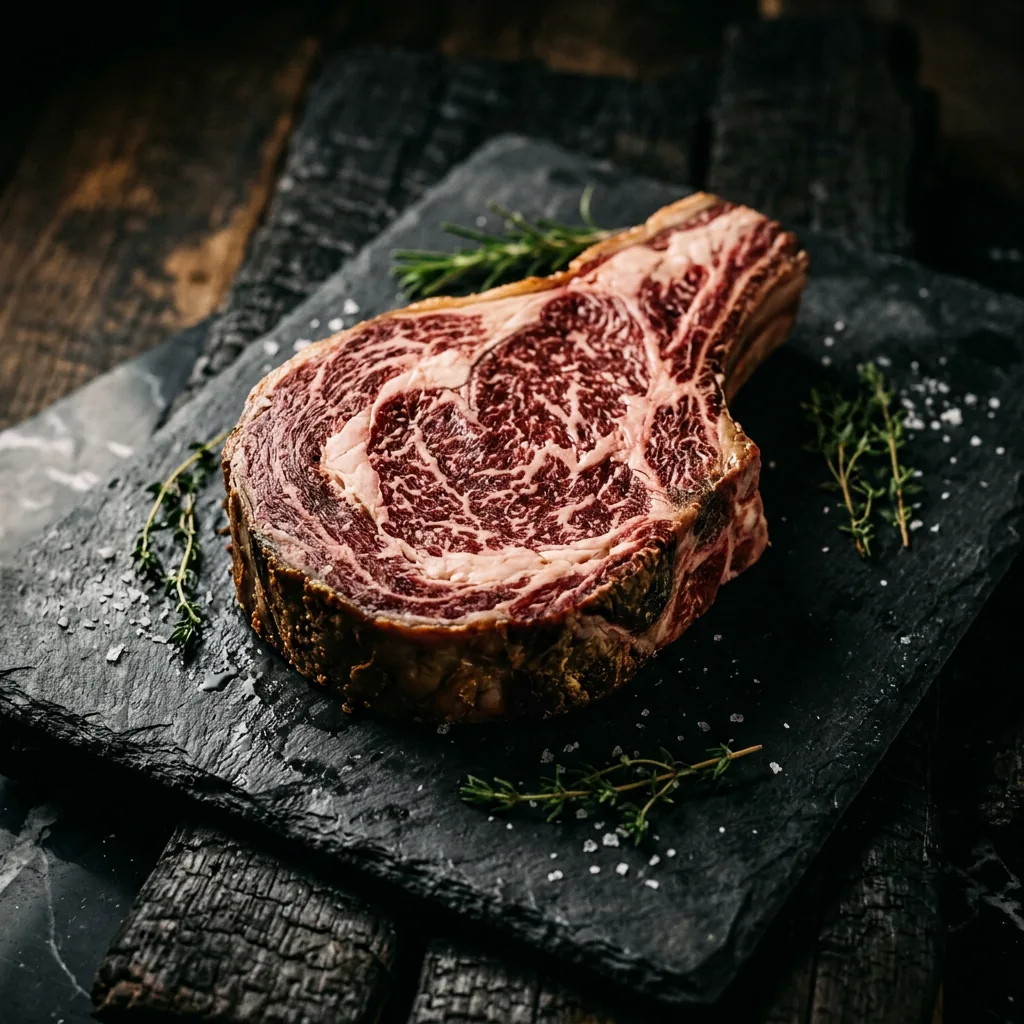
The vast majority of halal-certified beef and lamb is culinarily identical to non-halal equivalents. A ribeye from a halal-certified carcass is the same muscle with the same marbling and cooking properties. The slaughter method, when correctly performed, is the only process difference that a cook or diner encounters.
Pro tip: Halal certification bodies vary enormously in rigor. In the UK, seek HMC (Halal Monitoring Committee) or HFA (Halal Food Authority) logos — both require continuous on-site supervision rather than periodic audits. In France, ARGML and Grande Mosquée de Paris certify. In Germany, IGMG certification is widely recognized. Always verify the certifying body's supervisory model, not just the logo on the package.
Kosher Fundamentals: The Kashrut System
Kosher (Hebrew: כשר, "fit" or "proper") derives from the broader body of Jewish dietary law (kashrut), which is considerably more complex than halal and extends well beyond slaughter.
Permitted species: ruminants with fully split hooves — cattle, sheep, goat. Pork is categorically prohibited. Poultry per tradition: chicken, turkey, duck, goose — not birds of prey.
Shechita (ritual slaughter): performed exclusively by a trained, certified shochet using a chalaf — a blade of exceptional sharpness, inspected before every slaughter for any nick or irregularity. A single, smooth, completely uninterrupted stroke is required. Any pause or sawing motion invalidates the slaughter. The animal cannot be stunned beforehand under traditional Orthodox standards.
*Post-slaughter inspection (bedika): a trained examiner (bodek) inspects internal organs, particularly the lungs. Any adhesion, lesion, or abnormality renders the entire animal treif (non-kosher) regardless of how perfect the slaughter was. Glatt kosher* certifies that the lungs were found entirely smooth — a higher standard that has become a premium quality signal.
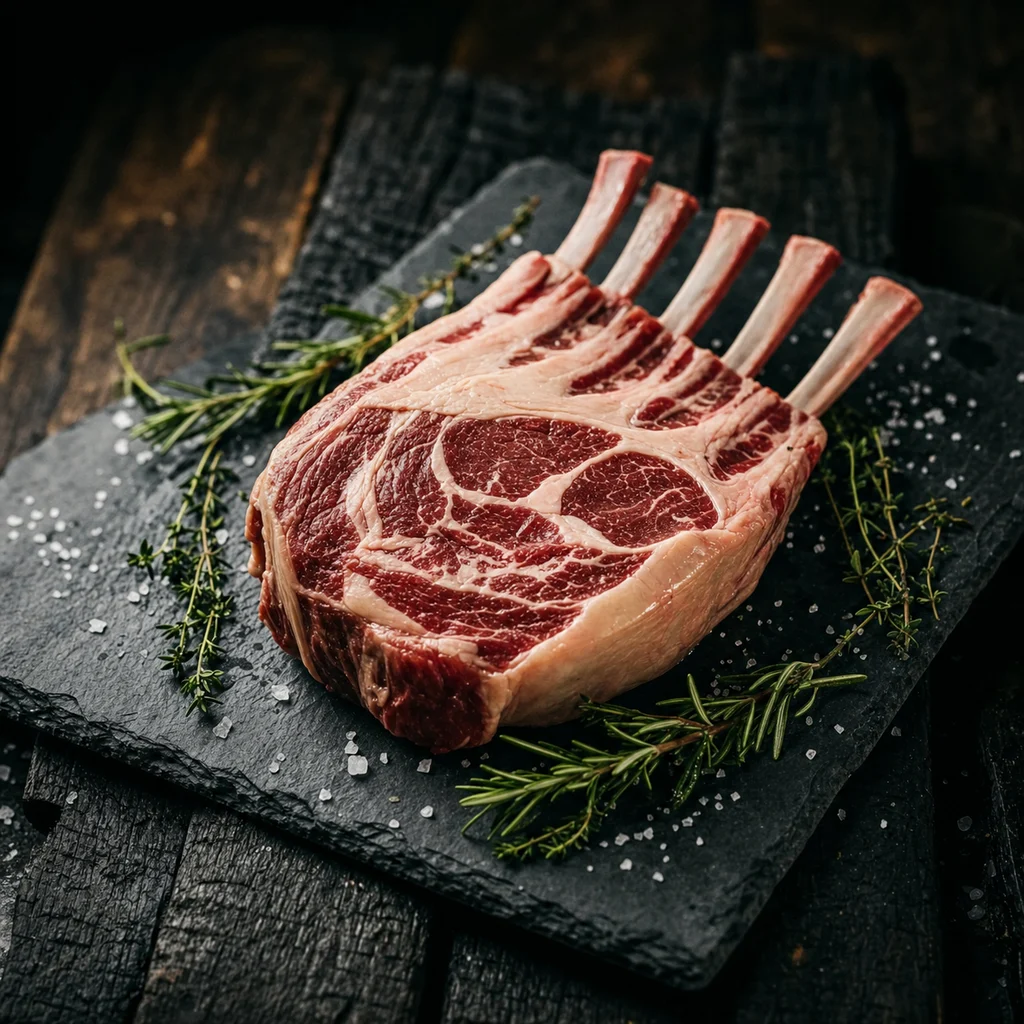
*Meat and dairy prohibition (basar be-chalav):* meat and dairy cannot be cooked, served, or eaten together. A kosher brisket cannot be finished with butter; a kosher lamb rack cannot accompany a cream sauce. This extends to utensils and preparation surfaces — separate equipment is required throughout.
The Hindquarter Restriction: Direct Consequences for Cut Availability
The most practically significant element of kosher law for meat professionals is the hindquarter restriction. Traditional kosher law requires removal of the sciatic nerve (gid hanashe) and associated fat vessels from the hindquarter — the posterior half of the carcass. This is anatomically complex and known as nikur or treibern. In the Ashkenazi tradition, rabbinic authorities have ruled that nikur at industrial scale is impractical, and the standard resolution is to sell the entire hindquarter as non-kosher.
| Kosher Availability | Cut Examples |
|---|---|
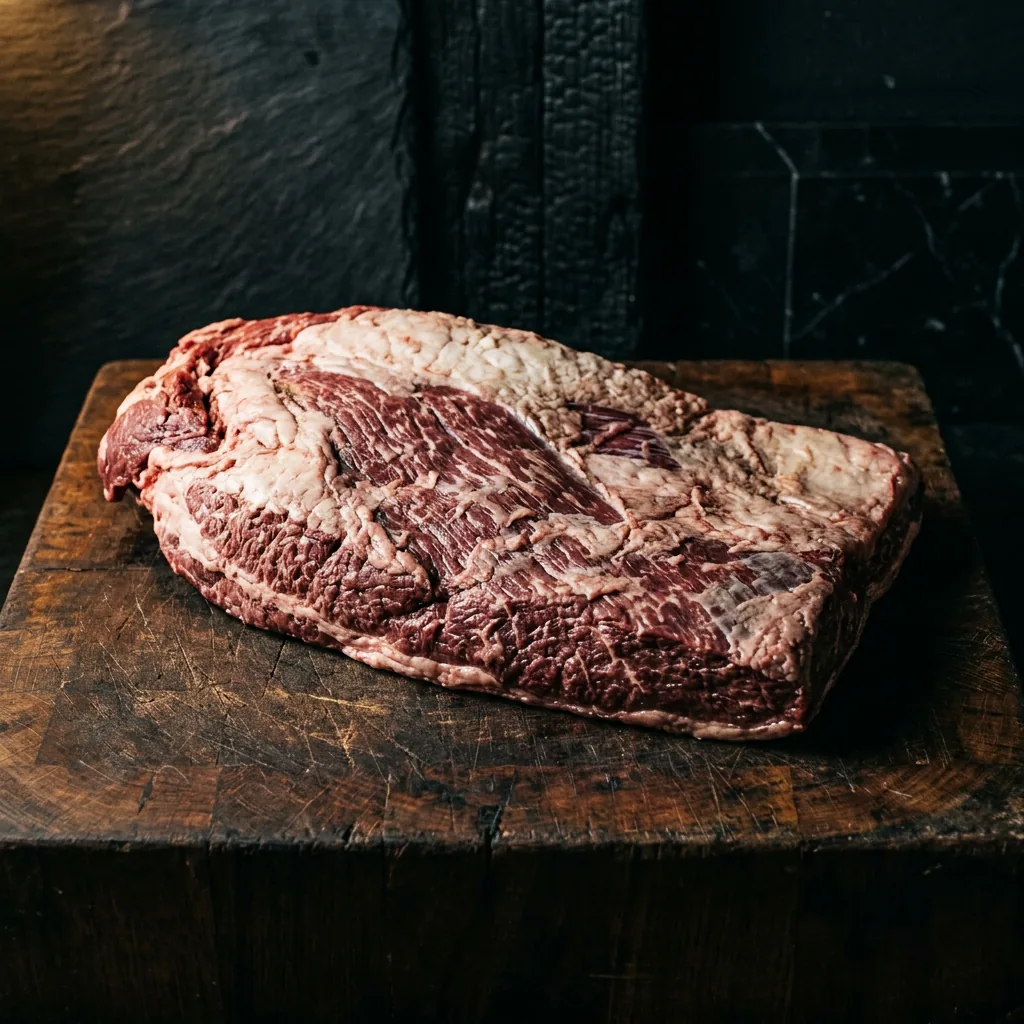
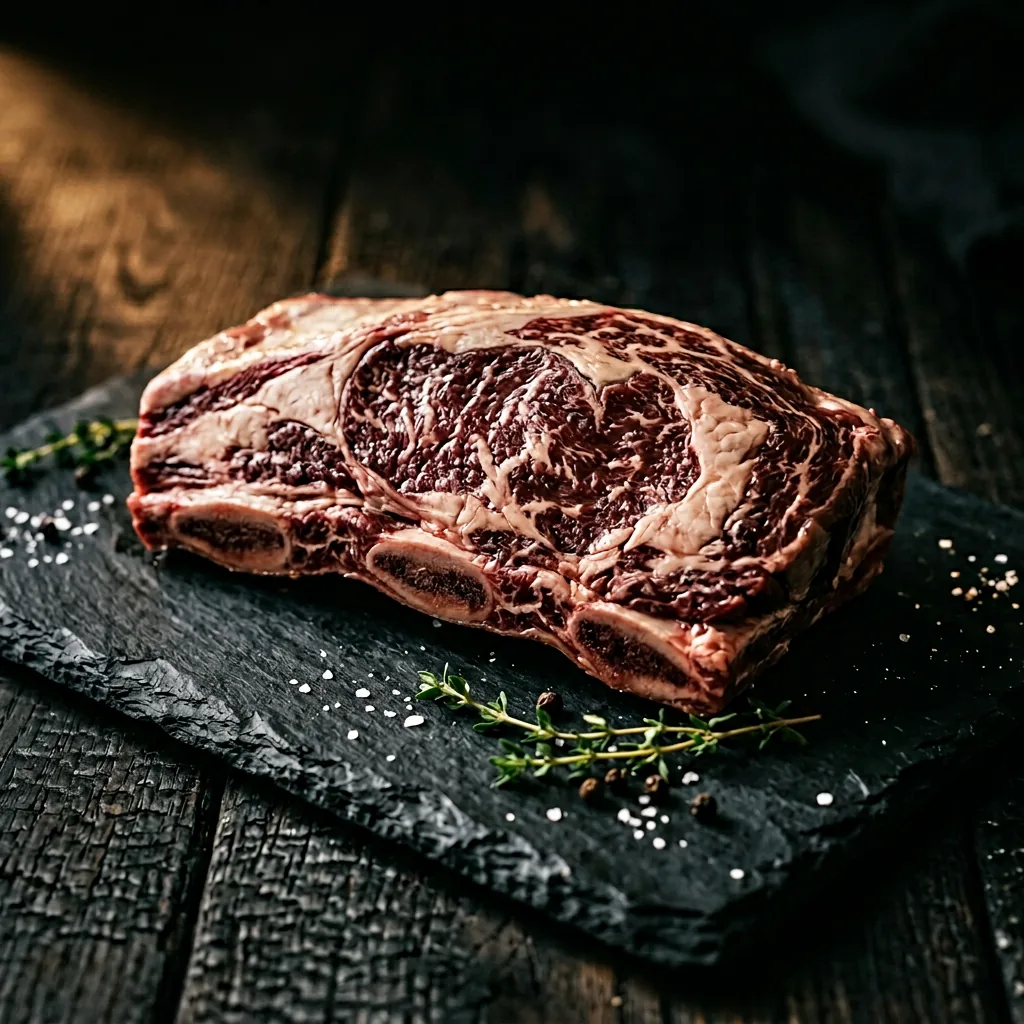
| Routinely available | Ribeye, short ribs, brisket, chuck roast, flat iron, flanken ribs, front shank, bone-in rib roast |
| Rarely/never available | NY strip, filet mignon, sirloin, picanha, tri-tip, top round, rump, flank |
| Sephardic tradition | Some Sephardic butchers perform nikur and offer hindquarter cuts under rabbinical certification |
This restriction shaped an entire culinary tradition. The Ashkenazi braised brisket canon — low and slow for Jewish holidays, a dish of extraordinary refinement — was born from the constraint of working with what was available. The brisket is one of the finest slow-cook cuts on the carcass; that Jewish cookery elevated it to an art form is culinary necessity becoming cultural treasure.
Pro tip: When sourcing kosher beef professionally, confirm whether the butcher operates under Ashkenazi or Sephardic tradition — the latter may carry hindquarter cuts including striploin under proper nikur certification, opening menu possibilities unavailable from most kosher suppliers.
The Welfare Debate: Stunning, Slaughter, and European Law
Both halal and kosher traditions historically require slaughter without prior stunning — the most contested animal welfare issue in European food policy over the past two decades.
The religious position: proponents argue that a precisely executed shechita or dhabh produces near-instantaneous loss of consciousness through catastrophic blood pressure drop, and that improper mechanical stunning can cause greater suffering than skilled ritual slaughter.
Veterinary and regulatory consensus: the British Veterinary Association, EFSA 2020 opinion, and most European veterinary bodies hold that pre-slaughter stunning reduces time to unconsciousness and eliminates a period of potential awareness that unstunned slaughter cannot eliminate regardless of technique.
| Country | Regulatory Position |
|---|---|
| Belgium, Denmark, Sweden, Norway | Mandatory pre-stunning; religious exemptions revoked |
| UK | Permitted under WATOK with religious community exemptions |
| Germany | Federal law requires stunning; case-by-case exemptions at Bundesland level |
| France | Permitted; reporting requirements since 2020 |
| Netherlands | Permitted with additional monitoring since 2012 compromise |
The halal resolution: many major halal certification bodies now accept reversible electrical pre-stunning — a low-voltage stun that renders the animal unconscious but does not stop the heart, preserving halal validity if supervised correctly. This has substantially reduced the welfare controversy for mainstream halal-certified product. Kosher authorities have been less willing to accept stunning under Orthodox standards.
Premium Halal and Kosher Sub-Markets
High-quality certified religious meat has developed into a significant premium niche with dedicated supply chains:
| Product | Description | Key European Markets |
|---|---|---|
| Halal A5 Wagyu | Japanese A5 certified by JAKIM (Malaysia) or MUI (Indonesia) | Germany, Netherlands, UK |
| Glatt Kosher Wagyu | Uruguayan and Argentine Wagyu-cross with rabbinical certification | UK, France |
| Halal Heritage Lamb | Herdwick, Soay, Dorset from UK farms | Premium UK and EU Muslim market |
The wagyu_a5_ribeye certified halal by JAKIM commands a premium over equivalent non-certified cuts because it opens access to the global Muslim premium market — estimated at 1.9 billion potential consumers — with verified documentation that high-end Muslim consumers increasingly demand.
Practical Implications for the Meat Professional
Label literacy: a halal logo without a named certifying body is commercially meaningless. Always identify the certification organization, not just the logo.
Forequarter excellence: the constraint of kosher forequarter-only cooking produced the world's finest braised traditions. Flanken-style short ribs, 72-hour brisket, and chuck pot roast are not consolation prizes — they are the pinnacle of their respective techniques, refined over centuries of working brilliantly within constraint.
Shared quality baseline: beneath theological differences, halal and kosher share a foundational quality principle — animal health at slaughter is mandatory. A sick, injured, or stressed animal cannot produce valid certified meat regardless of technique. This baseline welfare standard has no enforcement equivalent in conventional commercial slaughter, making certified religious meat a genuine quality argument for the premium consumer, not merely a religious accommodation.
Acknowledging halal and kosher certification at the cut level — where available and verifiable — serves a substantial and underserved European audience. The Muslim population of the EU exceeds 25 million; the Jewish community approximately 1.4 million. Both groups are underserved by mainstream premium meat retail and represent high-engagement premium consumers for whom accurate certification information is not a preference but a requirement.