When the heat is off, the cooking is not. Internal temperature continues to rise — often 3°C for a thin steak, sometimes 6–7°C in a thick roast or a bone-in prime rib — and ignoring this fact is one of the most common, most costly mistakes in all of meat cookery. Carry-over cooking is not a mysterious quirk; it is a fully predictable physical process governed by the laws of thermodynamics, and working with it rather than against it is the difference between a steak that hits its target doneness precisely and one that overshoots by a full grade. Resting, the deliberate pause between heat source and knife, completes the work that cooking began.
The Physics of Carry-Over
A steak is a remarkably poor conductor of heat. When the surface is exposed to a 220–240°C cast-iron pan, that surface temperature can reach 180°C or higher while the geometric center of a 4 cm cut may still sit at 38–42°C. This is the thermal gradient — a steep temperature slope from the extreme outer crust to the cool interior — and it is established the moment the meat contacts the heat source. When you remove the steak from the pan, the gradient does not stop. It continues to equalize: heat flows inward from hotter, more energetic zones toward cooler ones, as it always does, until equilibrium is reached.
The magnitude of carry-over scales directly with thickness and thermal mass:
| Cut Thickness | Carry-Over Rise | Pull Temperature for Medium-Rare (54°C target) |
|---|---|---|
| 1.5–2 cm thin steak | 2–3°C | 51–52°C |
| 2.5–3 cm standard steak | 3–4°C | 50–51°C |
| 4 cm thick-cut | 5–6°C | 48–49°C |
| Bone-in roast 2+ kg | 6–8°C | 46–48°C |
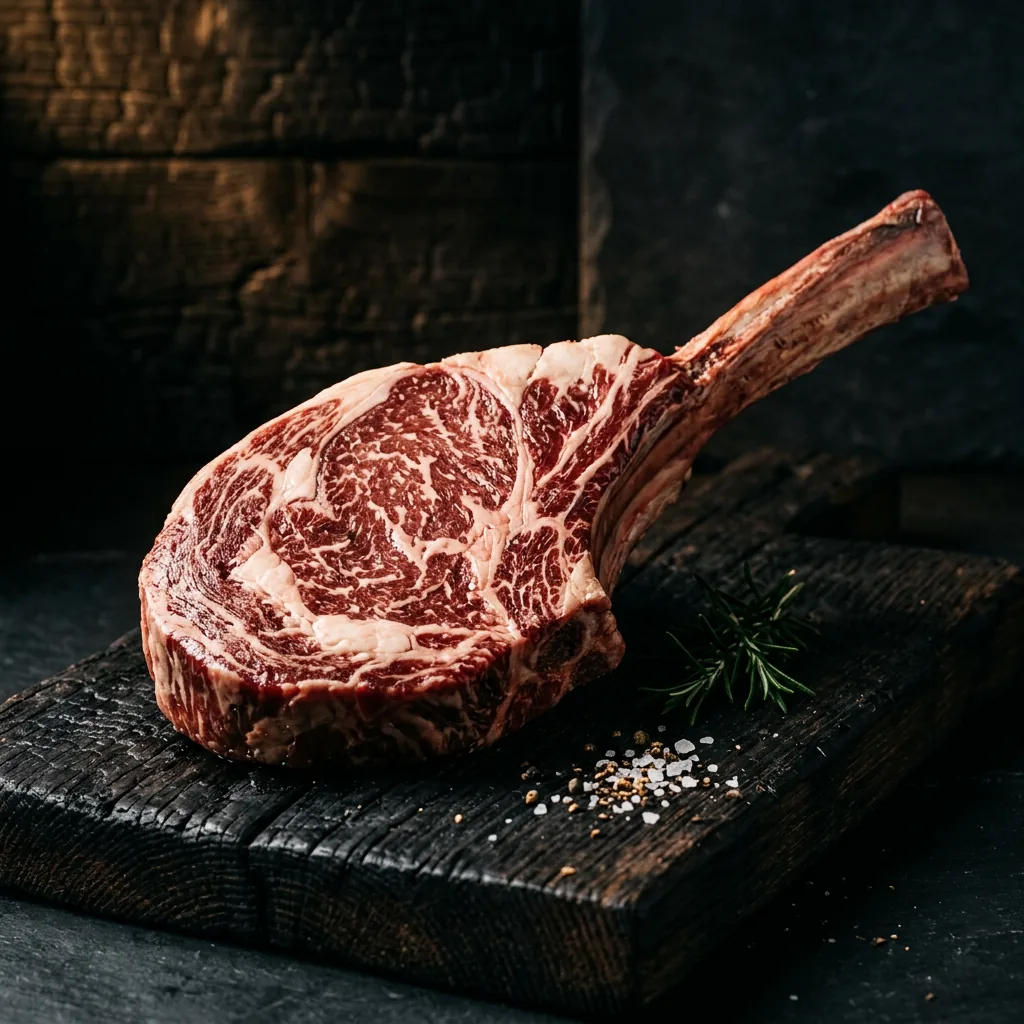
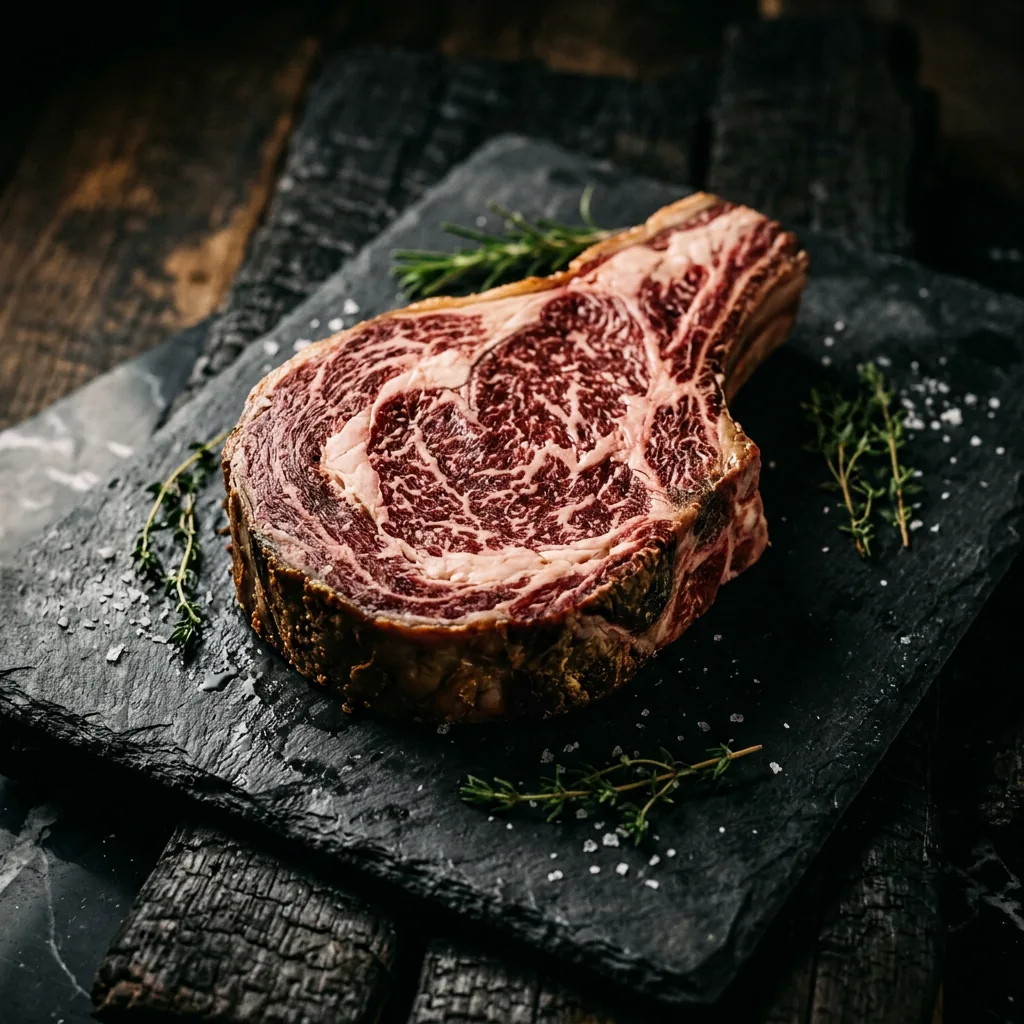
The presence of bone amplifies carry-over, because bone retains and conducts heat differently than muscle tissue. A tomahawk with its long rib bone will carry-over slightly more unevenly than a boneless ribeye of the same thickness: the meat closest to the bone continues receiving conducted heat longer after removal from the pan. The practical implication is always to pull bone-in cuts at the lower end of the pull-temperature range.
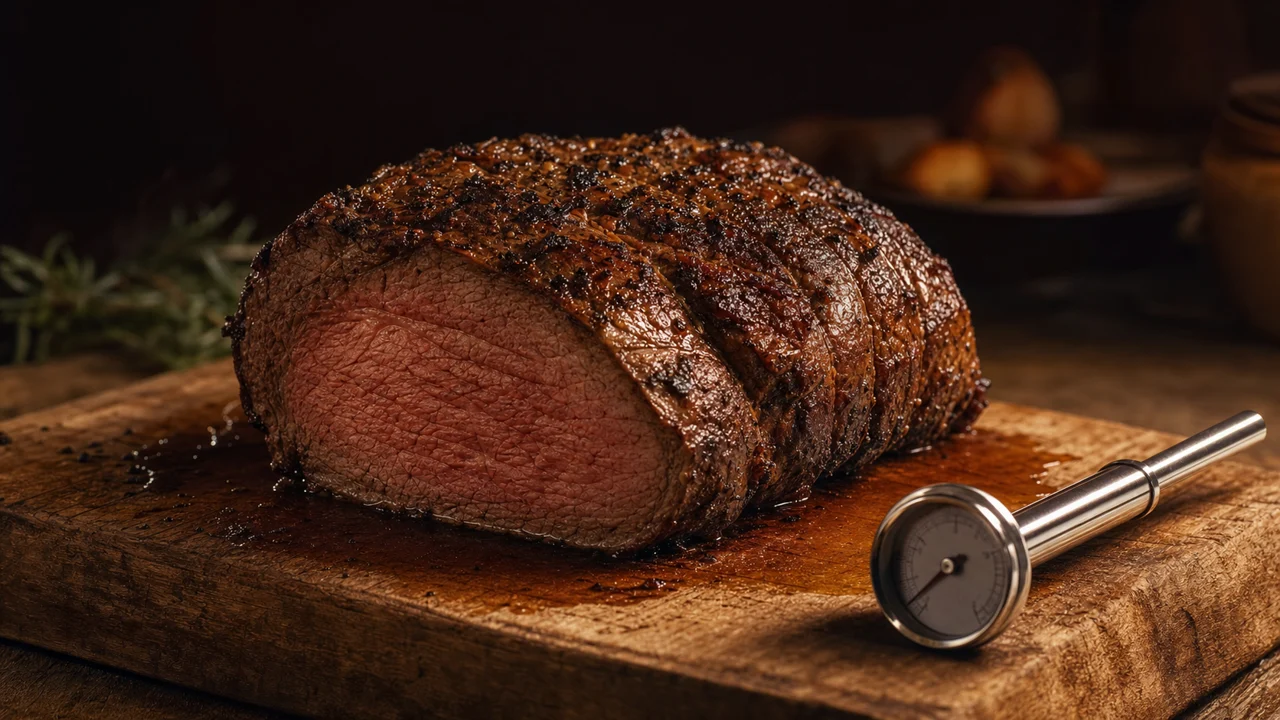
Pro tip: For any cut over 3 cm, insert a probe thermometer and leave it in during the rest. Watch the temperature climb in real time. After three or four steaks, you will have internalized exactly how your specific oven, pan, and cuts behave — and you will never guess again.
Why Resting Matters Beyond Temperature
Carry-over is only half the argument for resting. During cooking, the contraction of muscle fibers under heat creates internal pressure that forces moisture out of the fibers and into the intercellular spaces — the fluid channels between muscle bundles. A steak sliced the instant it comes off the heat will lose a significant and visible volume of this juice onto the cutting board. You are, in effect, serving the juice to the wood rather than to the plate.
Resting allows two restorative processes. First, as the internal temperature stabilizes and the thermal gradient flattens, the contracted muscle fibers partially relax, and they partially reabsorb the expelled moisture from the intercellular spaces. Second, the pressure differential between the hotter outer zones (higher internal pressure) and the cooler center equalizes as temperatures converge. The net result: a fully rested steak, when sliced, bleeds very little. The board remains nearly dry, the plate stays richly colored, and every milliliter of juice that would have been lost is retained in the meat.
The difference is substantial. Studies on resting time and moisture loss have consistently shown that unrested steaks lose 40–50% more juice on cutting than steaks rested to full temperature equilibration. For a premium cut — a thick-cut porterhouse or a 400g prime_rib portion — that moisture represents a meaningful fraction of the eating experience.
Pro tip: Cut a properly rested steak and the board stays nearly dry. Cut an unrested one and you serve the juice to your cutting board, not to your guest. It is that simple, and that consequential.
Resting Times by Cut
There is no single universal resting time. The correct duration scales with thickness, thermal mass, and whether bone is present:
- Thin steak (1.5–2 cm): 4–5 minutes minimum; 6–7 minutes ideal.
- Standard steak (2.5–3 cm): 6–8 minutes.
- Thick steak (4+ cm, [tomahawk](/atlas/tomahawk), bone-in): 10–12 minutes.
- Whole roast (prime rib, beef tenderloin roast): 20–30 minutes, loosely tented.
These are not arbitrary round numbers. They represent the time required for the temperature gradient to flatten sufficiently that the fibers can reabsorb expelled moisture and the cut temperature to stabilize. Rushing the rest is one of the most reliable ways to ruin a steak that was cooked perfectly.
Technique: Tent, Rack, and Plate
How you rest matters almost as much as how long. The standard instruction to "tent with foil" requires nuance. A tightly wrapped foil package traps steam that condenses on the crust surface and softens it — you spent 90 seconds building a Maillard crust and a poor rest will undo it in two minutes. Loose tenting — a foil sheet draped over the steak with air gaps at the edges — holds enough heat to prevent rapid cooling while allowing surface steam to escape.
Better still: rest on a wire rack. A steak placed directly on a plate or board traps moisture on the underside, softening the bottom crust and beginning to steam the meat from below. A wire rack allows air circulation on all sides, preserving both the top and bottom crust integrity while the temperature equalizes within. In a professional kitchen setting, the pass rack serves exactly this function.
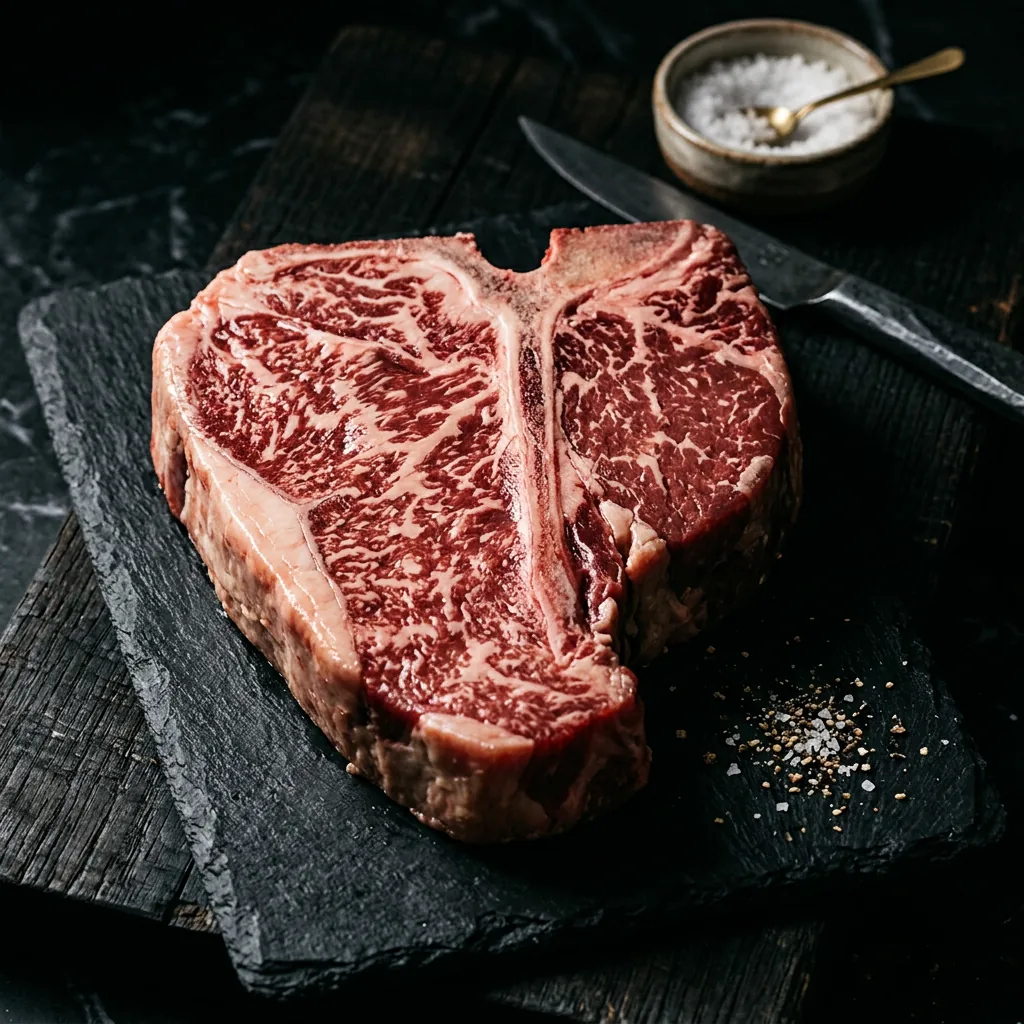
The porterhouse presents a particular resting challenge: it contains two distinct muscle groups — the strip loin and the tenderloin — separated by the backbone. The tenderloin is significantly more tender and cooks faster; the bone retains heat longer than either muscle. During resting, the bone-side tenderloin can continue cooking from bone-conducted heat even as the strip loin cools. The mitigation: always pull a T-bone or porterhouse at the very bottom of the pull-temperature range and rest it with the bone side slightly elevated if possible.
The Inverted Rules of Sous Vide
For sous-vide cooked meat, the physics are entirely different, and conventional resting logic inverts. A sous-vide bath equalizes the entire cut to the bath temperature before the bag is ever opened — there is no thermal gradient whatsoever at the moment of removal. There is therefore nothing to equalize and no meaningful carry-over to account for: the probe will read the same temperature throughout the cut.
Similarly, the low temperatures used in sous vide — typically 49–58°C for beef — minimize protein contraction, so far less moisture is expelled into the intercellular spaces during cooking. There is correspondingly less moisture to redistribute during a rest.
A sous-vide steak needs only the briefest pause between bag and searing pan — long enough to pat dry, perhaps two to three minutes on a rack. Extended resting of a sous-vide steak serves no practical purpose and risks dropping the internal temperature below the desirable serving range, requiring a longer compensating sear that risks overcooking the outer layers.
Common Errors and How to Avoid Them
Resting too long is an underappreciated failure mode. Beyond 12–15 minutes, a thin steak becomes cold enough that the fat congeals and the eating experience is flat. Tent lightly, plate while the meat still radiates perceptible heat, and serve immediately once the rest is complete. Resting is a window, not a holding room.
Cutting to check is the most expensive habit in home steak cookery. Every incision releases juice that cannot be recovered. A probe thermometer inserted before the cook begins eliminates the need to cut and check entirely — you know the temperature precisely throughout, from oven phase to rest, and the steak arrives at the plate intact.
Ignoring the board's contribution: A thick wooden cutting board is itself a heat sink and will pull temperature from a resting steak faster than a warm plate would. For thick cuts, rest on a warm plate, a wire rack, or a cutting board that has been briefly warmed with hot water and dried.
The Bottom Line
Carry-over cooking is physics, not suggestion. Every cut you cook will rise in temperature after leaving the heat source — by a predictable, manageable amount that scales with thickness. Pull 3–5°C below target, rest on a rack under loose foil for the appropriate duration, and the steak will land exactly where you aimed. The reward is not just technical precision: it is juice retained, texture complete, and a plate that delivers everything the cook intended.