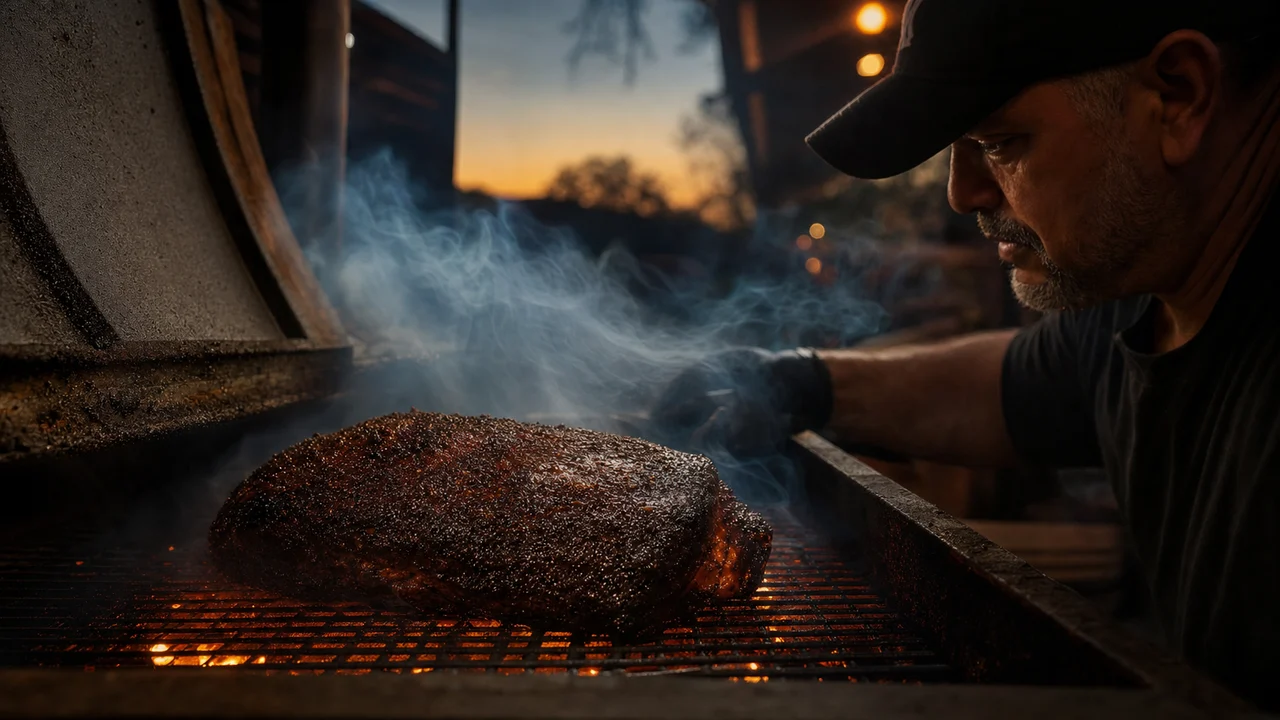
Real barbecue is not grilling. It is a different discipline entirely — one built on wood, time, low heat, and the patient transformation of collagen-rich meat into something that cannot be achieved any other way. Understanding the science behind it turns an instinctive, inherited process into a deliberate craft — one where every decision, from wood selection to fire management to the moment you wrap, has a specific chemical rationale. This guide covers the full science, from combustion chemistry to collagen conversion to the hardware itself.
The Four Elements of Real BBQ
Barbecue is defined by four interdependent principles. Remove any one and you have something else:
- Wood — the smoke source; flavor comes from wood combustion, not charcoal alone; charcoal provides heat, wood provides flavor
- Low temperature — 110–135°C (225–275°F) in the cooking chamber, measured at grate level
- Long time — anywhere from 4 hours for chicken to 20+ hours for a full packer brisket
- Indirect heat — the meat is never directly above the flame; convection carries heat and smoke around the meat
Grilling — direct, high-heat, short-time cooking — is the opposite of barbecue in almost every respect. The confusion between the two is the most widespread conceptual error in global meat culture. A grilled steak is excellent; a "barbecued" steak cooked at 300°C for 4 minutes is merely a grilled steak with an inaccurate name.
The Chemistry of Wood Smoke
Smoke flavor derives from the combustion of three structural polymers found in all hardwoods: lignin, cellulose, and hemicellulose. At optimal combustion temperatures (260–315°C for the wood itself, while the cooker maintains 110–135°C), these polymers break down into the aromatic compounds that define barbecue:
- Guaiacol and syringol — the foundational "smoky" aroma; guaiacol dominates in hardwoods, syringol characterizes fruitwoods and produces a sweeter, lighter note
- Eugenol — clove-like, spicy; characteristic of cherry and apple wood; contributes complexity
- Furaneol — sweet, caramellic; prominent in sugar maple; bridges smoke and sweetness
- Phenols — antiseptic, preservative, and flavor compounds; a thin phenolic layer on the meat's surface acts as both a flavor shell and a mild antimicrobial treatment
The rule of smoke color: thin, almost invisible blue smoke means ideal combustion and clean flavor deposition. White, billowing smoke means incomplete combustion — producing soot, creosote, and bitter, acrid flavors that are immediately detectable as an unpleasant aftertaste. Every fire management decision is ultimately aimed at maintaining blue smoke.
Pro tip: If you smell something astringent, harsh, or chemically pungent at the vents, your fire is producing the wrong smoke. Open the vents fully, add a split of dry wood, and wait for the plume to shift from white-grey to thin blue before loading meat. Never put meat on a fresh, unestablished fire.
Wood Selection: A Flavor Taxonomy
The choice of smoking wood is one of the most consequential flavor decisions in barbecue, equivalent to grape variety selection in winemaking:
| Wood | Flavor Profile | Best Applications |
|---|---|---|
| Hickory | Bold, bacon-like, assertive | Pork ribs, pork shoulder, whole brisket |
| Mesquite | Intensely earthy, Texan | Short smokes only; beef skirt and flank |
| Post Oak | Balanced, mild-complex | All-day brisket cooks; Texas Hill Country standard |
| Apple | Mildly sweet, fruity | Pork, poultry, anything requiring delicacy |
| Cherry | Sweet-tart, mahogany color | Pork belly, duck; beautiful bark color |
| Pecan | Nutty, moderate | Pork, beef; a softer hickory for long cooks |
| Alder | Gentle, clean | Salmon, trout, delicate poultry |
| Beech | Neutral, European | German and Scandinavian smoking traditions |
Never use: softwoods (pine, spruce, cedar — resin produces toxic, acrid smoke), painted or treated wood, or wood with visible mold or decay.
The Science of Bark
Bark — the deep mahogany-to-almost-black crust on properly smoked meat — is the most sought-after element on any barbecue plate. It is not burnt; it is a chemically distinct texture layer formed by three simultaneous processes:
Pellicle formation: Surface proteins partially dry and become tacky during the first hour of the cook, creating a smoke-adhesive layer that attracts and physically bonds aromatic compounds from the combustion gases.
Maillard reaction: At the surface, where temperatures exceed 140°C, proteins and sugars react to generate hundreds of new flavor compounds. The spice rub's sugars, the meat's surface proteins, and the ambient heat combine to produce the complex flavor that distinguishes bark from any other cooked surface.
Smoke compound deposition: Phenols, guaiacol, and syringol bond chemically to the pellicle layer over hours of exposure. Good bark has depth — a bite through it releases waves of complexity rather than a single smoky note.
Building good bark requires an overnight dry brine with coarse salt and black pepper applied uncovered in the refrigerator, a clean established fire, consistent temperature, and restraint with the spray bottle. Excessive spritzing washes the developing bark off before it sets.
The Stall: Patience as Technique
The "stall" (or "plateau") is the period during a long cook when the internal temperature appears to stop rising, typically between 65–75°C, sometimes for 3–6 hours. It is the most common source of panic among new pitmasters.
The mechanism is evaporative cooling: as collagen begins to break down and moisture migrates to the meat's surface, the rate of evaporation matches or exceeds the rate of heat input. The fire continues to burn perfectly; the meat is simply air-conditioning itself.
Solutions: - Wait — the purist approach; produces the best bark and the most complex result - Texas Crutch — wrap in unwaxed butcher paper (preferred) or aluminum foil; dramatically reduces evaporation surface and pushes through the stall; butcher paper preserves more bark than foil
Pro tip: Use unlined butcher paper (pink or white — the same paper used in Texas BBQ joints), never parchment or waxed paper. The porous paper allows the surface to breathe slightly while still trapping enough steam to power through the stall in 45–90 minutes.
Collagen: Why Long Cooking Works
Every classical BBQ cut — Brisket, Short Ribs, pork shoulder, spare ribs — is rich in collagen, the structural connective tissue protein that surrounds and weaves through muscle fibers. In quick, high-heat cooking, collagen remains tough and rubbery. Under prolonged exposure to temperatures above 70°C, collagen slowly hydrolyzes and dissolves into gelatin — the transformation that produces the signature melt-in-mouth texture of great barbecue and the luscious, self-basting quality that makes a properly smoked brisket appear to have braised in its own juices.
This is why barbecue cannot be shortcut with high heat: the collagen-to-gelatin conversion is a time-temperature function, not merely a temperature function. A brisket rushed at 200°C for 4 hours will be tough and dry; the same brisket held at 115°C for 14 hours will be extraordinary. Lean cuts — Beef Tenderloin, loin chops — gain nothing from barbecue treatment: they carry minimal collagen and simply dry out under prolonged low heat.
Smoker Types and Fire Management
| Smoker Type | Heat Source | Flavor Ceiling | Learning Curve |
|---|---|---|---|
| Offset stick-burner | Wood logs only | Highest | Steep; active fire management required |
| Kettle (charcoal + wood chunks) | Charcoal + hardwood | High | Moderate; excellent results possible |
| Pellet grill | Compressed wood pellets | Moderate | Low; automated temperature control |
| Kamado (ceramic) | Charcoal + wood chunks | High | Moderate; exceptional heat retention |
| Bullet smoker (WSM-style) | Charcoal + wood chunks | High | Moderate; very efficient fuel use |
All share the same performance target: maintain 110–135°C at grate level with a steady supply of thin blue smoke. Two probes are non-negotiable — one clipped at grate level, one inserted in the thickest part of the meat, avoiding bone. Temperature swings of more than ±10°C indicate a fire management problem that will compromise both bark development and cook predictability.
Key Cuts and What BBQ Does to Them
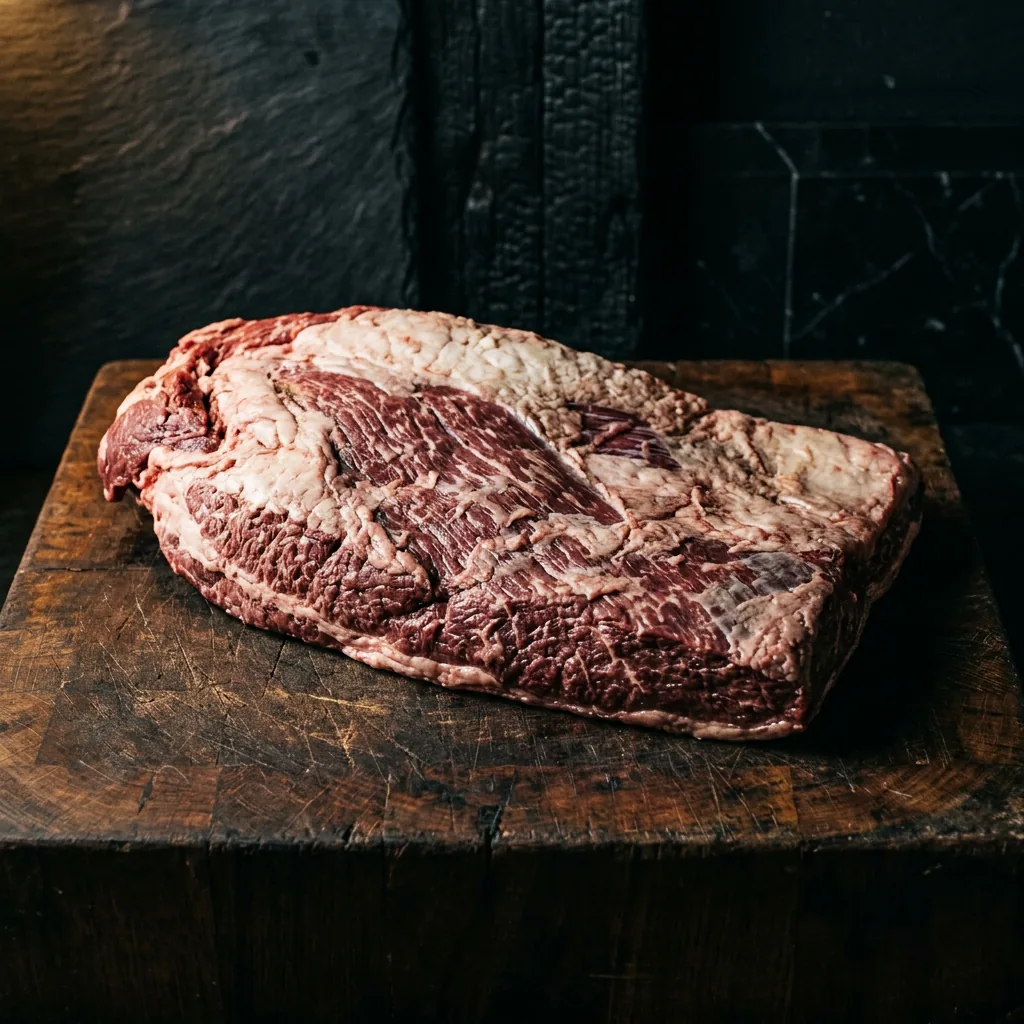
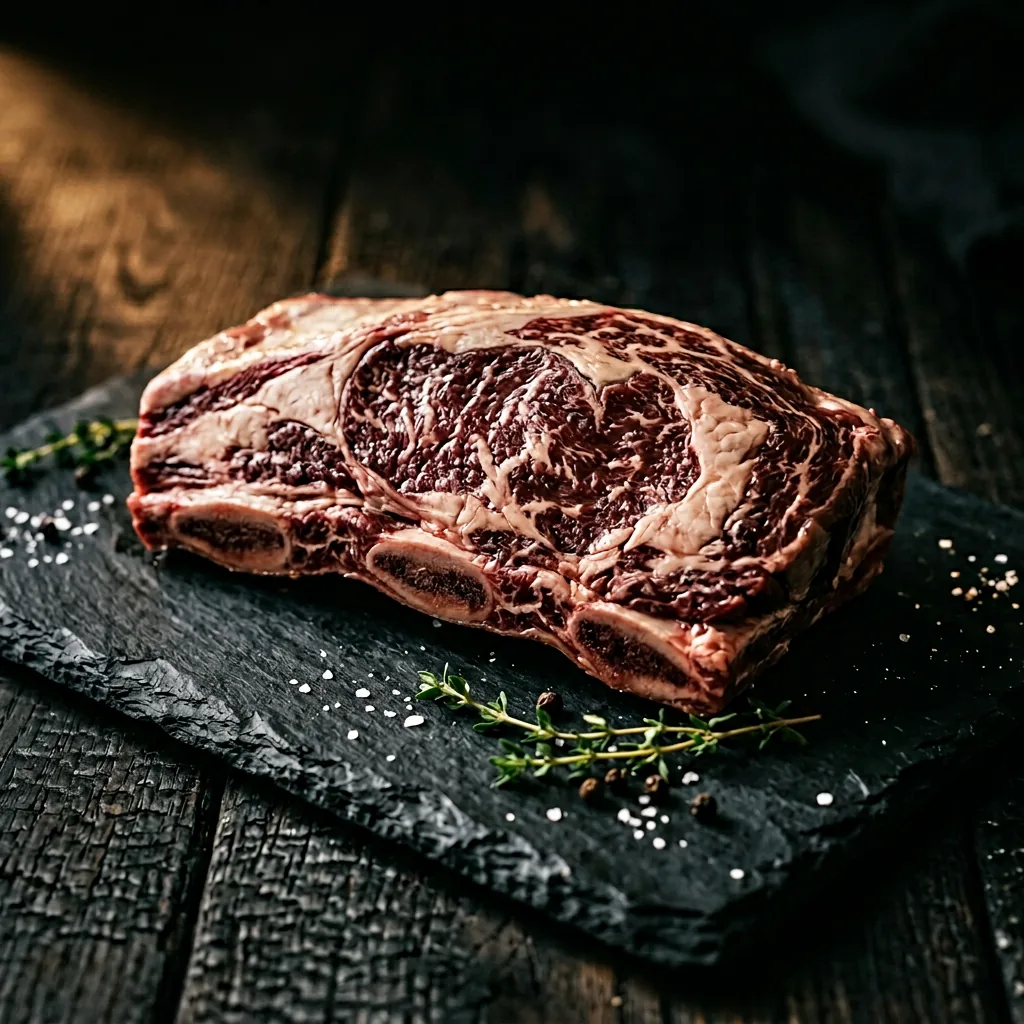
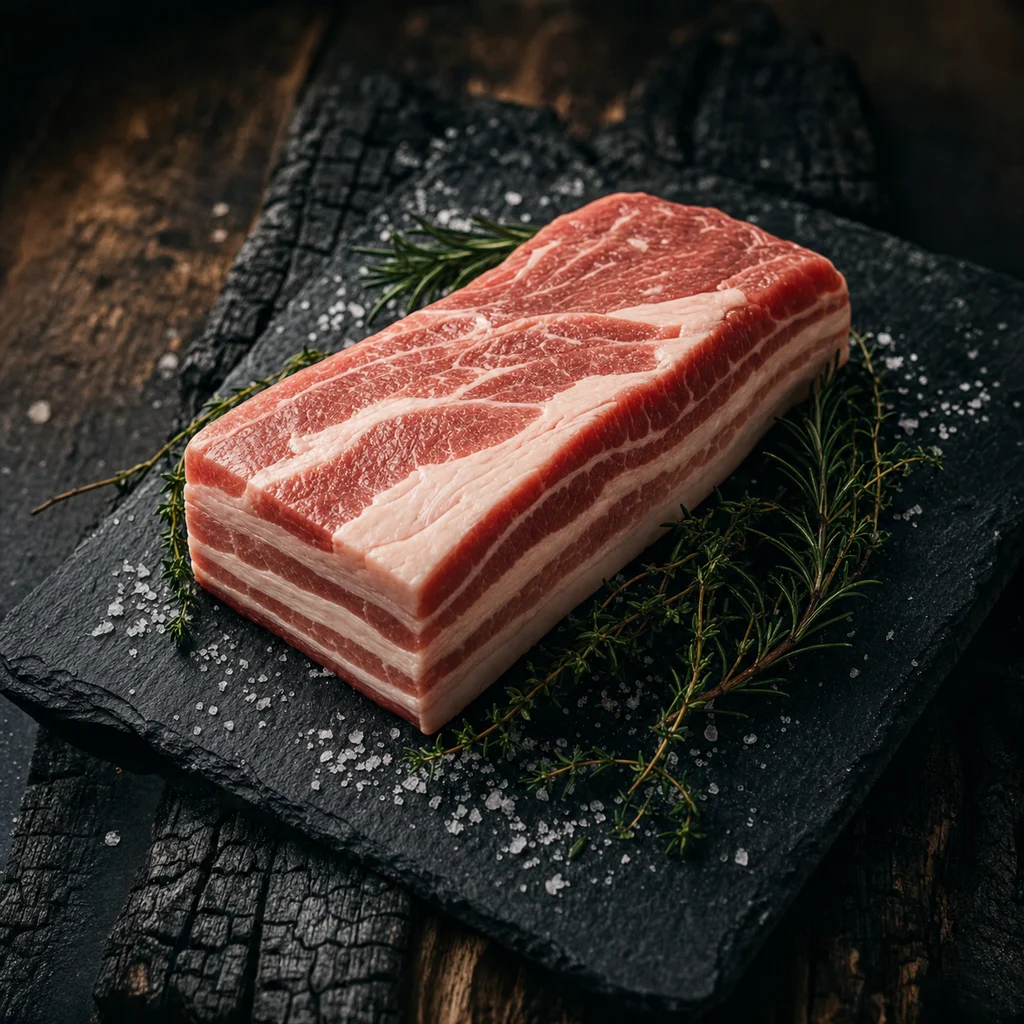
Brisket is the ultimate test — the flat loses moisture rapidly and must be wrapped at the right moment; the collagen-rich point (deckle) is more forgiving. A whole packer brisket at 115°C takes 12–18 hours. Short Ribs (beef plate ribs) are richer in collagen and fat, harder to overcook, and reward patience spectacularly. Pork Belly smoked at 120°C for 5–6 hours then crisped produces extraordinary results: smoke, collagen, and rendered fat combining in a single preparation that no other technique replicates.
Summary
Real barbecue is applied chemistry made delicious. The flavor of the smoke is determined by the molecules released at optimal combustion temperature; the bark is the product of the Maillard reaction plus phenolic deposition; the stall is evaporative cooling; the tenderness is collagen hydrolysis over time. Understanding these mechanisms transforms the cook from a follower of received tradition into a diagnostician — someone who can look at a fire, smell the smoke, and read a thermometer to know precisely what adjustment is needed. Master the science, and the craft follows.