Cooking a whole bird well is one of the most technically demanding achievements in home and professional kitchens alike — and one of the most frequently botched. The challenge is fundamental: a single bird contains two radically different muscle systems — lean breast and fatty thigh — that demand contradictory temperatures and cooking times. The breast destroys itself above 73°C; the thigh is unsatisfying below 74°C. Solving this differential is not stylistic — it is the central engineering problem of poultry cookery, and every classical and modern technique in this genre is an attempt to close the gap.
The Core Challenge: Anatomy and the Temperature Gap
The pectoralis major (breast) of a chicken is lean white tissue designed for short bursts of wing movement. It contains very little connective tissue and almost no intramuscular fat. Proteins begin denaturing at 50°C, become unpleasantly firm above 72°C, and are completely ruined by 80°C. The ideal window is narrow: 65–70°C.
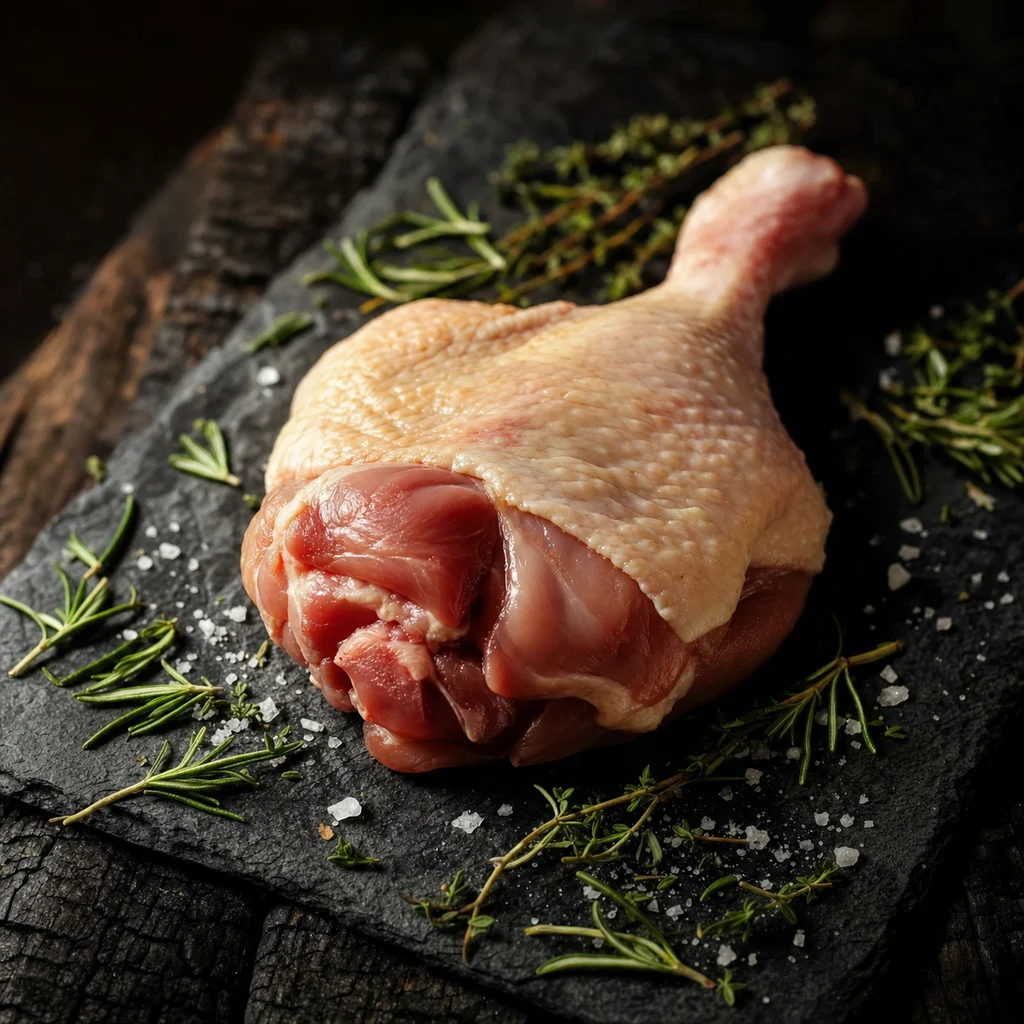
The biceps femoris and associated dark muscles of the thigh and leg are red, fatty, and collagen-rich — designed for sustained walking. They require higher temperatures: 74–80°C to render intramuscular fat and convert tough collagen into silky gelatin. Below 72°C, thigh meat is safe but rubbery and unsatisfying.
In a conventionally roasted whole bird, the breast — thinner and closer to the top heat — overcooks before the thigh joint reaches acceptable temperature. The temperature gap between breast and thigh at service can exceed 10°C in a trussed, unmodified bird. This is the problem every technique below addresses directly.
Spatchcocking: The Definitive Mechanical Solution
Spatchcocking (butterflying) is the most effective solution to the breast-thigh differential:
- Place the bird breast-side down on a stable cutting board
- Use poultry shears to cut along both sides of the backbone and remove it completely (reserve for stock)
- Flip breast-side up and press firmly on the breastbone with the heel of your palm until the cartilage cracks and the bird lies flat
- Optionally score skin over thigh joints to improve fat rendering
The result: breast and thigh at equal distance from the heat source; cooking time drops approximately 40%; entire skin surface faces upward for dramatically even browning. The temperature differential at service narrows to 2–4°C versus 8–12°C in a conventional roast.
Pro tip: After spatchcocking, dry brine uncovered on a wire rack in the refrigerator for 24–48 hours. Salt draws surface moisture out, which re-dissolves and penetrates the meat. The skin dries to near-parchment texture and crisps instantaneously under heat — producing crackling that no amount of basting can replicate. This single preparation step improves finished bird quality more than any other variable.
French Classical Technique: Barding, Trussing, and Resting
The classical French approach addresses the differential through insulation, shaping, and moisture management.
Barding wraps the breast in thin sheets of fat — barde de lard, thinly sliced pancetta, or pork caul fat — pinned over the breast surface. As the bird roasts, barding fat melts and continuously bastes the lean muscle from outside. This is critical for lean birds — guinea fowl, pheasant, squab — which carry minimal subcutaneous fat and dry catastrophically without intervention. A properly barded guinea-fowl-crown is the difference between a dry disappointment and one of the finest roasting experiences in European poultry cookery.
Trussing binds the bird into a compact, even shape: legs close to the body, wings tucked under. This prevents thin extremities from burning before the deep center reaches temperature and presents a professional form at the table.
Resting is the completion of cooking, not an optional pause. During roasting, heat drives moisture from muscle cells into intercellular spaces. Carving immediately pours this moisture onto the cutting board. During rest, temperature equalizes via carryover cooking and intercellular fluid is reabsorbed into relaxing muscle fibers. A well-rested bird retains 25–30% more juice than one carved immediately. The difference is dramatic and entirely predictable.
Temperature Targets by Species
| Bird | Breast Pull Temp | Rest Target | Thigh Target | Key Note |
|---|---|---|---|---|
| Chicken | 65°C | 68–70°C | 74°C | Most forgiving; 220°C spatchcocked, 40–45 min |
| Capon | 67°C | 70°C | 74°C | Low and slow 160°C; rest minimum 40 min |
| Duck whole | 54–57°C | 57–60°C | 74–80°C | Breast serves pink; legs best confited separately |
| Squab/Pigeon | 52–54°C | 55–57°C | 60°C | Treat as red meat; breast must be pink; never above 63°C |
| Guinea Fowl | 68°C | 70–72°C | 74°C | Always bard; legs separate braise strongly recommended |
| Pheasant whole | 65°C | 68°C | 72°C | Leanest of all; bard aggressively; serve pink |
| Poussin | 63°C | 66°C | 72°C | Spatchcock and grill; 200°C for 22–28 min |
| Partridge whole | 55°C | 57–60°C | 65°C | Most delicate game bird; serve pink throughout |
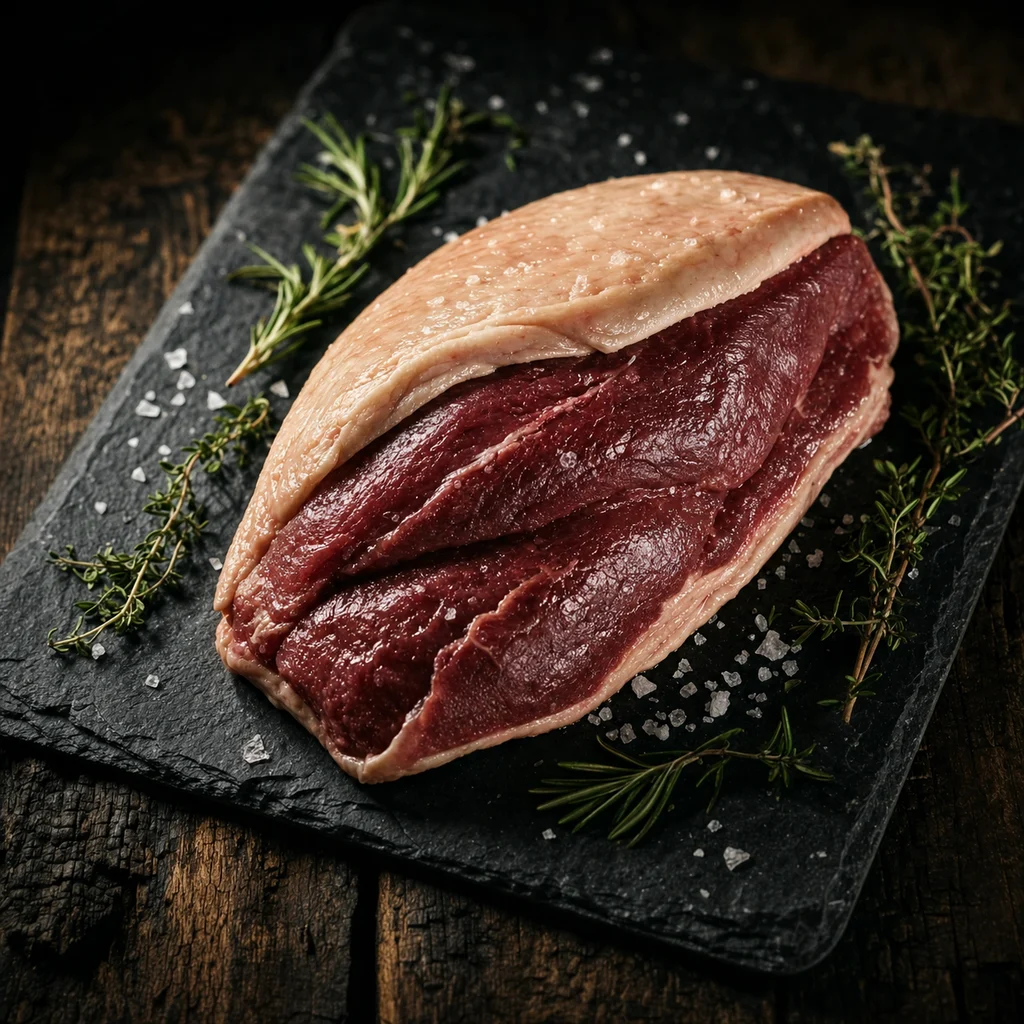
Pro tip: For duck_breast cooked separately, start cold skin-side down in a dry pan and render slowly at medium-low heat for 10–12 minutes before flipping. The fat cap is 8–12 mm thick and must be fully rendered before direct heat reaches the muscle. Rushing this step produces a waxy, chewy skin; patience produces crackling-crisp skin over a perfectly pink 57°C interior.
Carving Technique: Sequence and Precision
The carving sequence matters as much as the cooking. Working against the correct anatomical order wastes meat and destroys presentation.
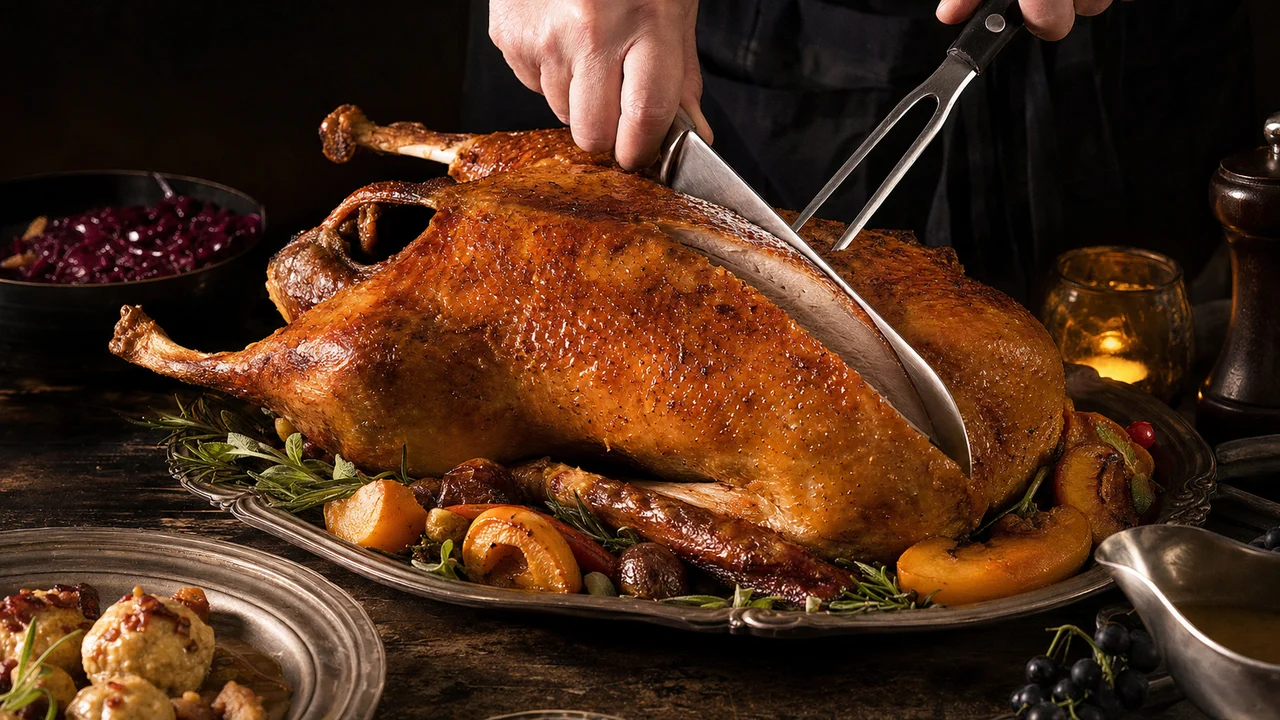
- Remove both legs first: press the drumstick away from the body; cut through skin in the hip crease; locate the ball socket by flexing and cut through the cartilage in one stroke
- Separate thigh from drumstick at the knee joint for plated service
- Remove the breast: run the carving knife along the keel bone, following the ribcage, and lift each breast lobe away as a single piece
- Slice against the grain: bias-cut at 45° in 8–10 mm slices to shorten muscle fibers and maximize tenderness at the plate
For service temperature: poultry must reach the plate above 55°C. A brief uncovered 5-minute return to a 100°C oven restores service temperature without further cooking — always preferable to cold-plate service.
Stuffing: The Professional Case Against
Dense cavity stuffings create a food safety problem: the stuffing center must reach 74°C before the bird is declared safe, but by the time it does, the breast will have spent 20–30 minutes above 75°C — a total overcook. There is no clean technical solution.
Professional practice: cook stuffing separately at all times. Use the cavity for aromatics that perfume the bird through steam and contact without safety risk: half a lemon, thyme, rosemary, four garlic cloves, half an onion. These contribute genuine fragrance and flavor to the thigh meat through contact — all without compromising the breast or creating food safety risk.
Pro tip: The most consistently excellent whole bird: spatchcock, 24-hour dry brine uncovered, cook on a wire rack over a roasting tray (airflow beneath crisps the underside), roast at 220°C without basting, rest 15 minutes uncovered. No liquid in the tray, no basting, no covering. Dry skin crisps to glass-thin crackling every time.
Premium Birds: Species Notes for the Serious Cook
Capon — the pinnacle of the Western roasting tradition; a castrated cockerel raised to 2.5–4 kg over six months or more. The breast is extraordinarily large, tender, and delicately flavored — the French and Catalan Christmas bird by tradition. Low-and-slow at 160°C is mandatory; high heat destroys its exceptional texture.
Squab (pigeon) — the most underestimated restaurant bird in European cookery. Rich, gamey, dark red flesh throughout; treat entirely as red meat; the breast must be served pink. At 220°C, 15–18 minutes is sufficient for a 300–350 g bird. The squab-pigeon has no peer among domestic birds for depth of flavor.
Guinea Fowl — occupies the flavor space between chicken and pheasant; lean and deeply flavored. The guinea-fowl-crown is an elegant premium presentation for fine dining. Always bard the breast with pancetta. Legs braised with white wine and herbs is the canonical accompaniment.
Pheasant — the leanest of all common birds; dries faster than any other species. Bard aggressively with barde de lard or streaky pancetta. The pheasant_whole is at its finest in October and November before birds age into toughness. The French tradition of faisan à la crème was designed explicitly to compensate for its lean, assertive character.
Mastery of the whole bird is the foundation of serious poultry cookery. No other skill reveals more quickly whether a cook understands heat, anatomy, and time — and none rewards the investment in technique as generously at the table.