Beef
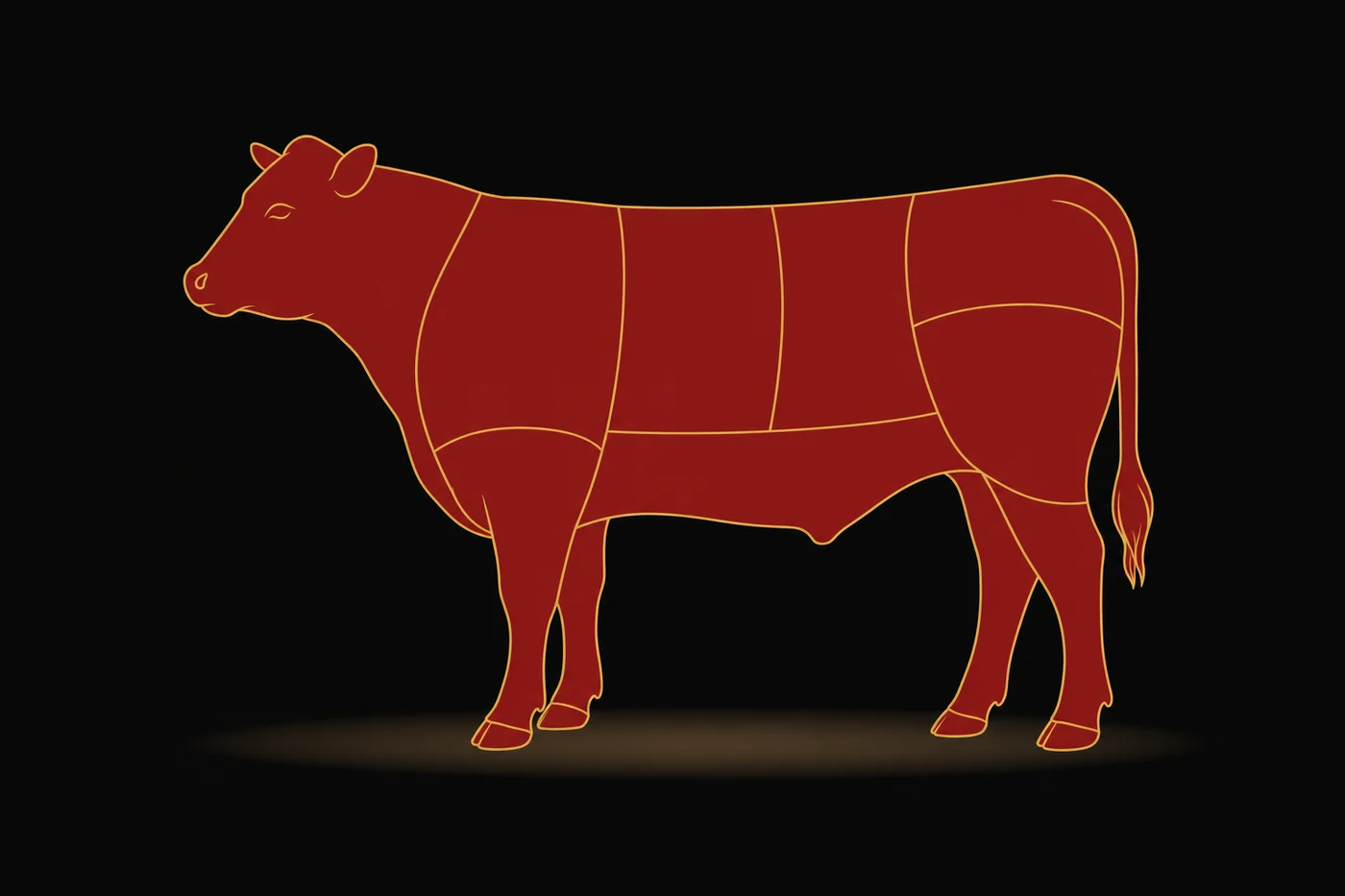
Beef is the sommelier’s widest canvas. A steer carries eight major primals, and the gulf between them is enormous: the constantly working chuck and brisket are laced with collagen and built for the smoker and braising pot, while the rib and short loin — barely used in life — give us the ribeye, the filet and the porterhouse that need nothing more than fierce heat and a few minutes’ rest. Marbling, the fine web of intramuscular fat, climbs steadily as you move along the spine toward the rib.
Muscles that move the animal constantly — neck, shoulder, leg — are dense with connective tissue and collagen. They reward low, slow, moist heat that melts collagen into gelatin. Muscles that mostly support weight rather than move it — the loin and rib along the spine — stay tender and suit fast, dry, high heat. Location on the chart is the single best predictor of how a cut wants to be cooked.
Select a primal to reveal its muscles, character and the cuts it yields.