Lamb
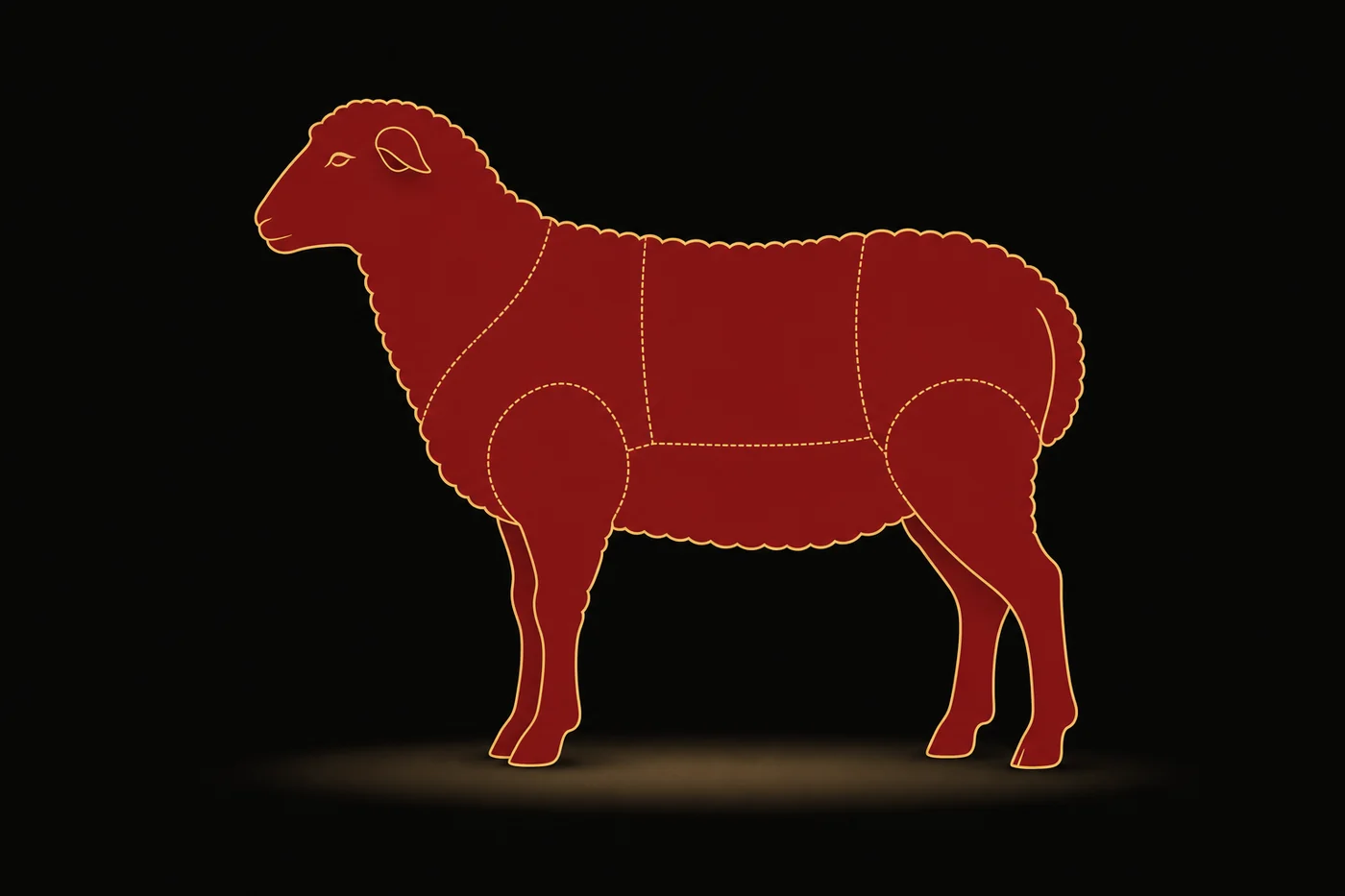
Lamb concentrates flavour in its fat, which carries a distinctive grassy, mineral note. The rack and loin are the prestige cuts — tender, quick to cook and best served blushing pink — while the shoulder and shank are collagen-rich braising stars that turn meltingly soft over hours. A whole leg sits in between, lean enough to roast yet large enough to repay careful timing. Older animals (hogget, mutton) deepen in flavour and reward slower methods.
Muscles that move the animal constantly — neck, shoulder, leg — are dense with connective tissue and collagen. They reward low, slow, moist heat that melts collagen into gelatin. Muscles that mostly support weight rather than move it — the loin and rib along the spine — stay tender and suit fast, dry, high heat. Location on the chart is the single best predictor of how a cut wants to be cooked.
Select a primal to reveal its muscles, character and the cuts it yields.