 Heritage Breeds
Brahman
About the breed
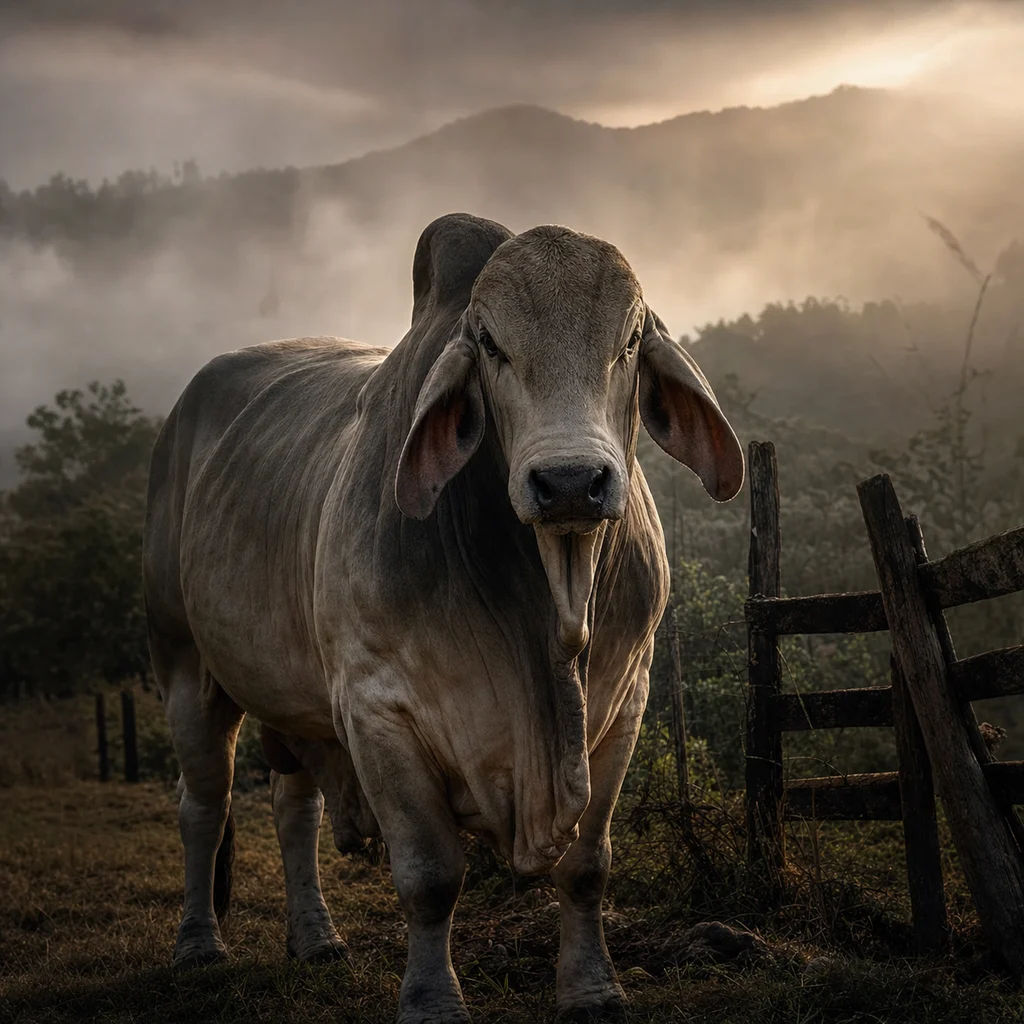
The Brahman is the quintessential Zebu of the Western world, immediately recognizable by its characteristic thoracic hump and large, drooping ears. Renowned for its unparalleled resilience in extreme climates, it stands as a cornerstone of tropical beef production and a symbol of hybrid vigor. Connoisseurs value the breed for its robust, lean beef that offers a distinct savory depth often missing in more common European breeds. It is an intelligent, long-lived animal that provides a unique alternative to the standard marble-heavy beef profiles.
Roots & Heritage
Developed in the United States between 1854 and 1926, the Brahman is the first cattle breed created in the Western Hemisphere, born from a fusion of four Indian Bos indicus breeds including Gir and Nelore. These cattle were imported to create a hardy animal capable of thriving in the humid, tick-prone environments of the American Gulf Coast. Its success led to its distribution across South America, Australia, and Africa, where it remains a foundational genetic pillar for the beef industry.
Meat Profile
Brahman beef is characterized by a lean muscular structure with minimal intramuscular fat compared to temperate Bos taurus breeds. The meat possesses a dense, slightly firmer texture and a deep red color, yielding a pronounced, beefy flavor profile with savory, metallic notes. While it typically grades as Select or low Choice, the fat it does produce is concentrated and flavorful, and the meat benefits significantly from extended aging to enhance tenderness.
In the Kitchen
Due to its leaner nature, Brahman beef requires precision to prevent drying; techniques like sous-vide or low-and-slow smoking are particularly effective for secondary cuts. For steaks, a hard sear followed by a gentle resting period is essential to relax the tighter muscle fibers. Avoid cooking beyond medium-rare for prime cuts to preserve juiciness, as the lack of marbling offers little protection against high-heat overexposure.