About the breed
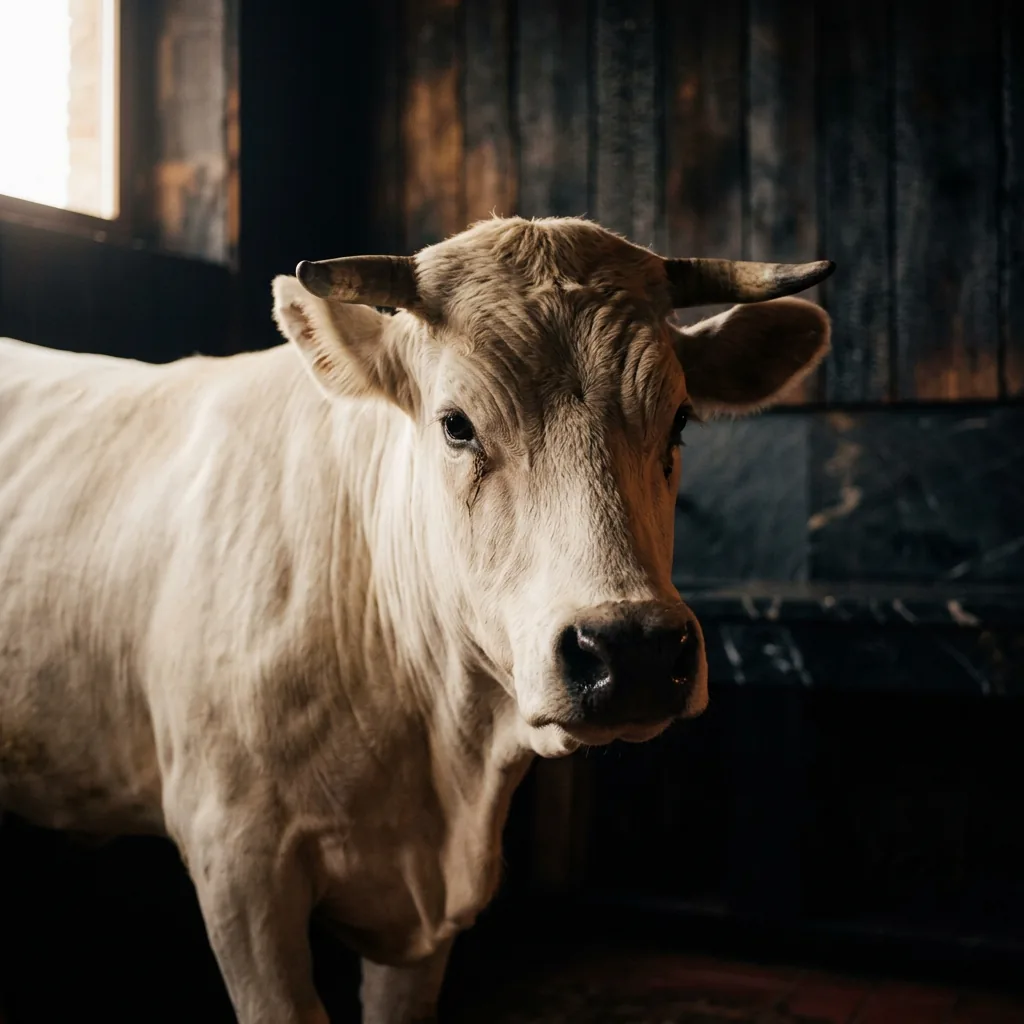
Known as the 'white giant' of Tuscany, the Chianina is one of the oldest and most majestic cattle breeds in existence, reaching weights of over 1,700 kg. It is revered by connoisseurs as the pinnacle of Italian beef, representing a perfect synergy of ancient heritage and impressive physical scale. Its standing in the gastronomic world is anchored by its role as the exclusive source for the legendary Bistecca alla Fiorentina.
Roots & Heritage
Originating in the Val di Chiana in central Italy, the breed's lineage extends back over 2,200 years to the Etruscan and Roman periods where they were prized as sacrificial animals and powerful draft oxen. Modern selection has transitioned the breed into a specialist meat producer while maintaining its unique genetic purity. Authentic Chianina beef is protected under the Vitellone Bianco dell'Appennino Centrale PGI (IGP) status, ensuring strict geographic and rearing standards.
Meat Profile
Chianina meat is distinctively lean with very little intramuscular fat, yet it possesses a remarkably fine grain and high protein content. The flavor is bold, savory, and mineral-heavy, lacking the buttery sweetness of highly marbled breeds but offering a sophisticated depth of 'pure' beef. When dry-aged properly, the texture is firm but tender, providing a satisfyingly clean bite and a porcelain-white external fat cap.
In the Kitchen
The meat is the definitive choice for a true Florentine T-bone, which must be cut thick—at least three fingers wide—and include both the fillet and striploin. It should be grilled over high-heat wood embers (ideally oak or olive) and must never be cooked beyond rare (al sangue) to preserve its juices. Because of its low fat content, avoid slow-cooking or pan-frying at low temperatures, as the meat can toughen quickly if over-exposed to heat.