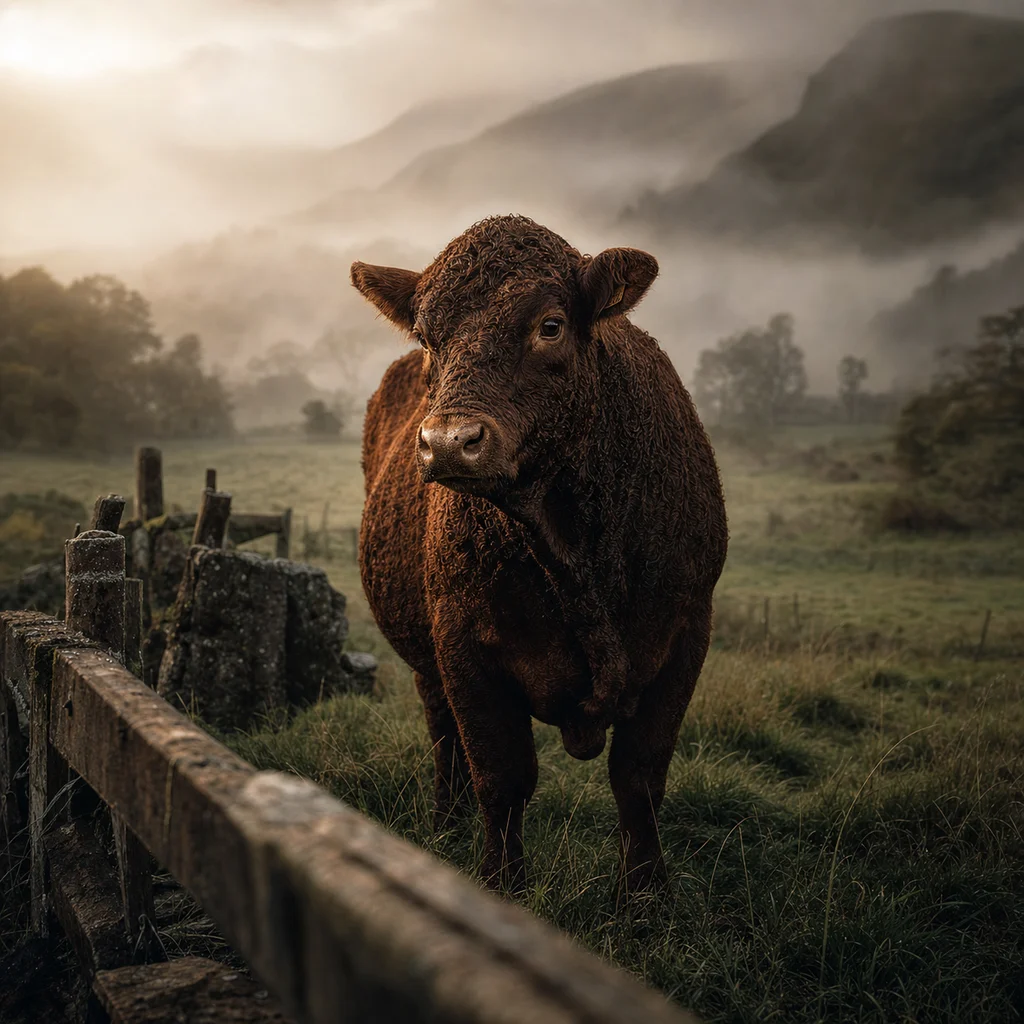
 Heritage Breeds
Devon Red Ruby
About the breed
The Devon Red Ruby, often referred to as the 'Red Rubies of the West,' represents the pinnacle of traditional British beef production. Renowned for their docility and hardiness, these cattle are master foragers, converting the lush, mineral-rich grasses of Southwest England into exceptional protein. Connoisseurs prize the breed for its consistent quality and the deep, complex flavor profile that only a slow-maturing, heritage animal can provide. It remains a cornerstone of the sustainable, grass-fed movement in modern gastronomy.
Roots & Heritage
Hailing from the rugged landscapes of Devon and Somerset, this is one of Britain's oldest native breeds with records dating back to the 16th century. Originally valued as versatile 'triple-purpose' animals for draft, milk, and meat, they played a vital role in the agricultural history of England’s West Country. Today, the breed is strictly selected for its superior beef qualities, maintaining a lineage that has influenced cattle breeding globally.
Meat Profile
The beef is characterized by its deep cherry-red color and excellent intramuscular fat distribution, which is remarkable for a purely grass-fed breed. The fat is creamy and firm, carrying a distinct sweetness and mineral complexity derived from coastal pastures. On the palate, the texture is fine-grained and tender, offering a robust, beefy flavor that lingers without being overwhelming.
In the Kitchen
To honor the heritage of the Red Ruby, focus on dry-aging the primary cuts for at least 28 to 35 days to concentrate the natural sugars. High-heat searing is essential to caramelize the fat cap, but internal temperatures should be kept at medium-rare to preserve the delicate moisture levels of the grass-fed fibers. Secondary cuts like the chuck or brisket are exceptional when slow-braised, releasing a rich, silky collagen that coats the mouth.