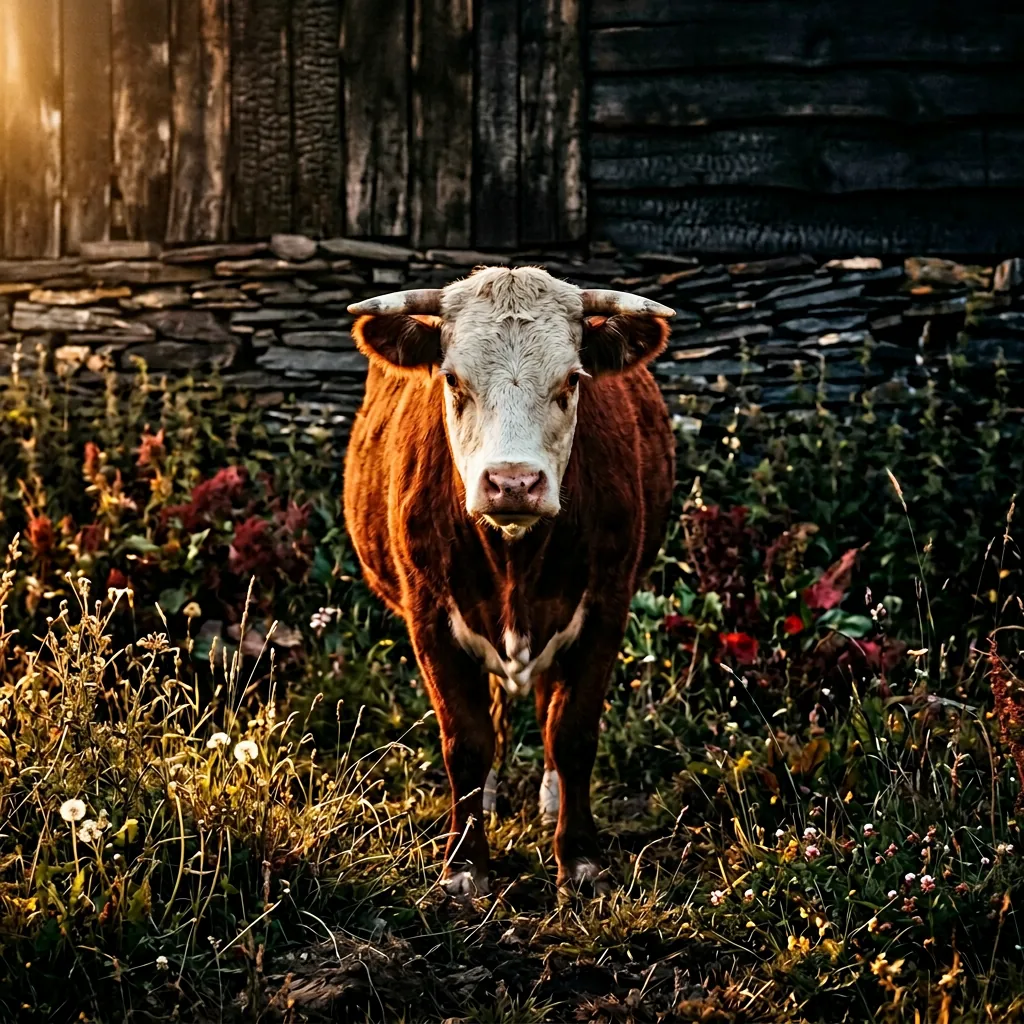
About the breed
Known as the British classic, the Hereford is globally recognized for its iconic red coat and white face, embodying the gold standard of pasture-raised beef. Among connoisseurs, it is prized for its remarkable ability to convert grass into high-quality marbling, resulting in a flavor profile that is both profound and traditional. This breed represents the perfect balance of hardiness and culinary excellence, making it a cornerstone of the premium steakhouse market.
Roots & Heritage
Originating in the lush pastures of Herefordshire, England, during the 18th century, the breed was systematically refined by pioneers like Benjamin Tomkins to prioritize weight gain and meat quality. Its legendary adaptability led to its rapid expansion across the Americas and Australia, where it became the foundation of modern beef production. Today, the Hereford remains a symbol of heritage farming, often associated with sustainable, extensive grazing systems.
Meat Profile
Hereford beef is celebrated for its fine-grained texture and creamy fat distribution that yields a succulent mouthfeel. The meat typically exhibits a deep cherry-red color, contrasted by bright white intramuscular fat that melts at lower temperatures, enhancing the overall juiciness. Its flavor is characteristically clean and buttery, with a subtle sweetness that reflects its grass-centric diet.
In the Kitchen
To honor the Hereford's delicate fat structure, dry-aging for 21-28 days is recommended to concentrate its natural sweetness. For primary cuts like the ribeye or striploin, a high-heat sear followed by a resting period is essential to preserve the internal juices. Because of its marbling, it performs exceptionally well at medium-rare, allowing the fat to render completely without drying out the muscle fibers.