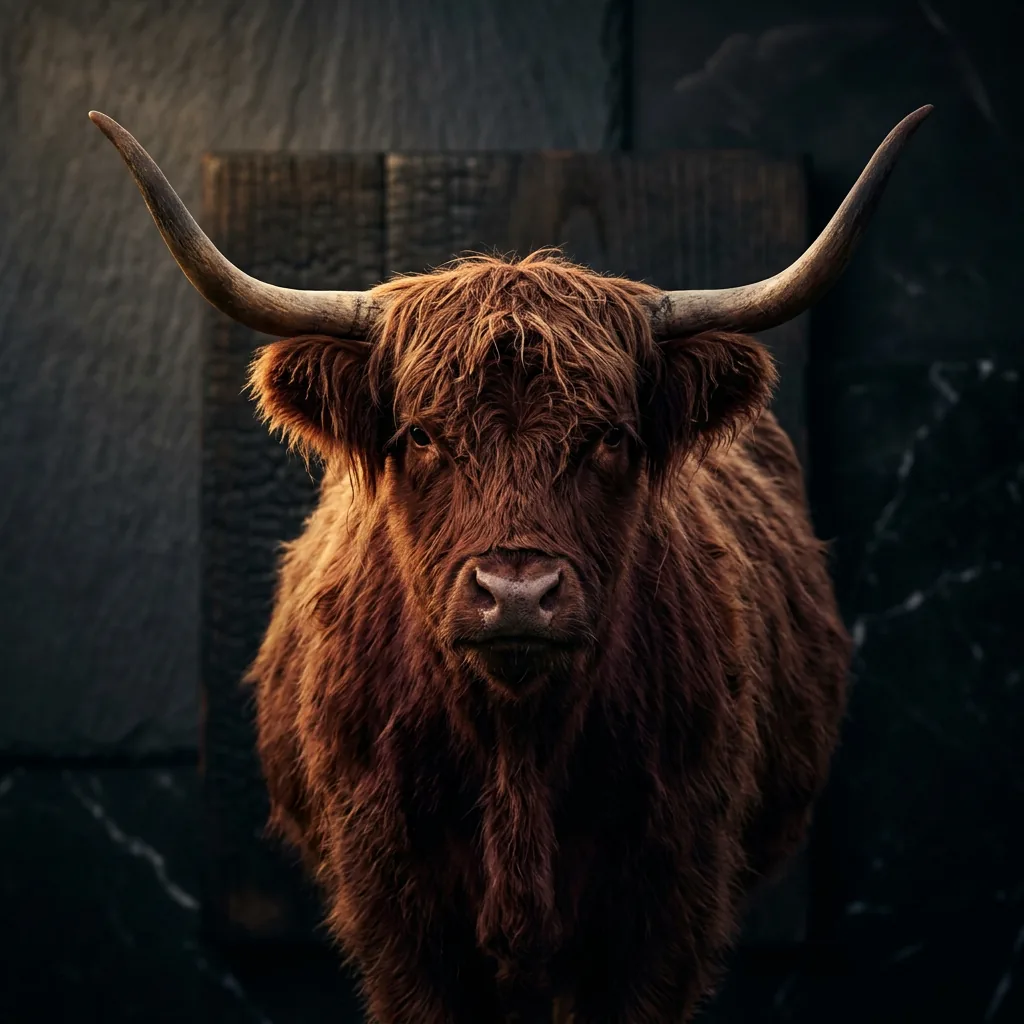
About the breed
Highland Cattle represent the pinnacle of rustic beef production, celebrated for their iconic shaggy appearance and exceptional hardiness. Connoisseurs prize this breed for its slow maturation, which allows for a depth of flavor and nutritional density that industrial breeds simply cannot match. It remains a hallmark of sustainable, extensive farming, producing a meat that is as ethically sound as it is gastronomically superior.
Roots & Heritage
Originating in the rugged Scottish Highlands and the Western Isles, they are the oldest registered cattle breed with a herd book dating back to 1884. Historically, two distinct strains existed—the small, black 'Kyloe' from the islands and a larger red strain from the mainland—which eventually merged into the modern Highland breed. Their evolution was dictated by the harsh Atlantic climate, requiring them to thrive on poor grazing land where modern breeds would perish.
Meat Profile
The meat is distinctively lean yet well-marbled, as the breed's thick double coat provides natural insulation, reducing the need for a heavy layer of subcutaneous backfat. It is characterized by a deep, dark red color, a fine grain, and a robust, slightly gamey flavor profile that reflects its natural diet. Studies often highlight that Highland beef is significantly lower in cholesterol and higher in iron than commercial supermarket beef.
In the Kitchen
Due to its lean nature and fine muscle fibers, Highland beef should be cooked at slightly lower temperatures than standard beef to prevent the proteins from tightening. While prime cuts make exceptional, succulent steaks, the breed's true strength lies in slow-cooking methods like braising, which allows the fine intramuskular fat to melt into a rich, savory essence. Always allow the meat to rest for an extended period after cooking to ensure the juices redistribute perfectly.