Behind every cut name is geography — both the geography of the carcass and the cultural geography of the tradition that named it. Beef is divided into eight primal cuts by American convention, into different regional groupings by French, German, Italian, Argentine, and Japanese tradition, but the muscles themselves are universal. Knowing the primal tells you how that muscle was used during the animal's life — how frequently it contracted, how much collagen it accumulated, how much intramuscular fat it deposited — and therefore exactly how it responds to heat, moisture, and time. This knowledge is the analytical foundation of every other skill in meat cookery.
The Eight Primals of Beef: Structure and Logic
Chuck is the shoulder and neck region, encompassing the muscles that support the head and drive the forelegs. These are among the most-used muscles on the animal — the result is abundant connective tissue, moderate marbling, and deep complex flavor from high myoglobin content. Chuck is the foundation of braising tradition, and modern seam butchery has extracted genuinely premium cuts from it, including the flat iron (infraspinatus) and the Denver steak (serratus ventralis).
Rib covers the upper back from ribs 6 through 12. These muscles — primarily the longissimus dorsi and the spinalis dorsi — did very little physical work during the animal's life. Low usage produces low collagen content and high natural tenderness. The rib primal is home to ribeye, prime rib, tomahawk, and cowboy steak — the most expensive primal per kilogram in most markets, for structural reasons that make evolutionary sense.
Loin extends from rib 13 to the hip bone. The tenderloin, tucked inside the spine and doing almost no muscular work, is the most tender muscle on the animal. Together, the loin contains the filet mignon, the new york strip, the tbone, and the porterhouse — a T-bone from the position in the loin where the tenderloin has grown large enough to meet USDA minimum diameter.
Round is the rear leg musculature — large, heavily worked muscles with minimal intramuscular fat and significant connective tissue. Top round, bottom round, and eye of round are useful for thin-sliced roasting, curing, and grinding, but structurally unforgiving of casual cooking shortcuts that the rib and loin primals can accommodate.
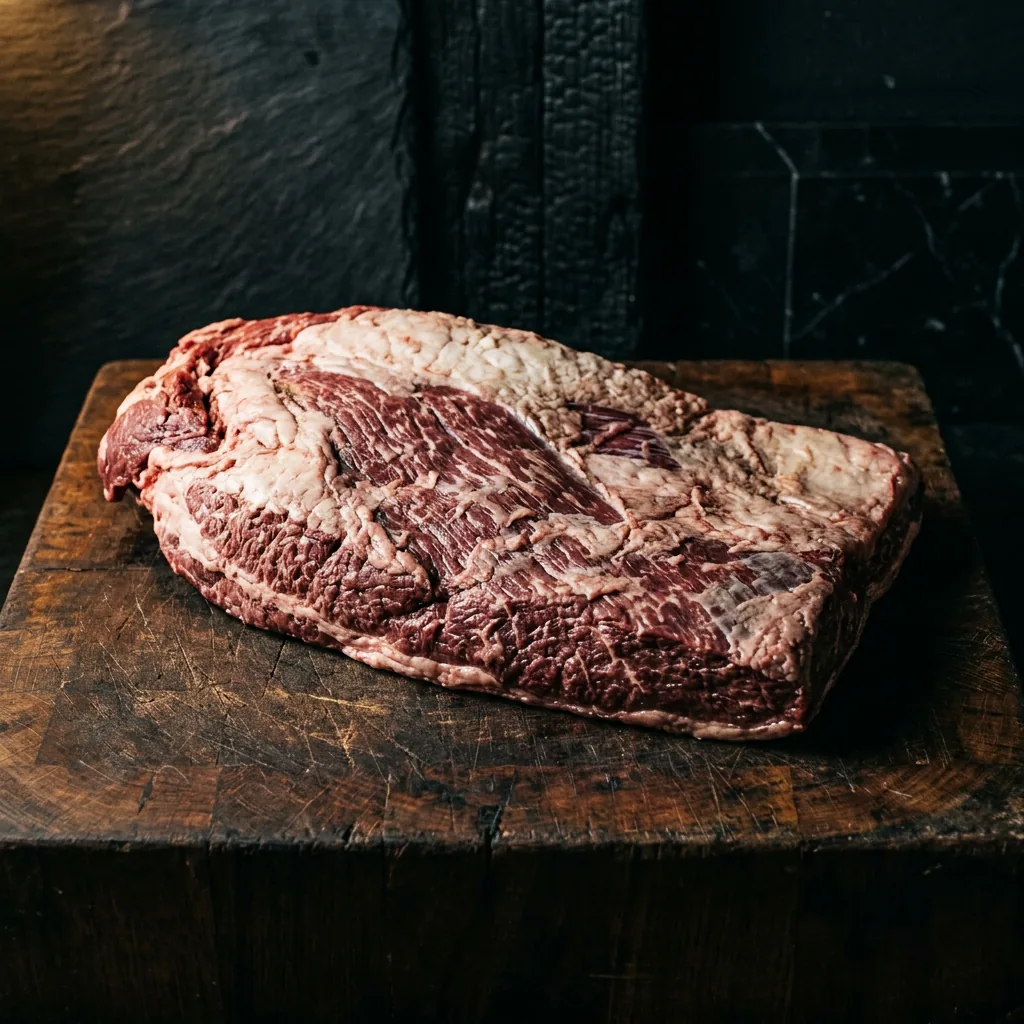
Brisket is the pectoral muscle — one of the most heavily worked muscles on a 600-kilogram animal whose chest bears constant weight and forward momentum. Collagen content is so dense that only 12–18 hours at 107–120°C can convert it to the silky gelatin that defines great Texas BBQ. See brisket for the full treatment. No primal rewards patience more or punishes impatience more severely.
Plate sits below the rib on the underside, containing the skirt steak (diaphragm) and short ribs. The skirt has intense flavor from very high myoglobin content and responds to flash, high-heat cooking. Short ribs from the plate are among the most collagen-rich cuts on the animal.
Flank is the abdominal wall muscle below the loin — lean, coarsely grained, intensely flavored from constant respiratory movement. The flank steak must be cooked precisely to medium-rare and sliced very thin against the grain. The grain direction is non-negotiable.
Shank is the lower leg — virtually pure collagen, connective tissue, and bone with minimal lean muscle. It is not a steak cut; it is a transformation cut requiring sustained moist heat. Cross-cut, it becomes osso buco. Simmered over many hours, it produces the most gelatinous beef stock possible.
| Primal | Key Cuts | Best Cooking Method | Why |
|---|---|---|---|
| Chuck | Flat iron, Denver, chuck eye | Braise, slow roast, grind | High collagen, moderate fat |
| Rib | Ribeye, tomahawk, prime rib | Dry heat, high temperature | Low collagen, high natural fat |
| Loin | Filet mignon, strip, T-bone | Dry heat, precise temperature | Minimal collagen, tender muscle |
| Round | Top round, eye of round | Thin roast, cure, grind | High collagen, low fat |
| Brisket | Flat, point | 12–18 hours at 107–120°C | Extreme collagen concentration |
| Plate | Skirt steak, short ribs | Flash high heat or long braise | High myoglobin, intense flavor |
| Flank | Flank steak | Quick, hot; slice thin against grain | Coarse fiber; no fat buffer |
| Shank | Osso buco, stock | Sustained moist heat | Nearly pure collagen and bone |
Sub-Primals and the Art of Seam Butchery
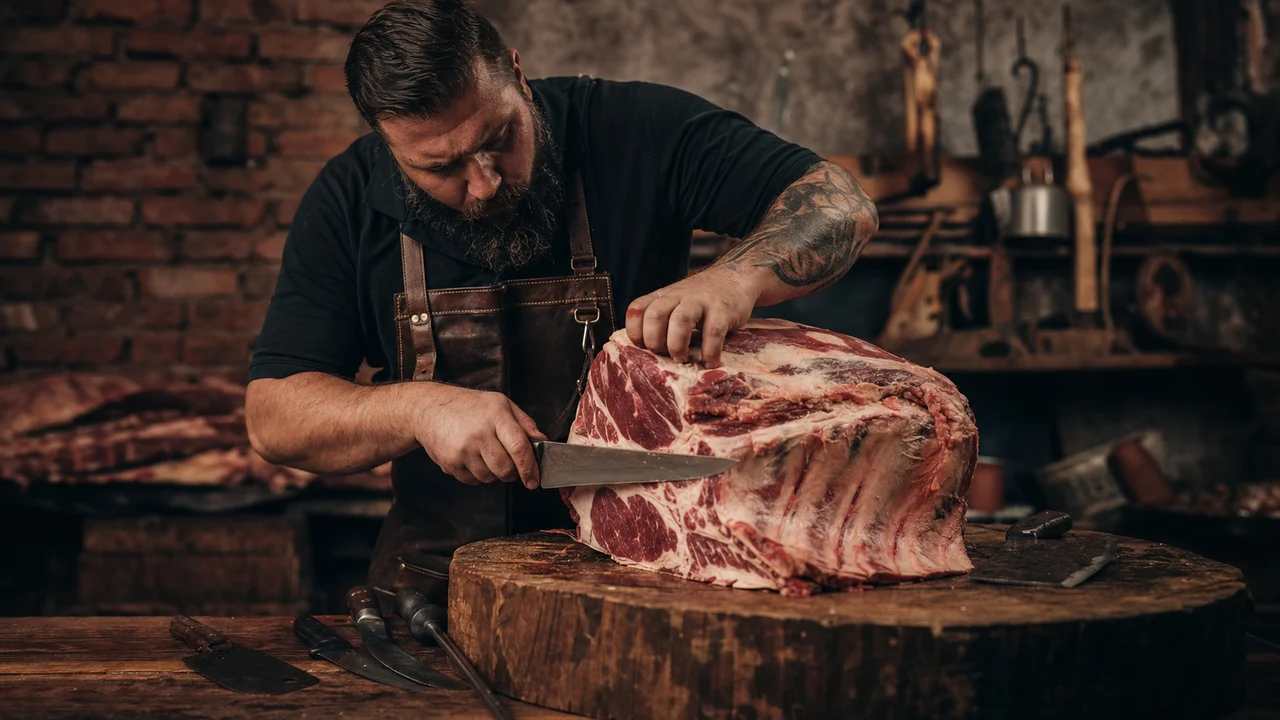
A primal is a region, not a final product. Each primal contains multiple distinct muscles separated by fascial planes — connective tissue boundaries that define the natural seams between muscle groups. Classical butchery cuts through these planes, producing multi-muscle pieces that are then portioned into steaks. Modern seam butchery, refined in France (boucherie de tradition) and now standard at premium butchers worldwide, separates muscles along their natural fascial boundaries before portioning, producing single-muscle cuts with more consistent texture and more predictable cooking behavior.
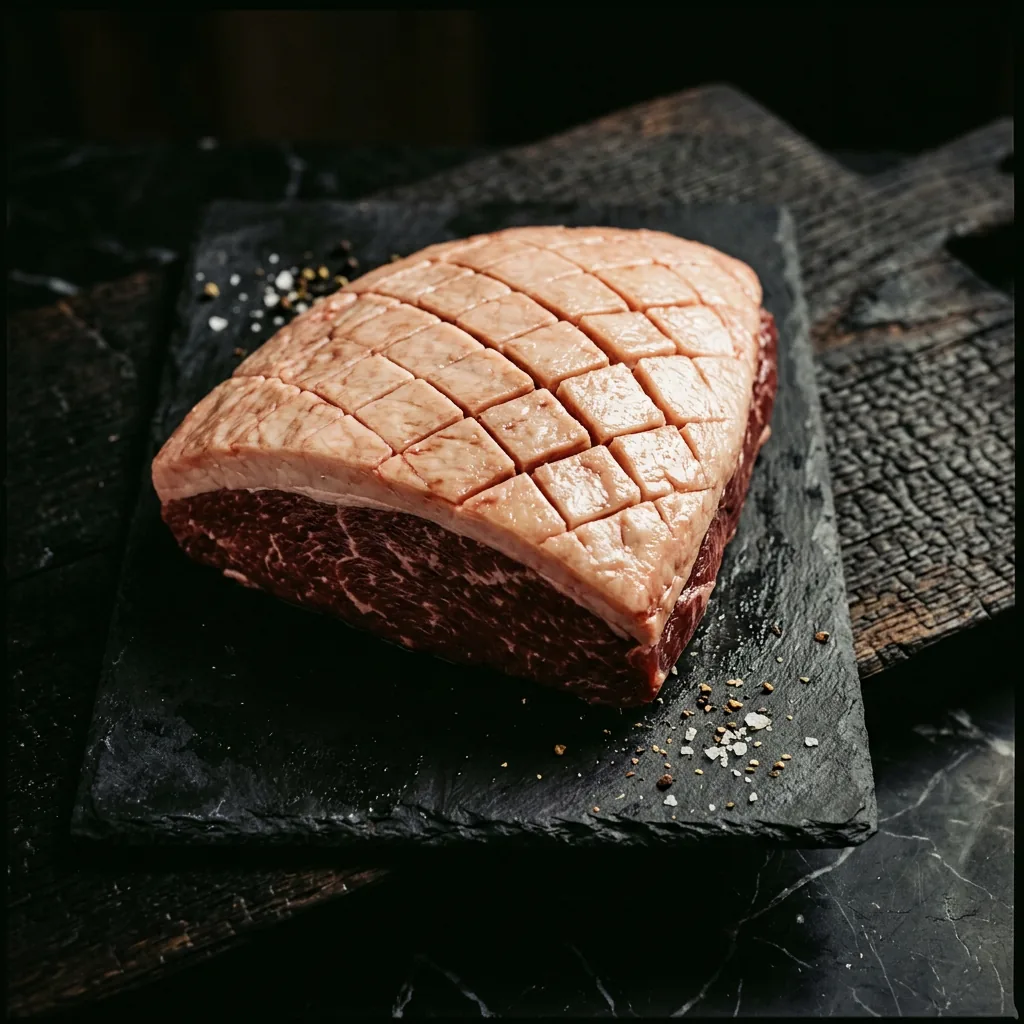
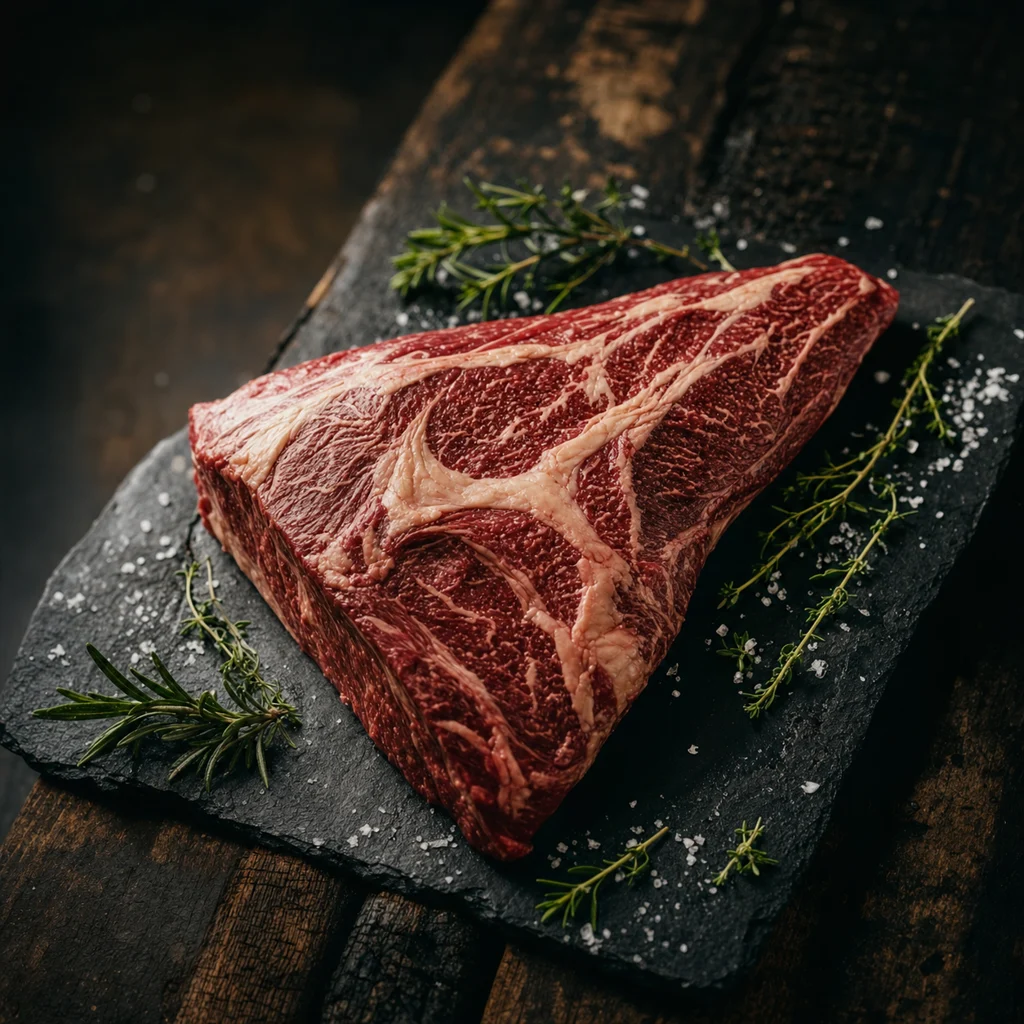
This practice has produced what appear to be "new" cuts but are old muscles given new respect and visibility. The flat iron is the infraspinatus from the chuck shoulder clod — routinely ground before butchers recognized that its one central fascial seam was the only obstacle to a naturally tender, richly flavored steak. The tri tip — the bottom sirloin flap, long popular in California as a barbecue cut — was served in a single Santa Maria restaurant for decades before the rest of the country discovered it. The spider steak (iliacus from the hip socket), the bavette d'aloyau, and the picanha (top sirloin cap, or rump cover) all existed before they had English names widely used beyond their originating traditions.
Pro tip: Every "new" cut on a menu is an old muscle, freshly seamed. When you encounter a cut you do not recognize, ask the butcher which primal it comes from and what the anatomical muscle name is. The answer tells you everything: how much work the muscle did, how much collagen it carries, and exactly how it should be cooked.
International Cutting Traditions
French tradition (découpe française) produces a greater number of smaller, more precisely defined cuts by following natural seam lines more aggressively than the American primal approach. The French recognize the onglet (hanger steak), the bavette d'aloyau, the araignée (spider steak), and the poire as distinct named cuts — muscles that American butchery collapses into larger regional pieces. The entire language of modern premium butchery descends from French tradition.
Argentine tradition centers the parrilla as the defining cooking medium, and the cut map reflects this. The picanha (known as tapa de cuadril in Argentina, picanha in Brazil), the tri tip, and the entraña are positioned as premium grill cuts in South American tradition in ways that North American butchery historically did not recognize.
Japanese tradition has produced the most anatomically precise cutting map in global butchery: the zabuton (chuck short rib, boneless), ichibo (top sirloin cap), and misono cuts are defined not just by muscle group but by the specific sub-section of the muscle with the highest marbling density for thin-slice sukiyaki service. Japanese wagyu butchery operates at anatomical granularity that makes even French seam butchery seem broad.
Lamb and Veal: The Same Logic, Different Species
The activity-based logic governing beef primal selection applies directly to other species. Lamb's four main primals — shoulder, rack, loin, and leg — map onto the same hard-working-versus-low-use spectrum. The lamb rack (ribs 5–12) is tender, elegant, and quick-cooking — the equivalent of the beef rib primal. The shoulder, heavily worked and collagen-rich, slow-roasts at 150°C for 5–6 hours into something that rivals brisket in its transformation.
Veal primal logic mirrors beef but with softer connective tissue throughout, since the animal has not lived long enough to fully develop collagen networks. The veal rack and veal tenderloin are benchmark French restaurant cuts for precisely this reason — they cook quickly, stay pale, and require only the most refined technique to reveal their characteristic milky delicacy.
Pro tip: Buy by the sub-primal whenever possible. A whole chuck eye roll, a full strip loin, or a complete packer brisket costs significantly less per kilogram than pre-portioned steaks and allows you to control thickness, portion size, and aging. The butcher's labor is part of what you pay for in pre-portioned steaks — eliminate that labor and reinvest the savings in provenance and grade.
Summary
The primal map is the master key to meat cookery. Know which primal a cut comes from, understand how actively the muscle worked during the animal's life, and you know precisely how much collagen it contains, how much intramuscular fat it deposited, and what combination of heat, time, and moisture will bring it to its optimal state. Seam butchery has expanded the vocabulary of available cuts without changing the underlying anatomy. International traditions have produced different maps of the same animal, and familiarity with those maps transforms confusing foreign menus into legible, navigable systems.