← Heritage Breeds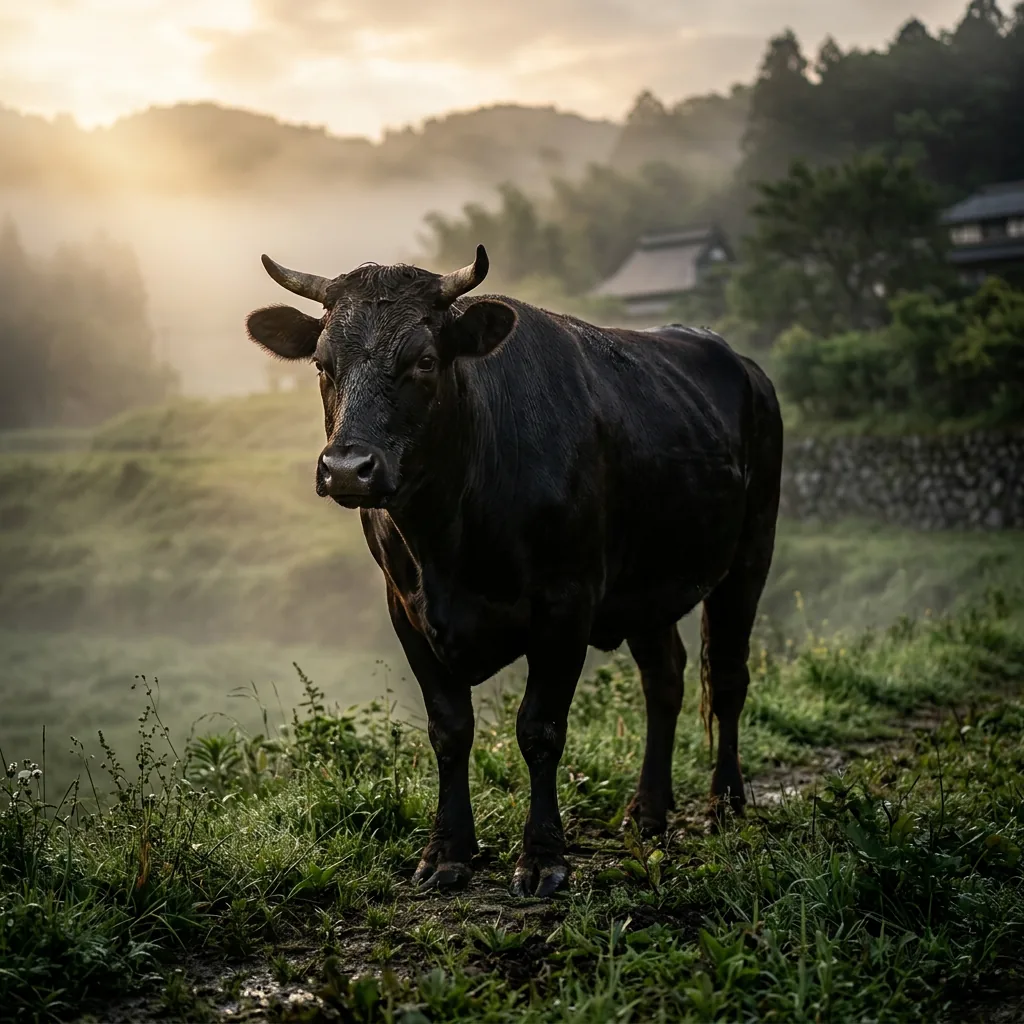
Heritage Breeds · 26
Beef
Heritage and premium cattle — from Wagyu and Galician blonde to Galloway and Highland.
Japan (Hyōgo, Kagoshima, Miyazaki, Kobe regions)
Wagyu A5 (Japanese Black)
BMS (Beef Marbling Standard) 8–12, the highest possible grade · Genetically predisposed to high intramuscular fat with very low melting point (~25°C)
Hyōgo Prefecture, Japan
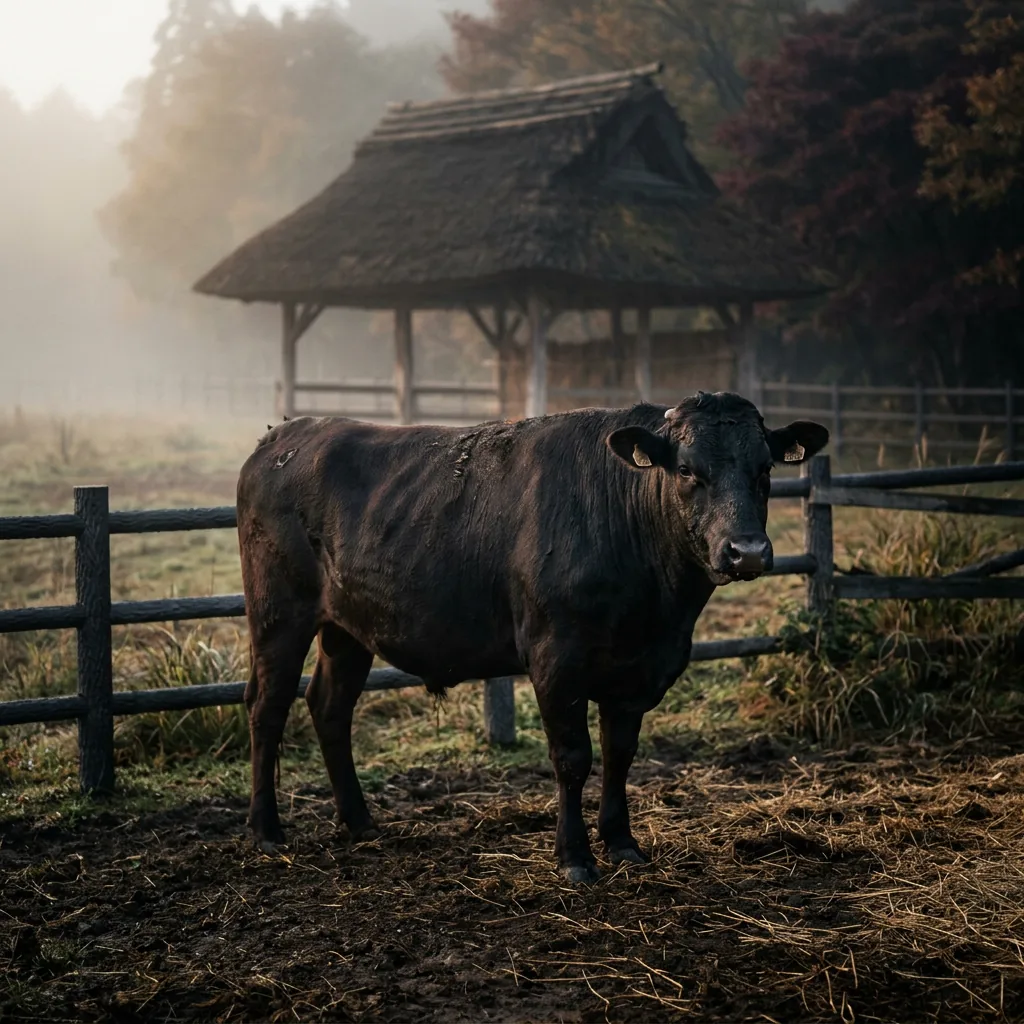
Kobe Beef
Strictly Tajima bloodline of Japanese Black cattle, born and raised in Hyōgo · BMS ≥ 6, yield grade A or B, carcass ≤ 499.9 kg
Tajima region, Hyōgo, Japan
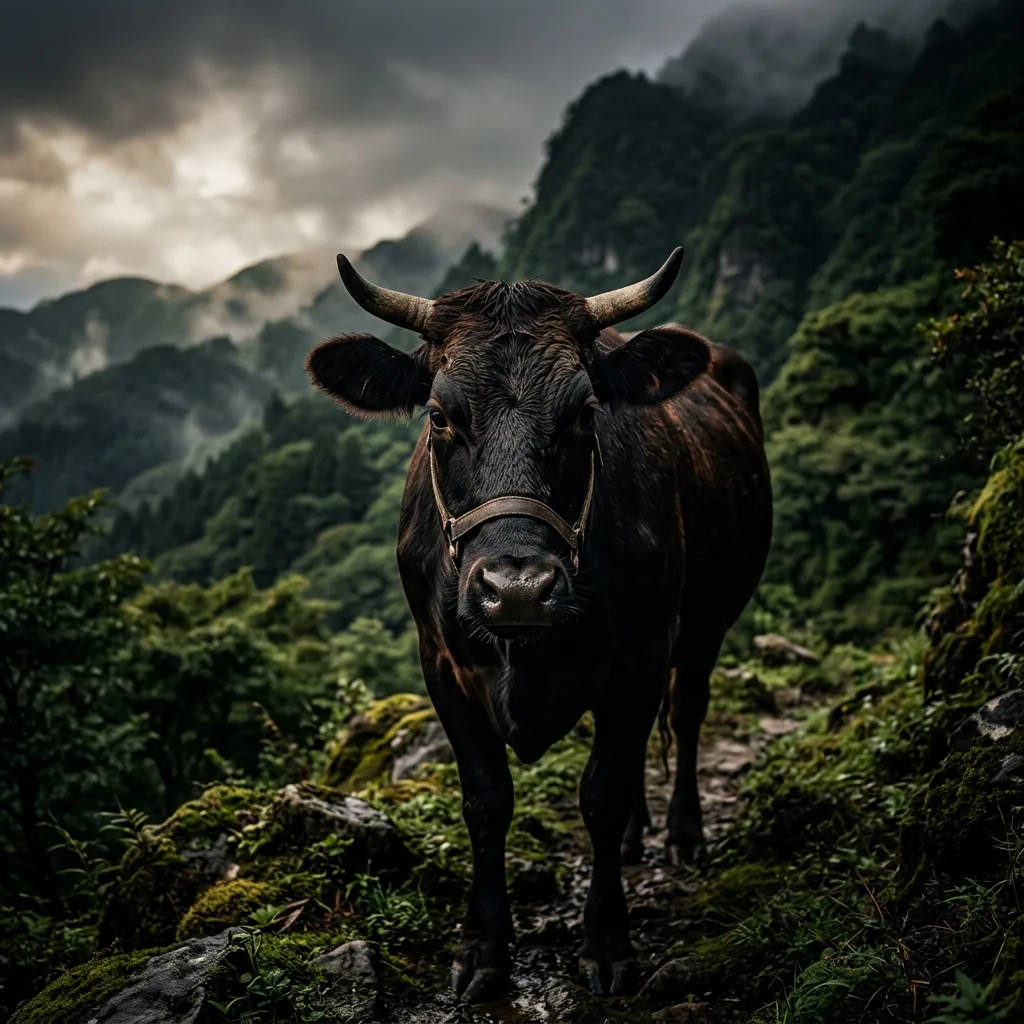
Tajima Wagyu
Foundation bloodline behind Kobe, Matsusaka, and Ōmi beef · Compact frame, slow growth, exceptional fineness of marbling
Aberdeenshire & Angus, Scotland
Black Angus
Naturally hornless (polled), solid black coat · Excellent marbling, fine grain, balanced fat-to-lean ratio
Herefordshire, England
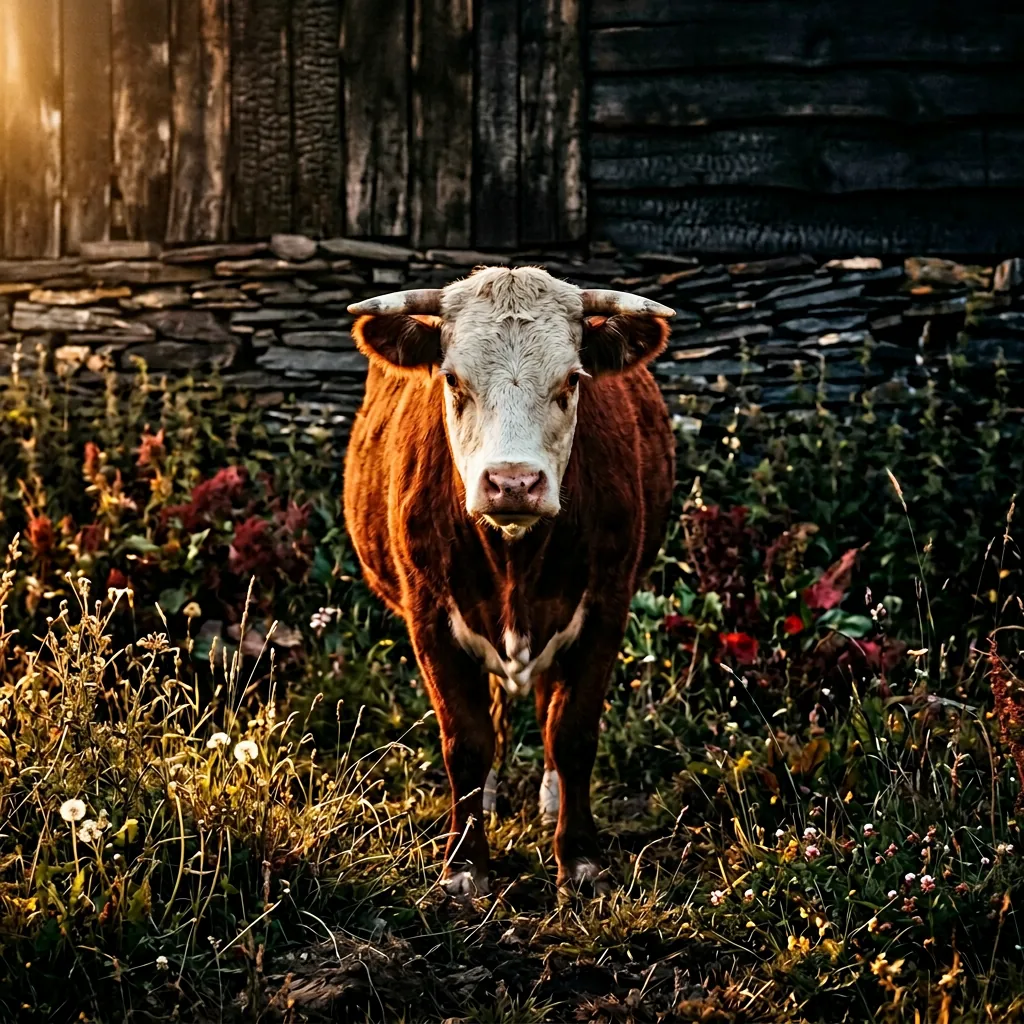
Hereford
Distinctive red body with white face, crest, dewlap, and underline · Robust foragers, excellent feed efficiency on pasture
Simme Valley, Switzerland
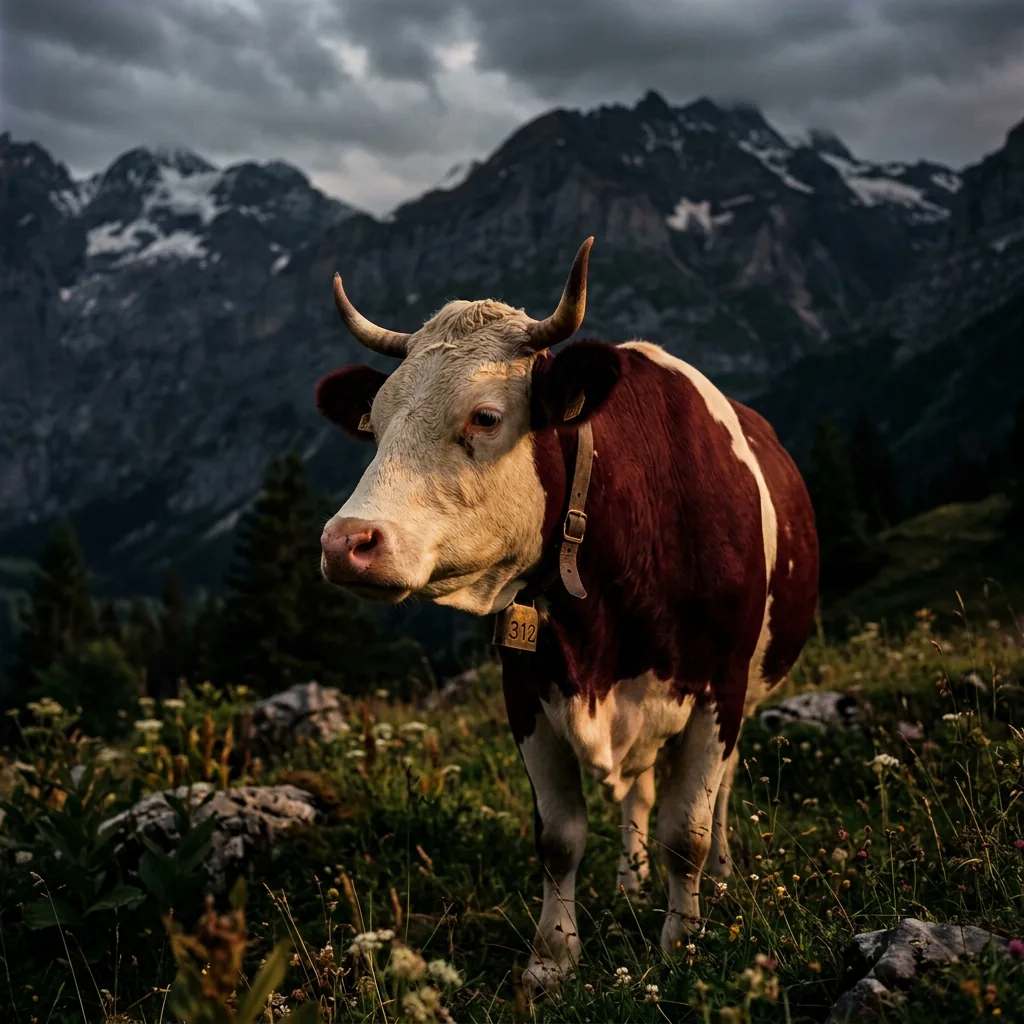
Simmental
Dual-purpose: prized for both milk and beef · Large frame, fast growth, lean cuts with subtle marbling
Charolles, Burgundy, France
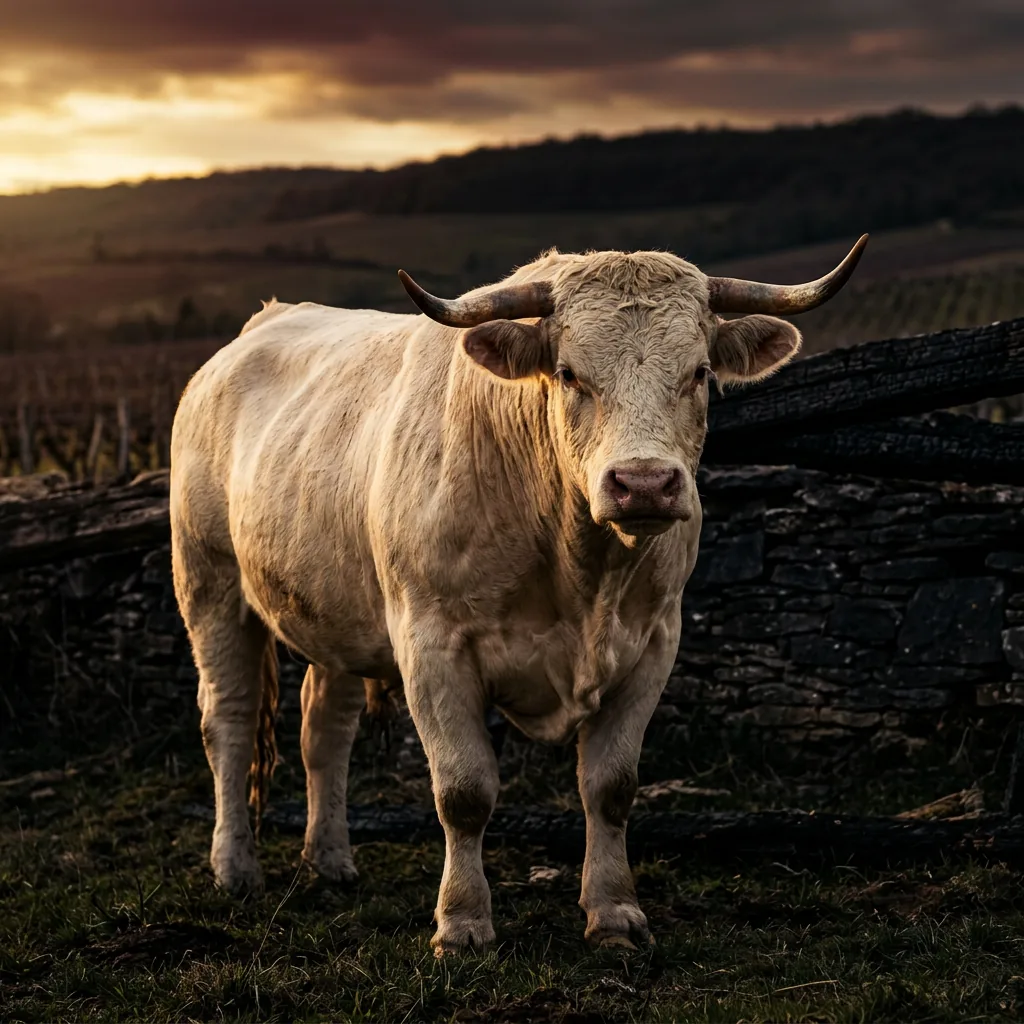
Charolais
Cream-white coat, very large muscular frame · Lean, well-textured meat with low fat cover
Val di Chiana, Tuscany, Italy
Chianina
World's largest cattle breed — bulls reach 1,750+ kg · Pure white coat, black skin pigment, athletic build
Galicia, Spain
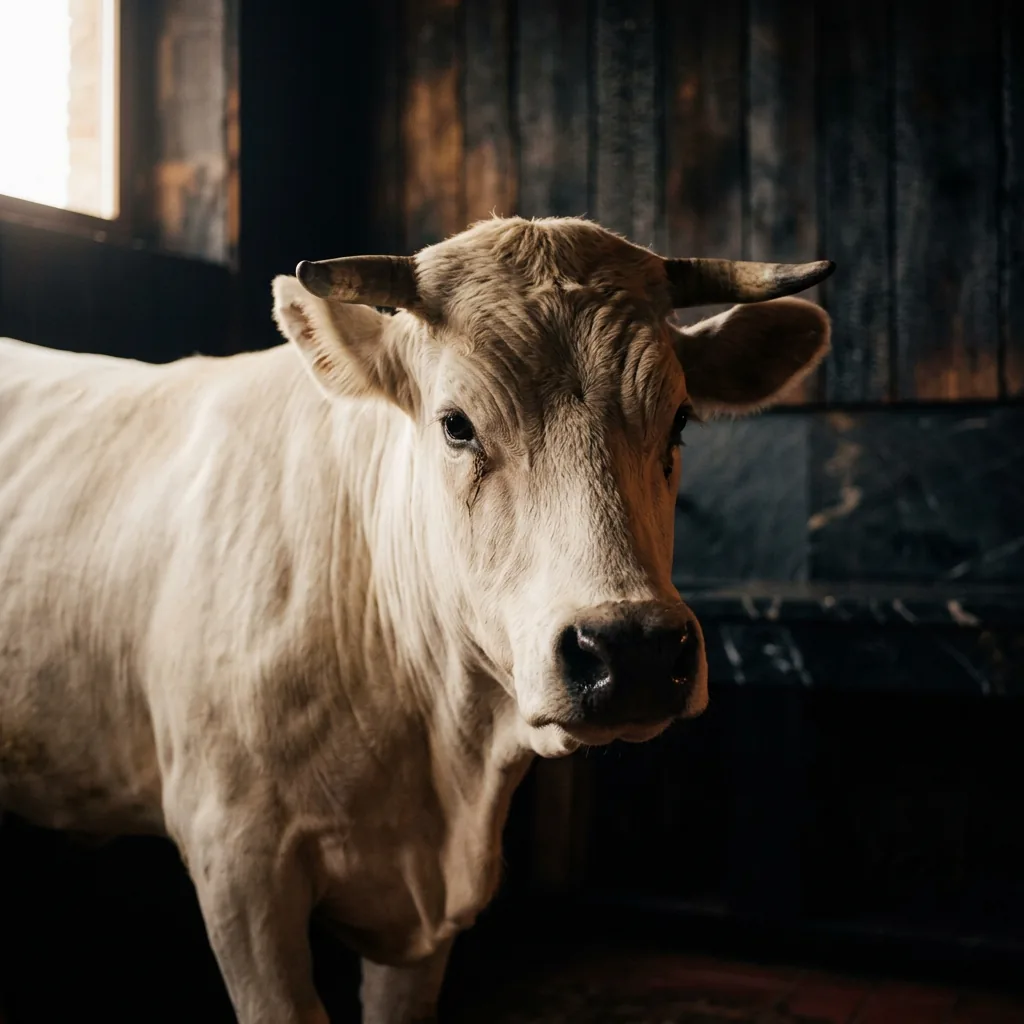
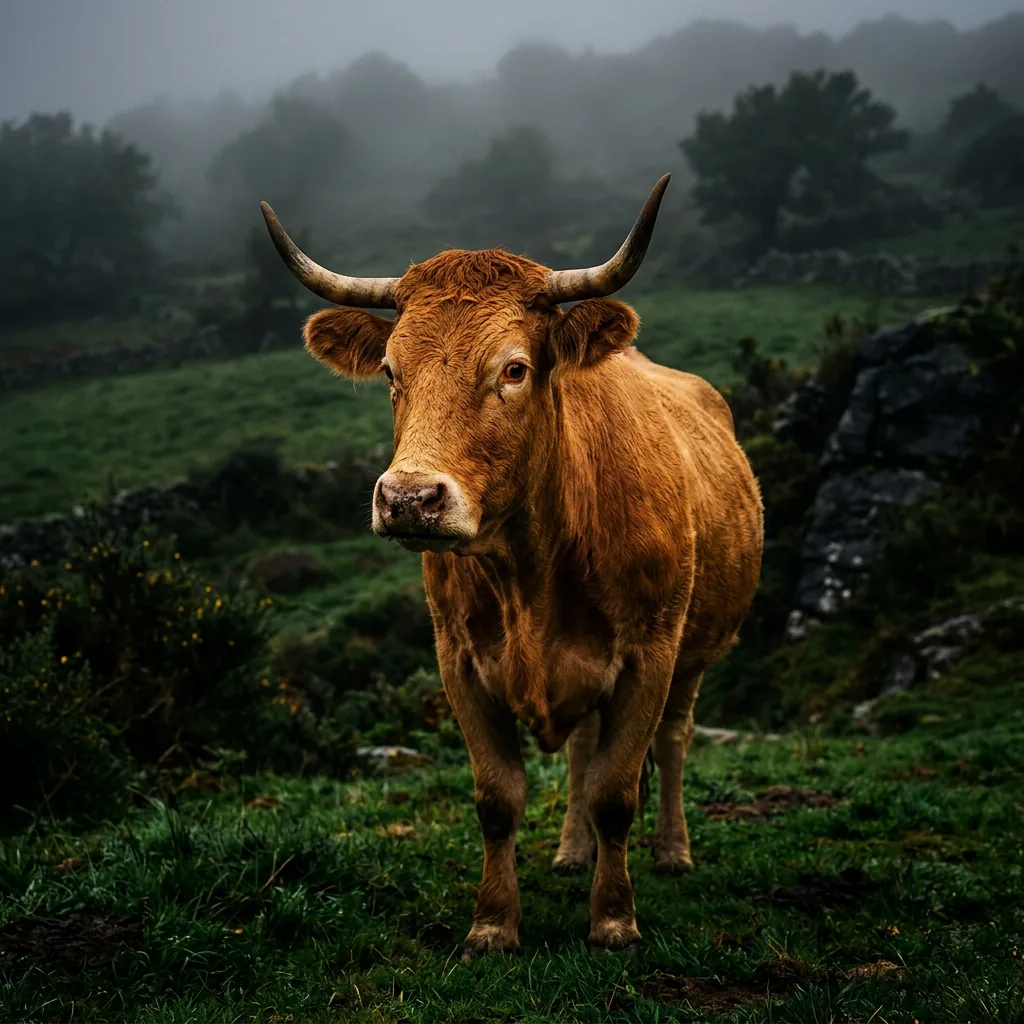
Rubia Gallega (Galician Blonde)
Honey-blonde coat; raised on lush Atlantic pastures · Often slaughtered as ex-dairy cows aged 8–18 years for deep, mineral, almost cheesy flavor
Scottish Highlands & Hebrides
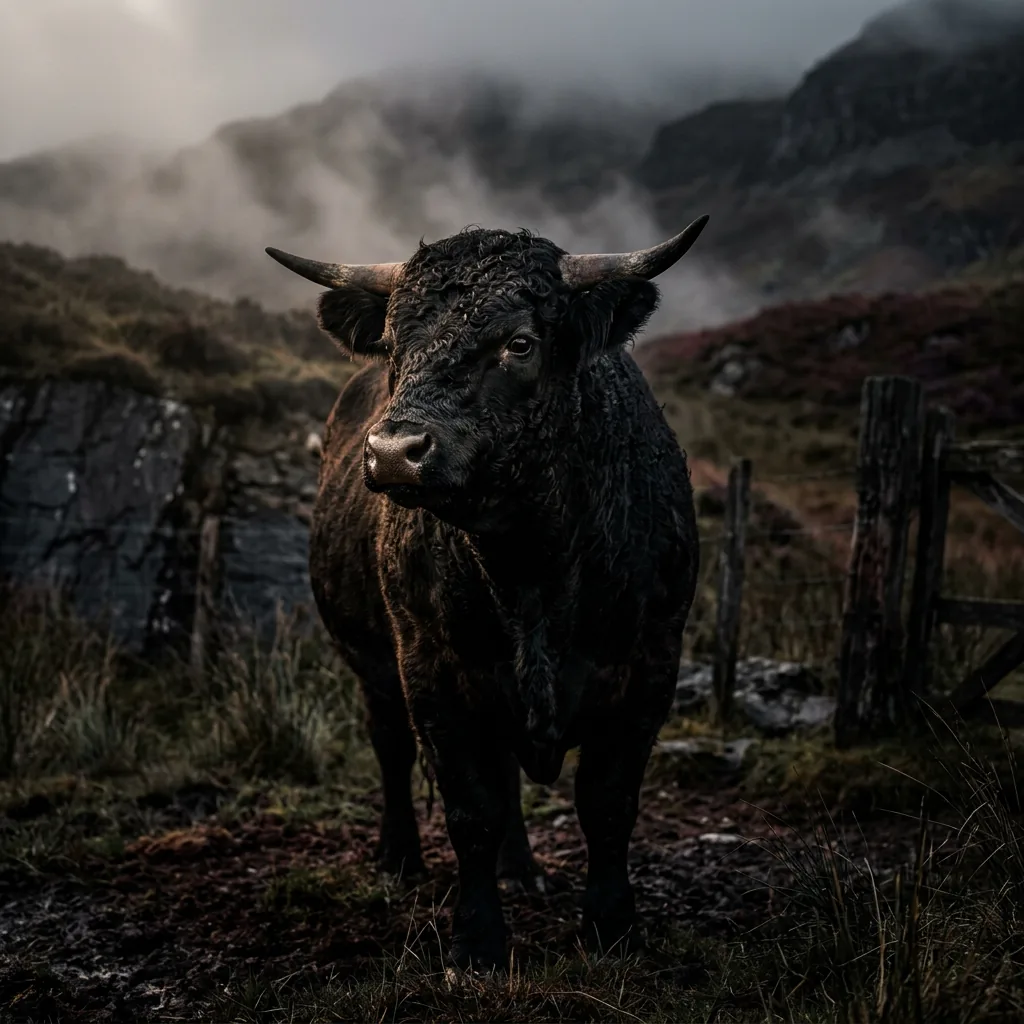
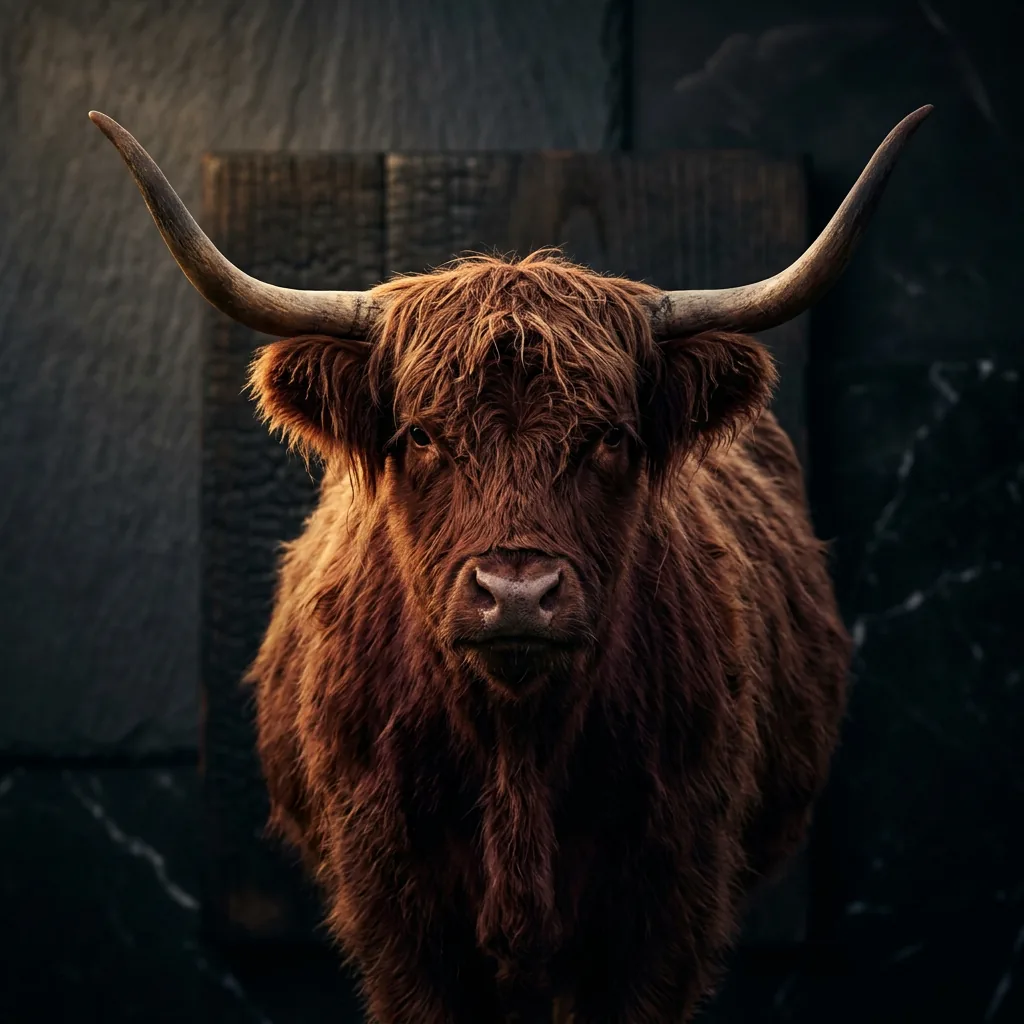
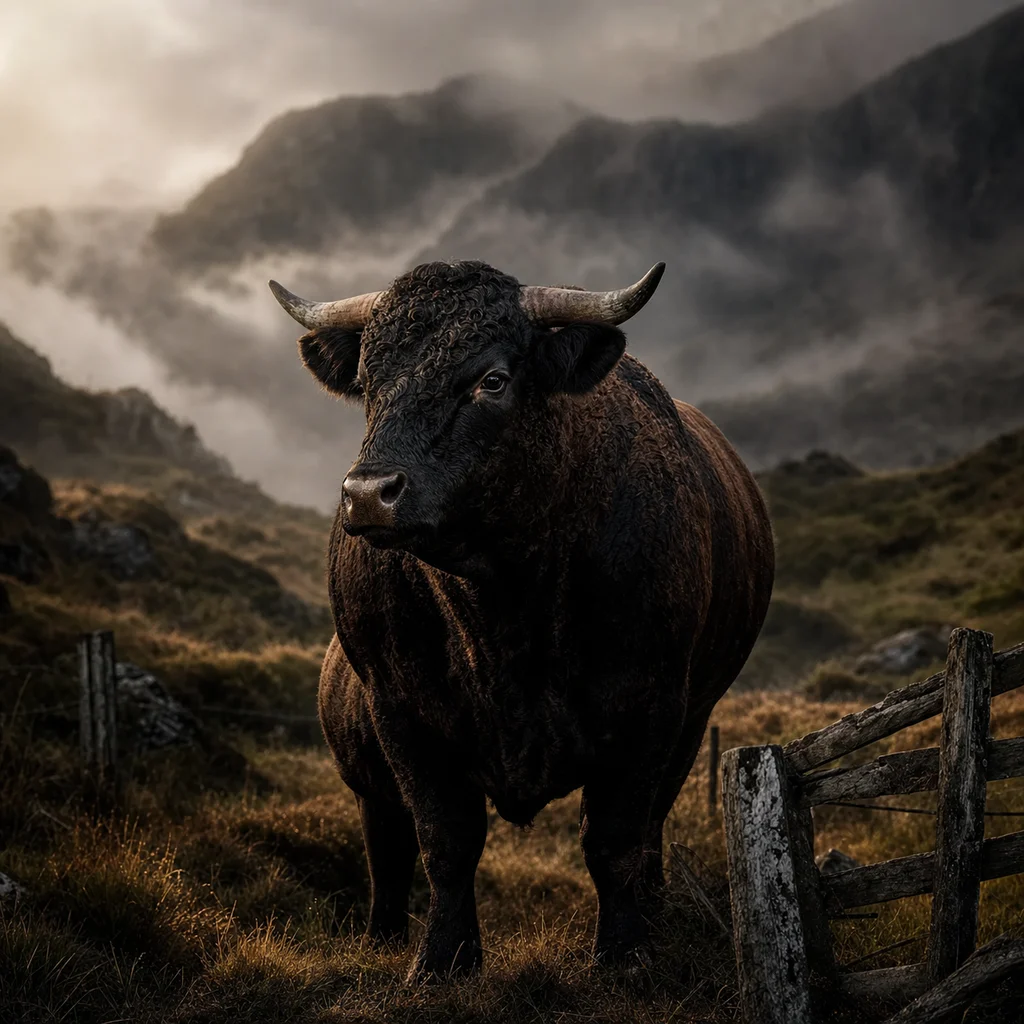
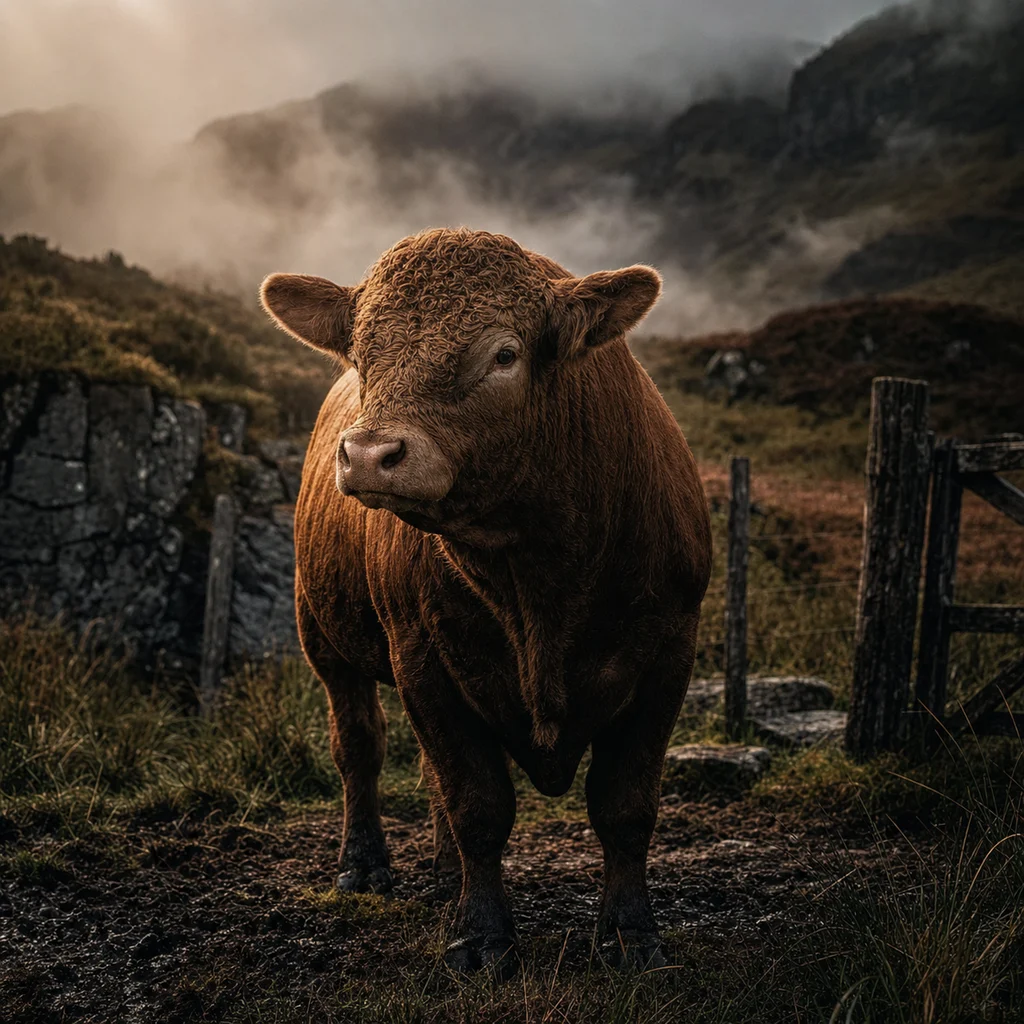
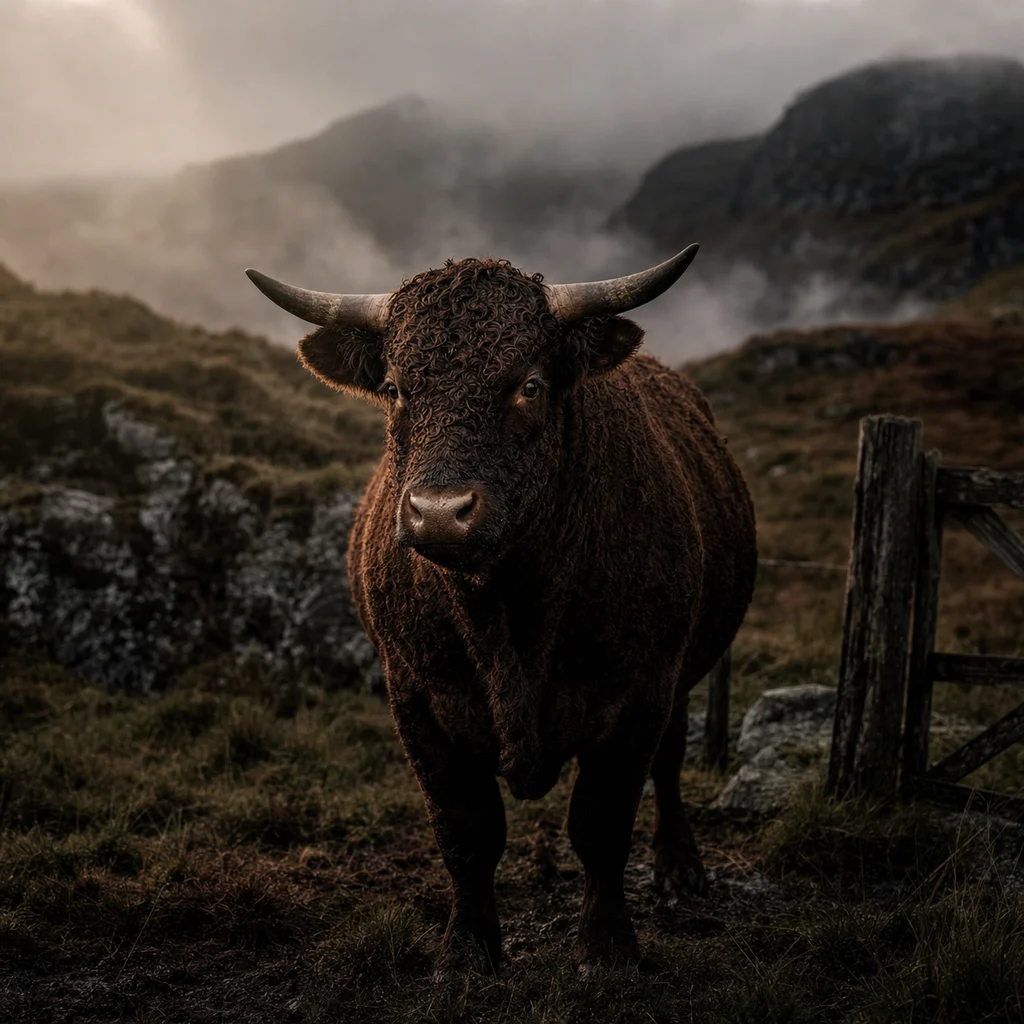
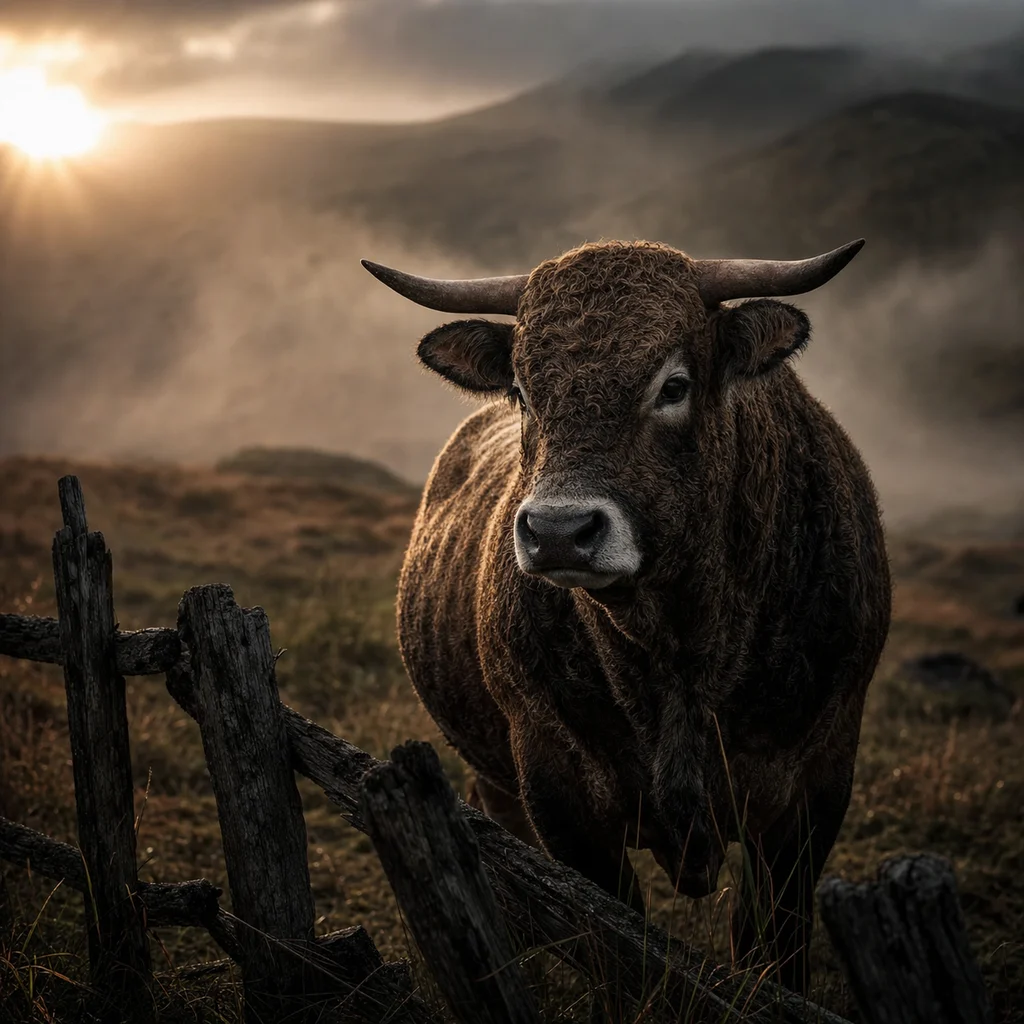
Highland Cattle
Iconic shaggy double coat (no thick subcutaneous fat needed) · Slow-growing, lean meat with fine grain and pronounced beef flavor
Scotland (SW Galloway region)
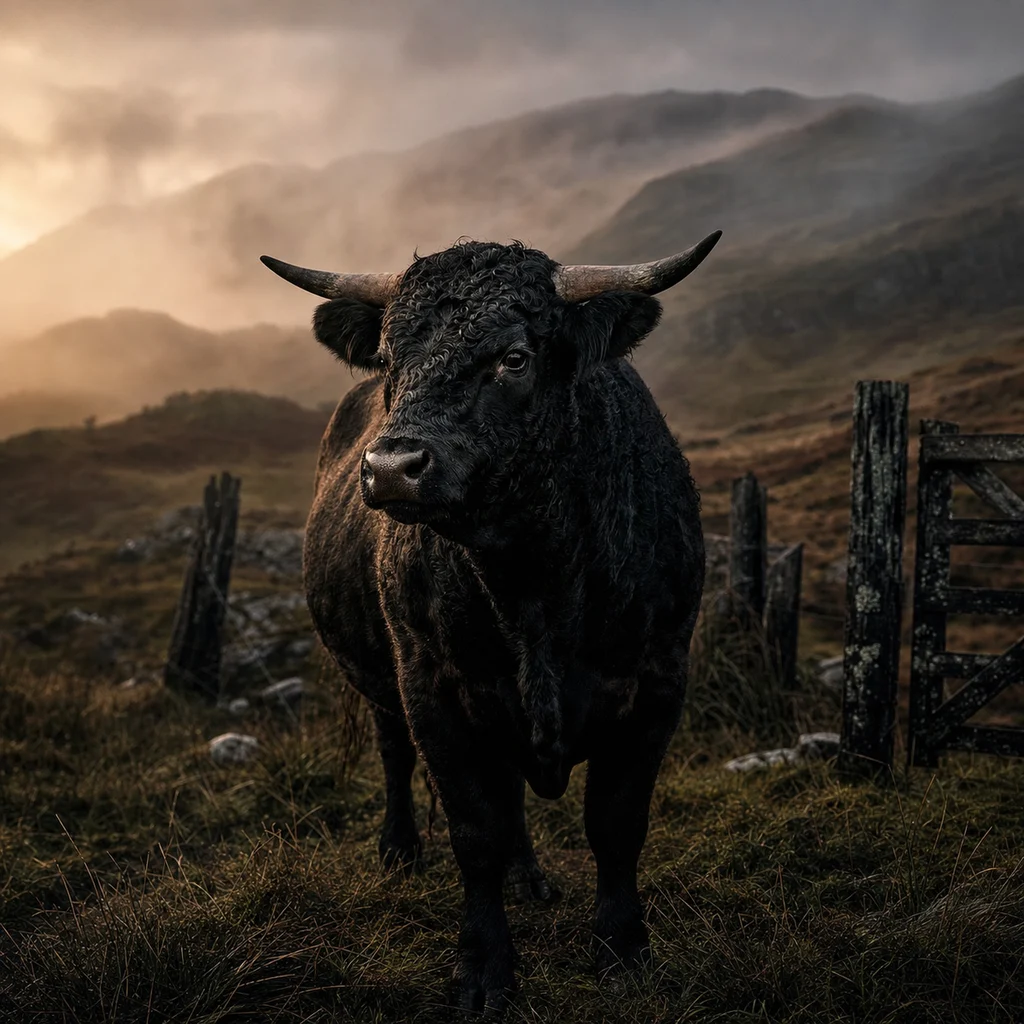
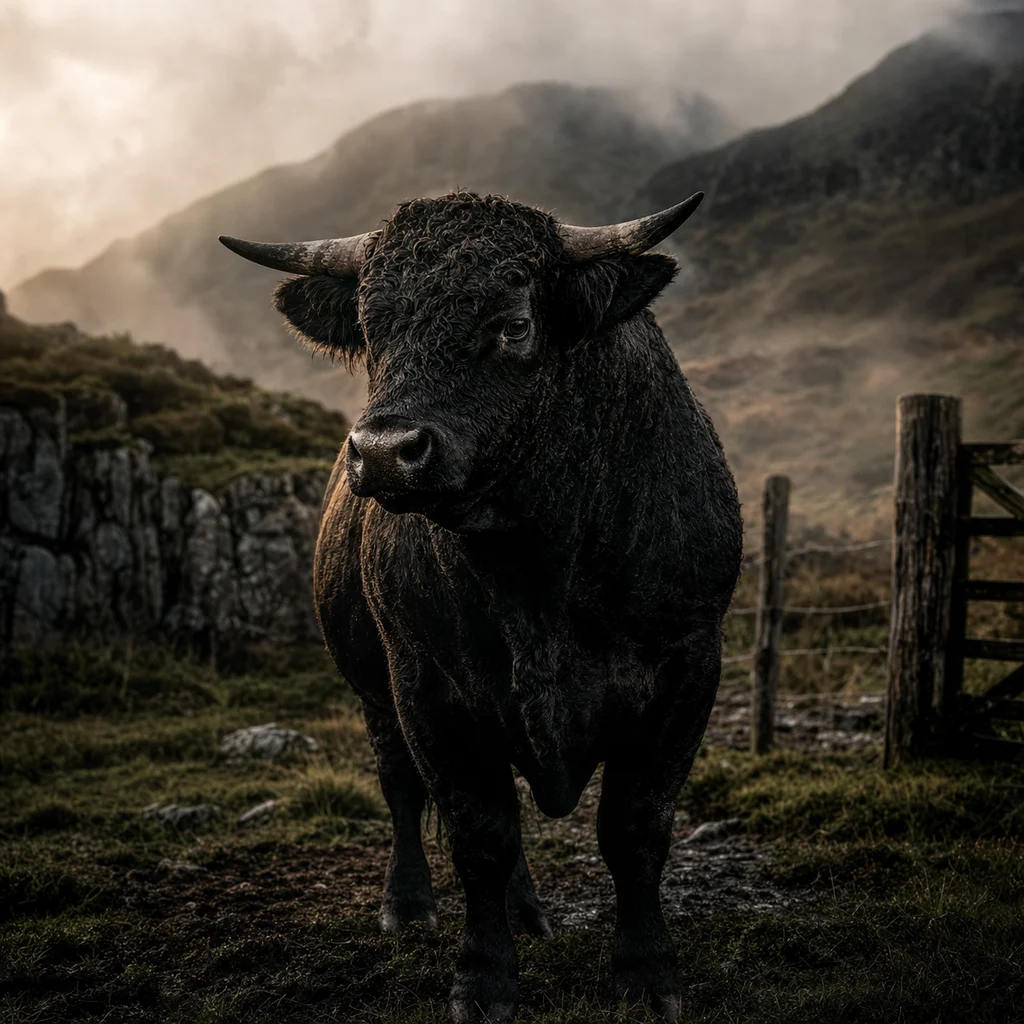
Galloway
Naturally polled with thick double coat that sheds in summer heat · Very lean beef with ~1% saturated fat and elevated omega-3 fatty acids
Scotland (Galloway region)
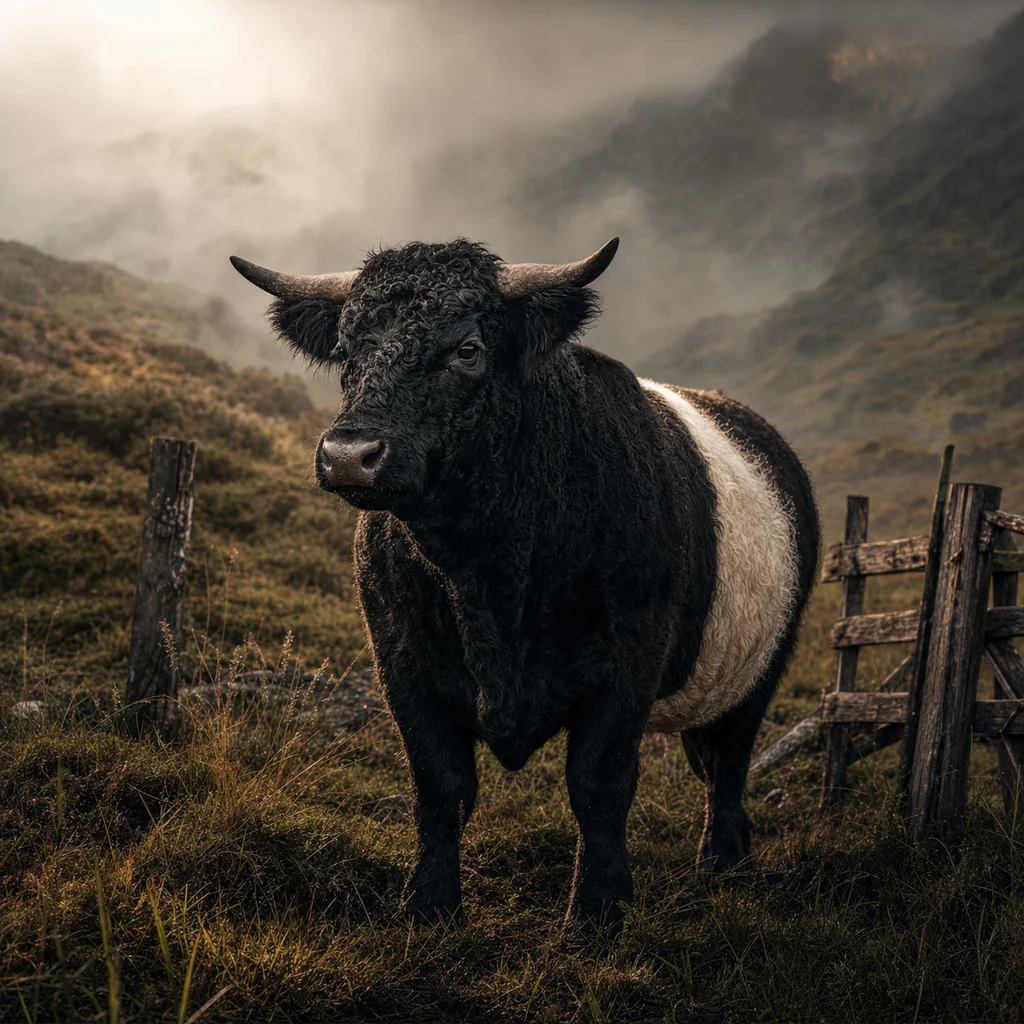
Belted Galloway
Distinctive white belt encircling the black, dun, or red body · Double-layered weatherproof coat; exceptional cold and wet tolerance
Austria (Pinzgau valley, Alps)
Pinzgauer
Chestnut-red body with white markings on the back and flanks · Superior marbling for a lean European breed; fine-fibred, tender muscle
Germany (Bavaria and Franconia)
Gelbvieh
Red-gold to russet coat; large, muscular frame · Largest ribeye area per 100 kg of any breed tested in USDA Clay Center trials
France (Auvergne / Massif Central)
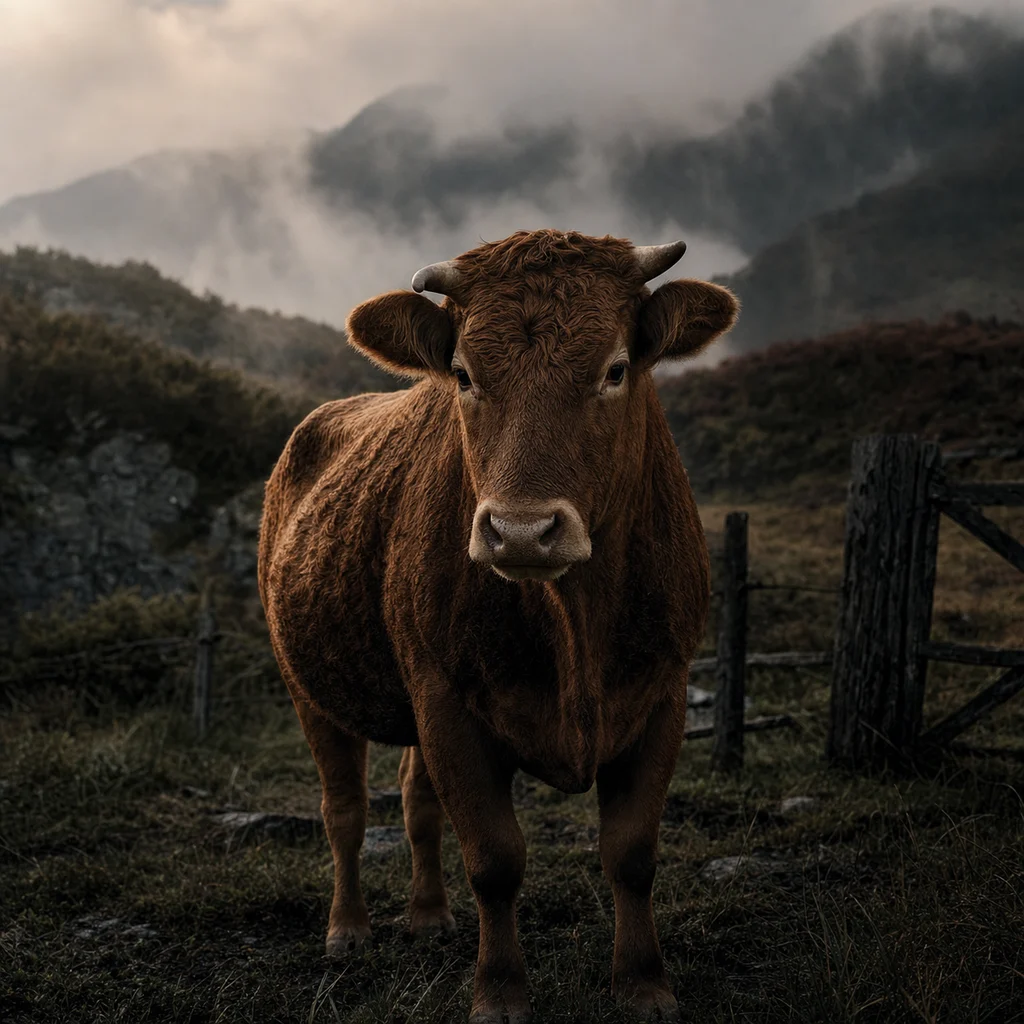
Salers
Dark mahogany red coat; naturally horned with polled lines available · Largest pelvic area of any major beef breed, enabling exceptional calving ease
France (Aubrac plateau, Aveyron)
Aubrac
Tawny/wheaten coat with distinctive lyre-shaped horns · Very hardy; high disease resistance and excellent longevity
France (Maine and Loire Valley)
Maine-Anjou (Rouge des Prés)
Largest French beef breed; distinctive red-and-white coat · Heavily muscled; bulls 1,000–1,100 kg, cows 700–750 kg
Australia (Murray River Valley, Victoria/NSW)
Murray Grey
Silver-grey coat; naturally polled with quiet, docile temperament · Exceptional genetic tenderness — highest GeneSTAR T2 scores of any tested breed
Belgium
Belgian Blue
Extreme double-muscling from myostatin gene deletion; 20%+ more muscle than conventional cattle · Very lean carcass with up to 76% lean content and 70% dressing yield
Italy (Piedmont, NW Italy)
Piedmontese
Double-muscling via myostatin pathway; lower fat deposition than Belgian Blue · Higher collagen solubility → exceptional tenderness despite lean profile
United States (Texas), descended from Spanish cattle brought by conquistadors in the 1500s
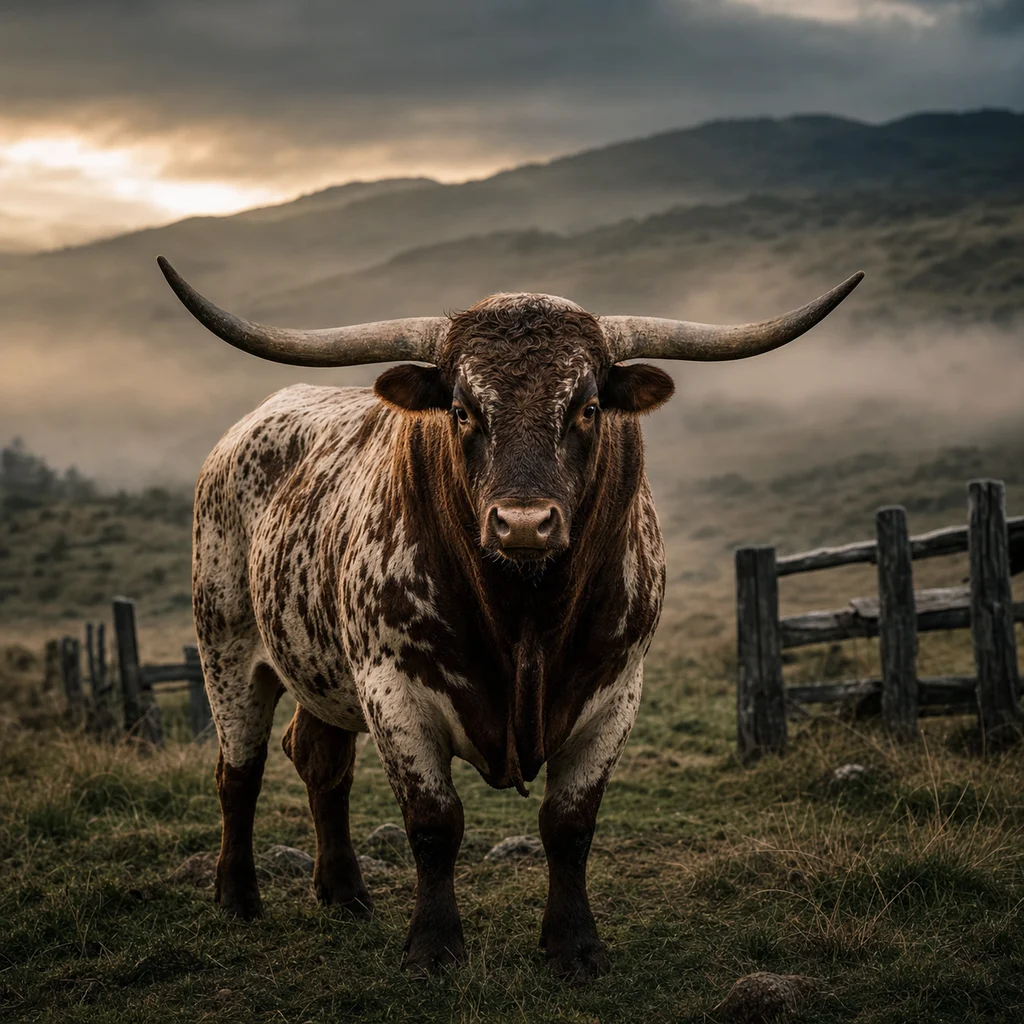
Texas Longhorn
Iconic spreading horns spanning 1.5–2.5 m tip to tip · Exceptionally lean, low-cholesterol beef with rich mineral flavor
United States, developed from Indian Bos indicus zebu breeds (Gir, Nelore, Krishna Valley) in the early 20th century
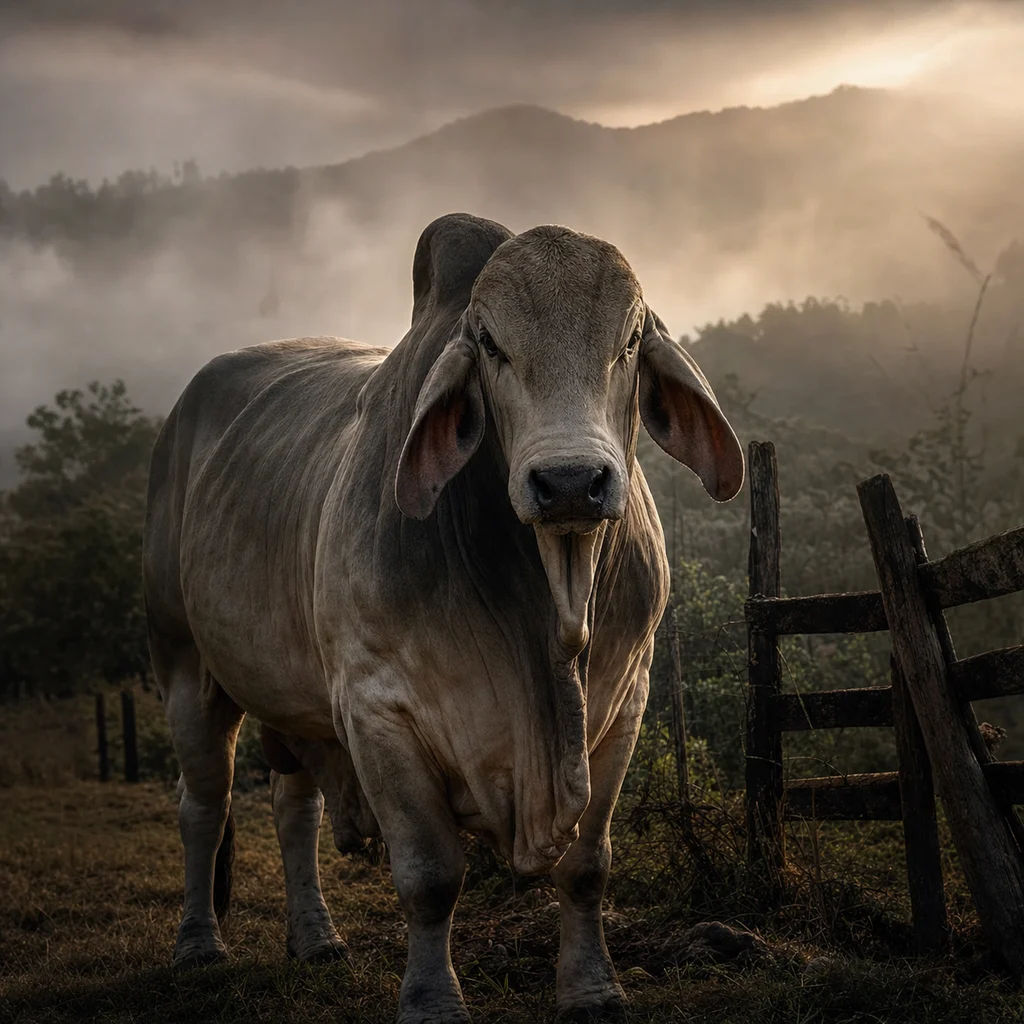
Brahman
Distinctive humped back (thoracic hump) and pendulous dewlap for heat regulation · Exceptional heat, humidity, and tick resistance — thrives in tropical climates
Korea; native Korean cattle breed with over 5,000 years of agricultural history on the peninsula
Hanwoo
Rich, abundant intramuscular marbling rivaling Wagyu in top grades · Distinctive sweet, buttery, umami-rich flavor profile unique to Korean cattle
Devon, Southwest England; one of the oldest English beef breeds, documented since the 16th century
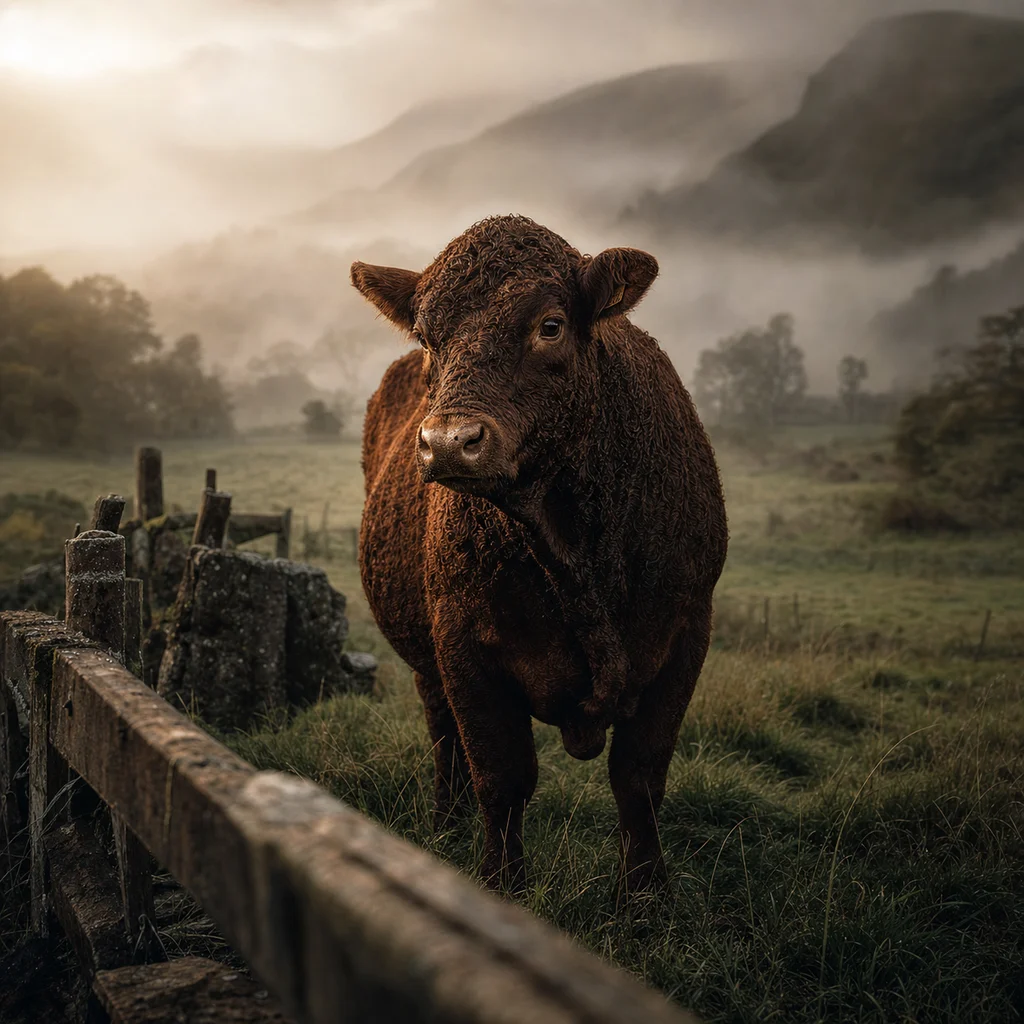
Devon Red Ruby
Distinctive deep ruby-red coat that gives the breed its evocative name · Well-marbled, richly flavored beef with a natural sweetness from lush Devon pastures
Northeast England (County Durham, Yorkshire, Lincolnshire); developed in the 18th century and spread worldwide
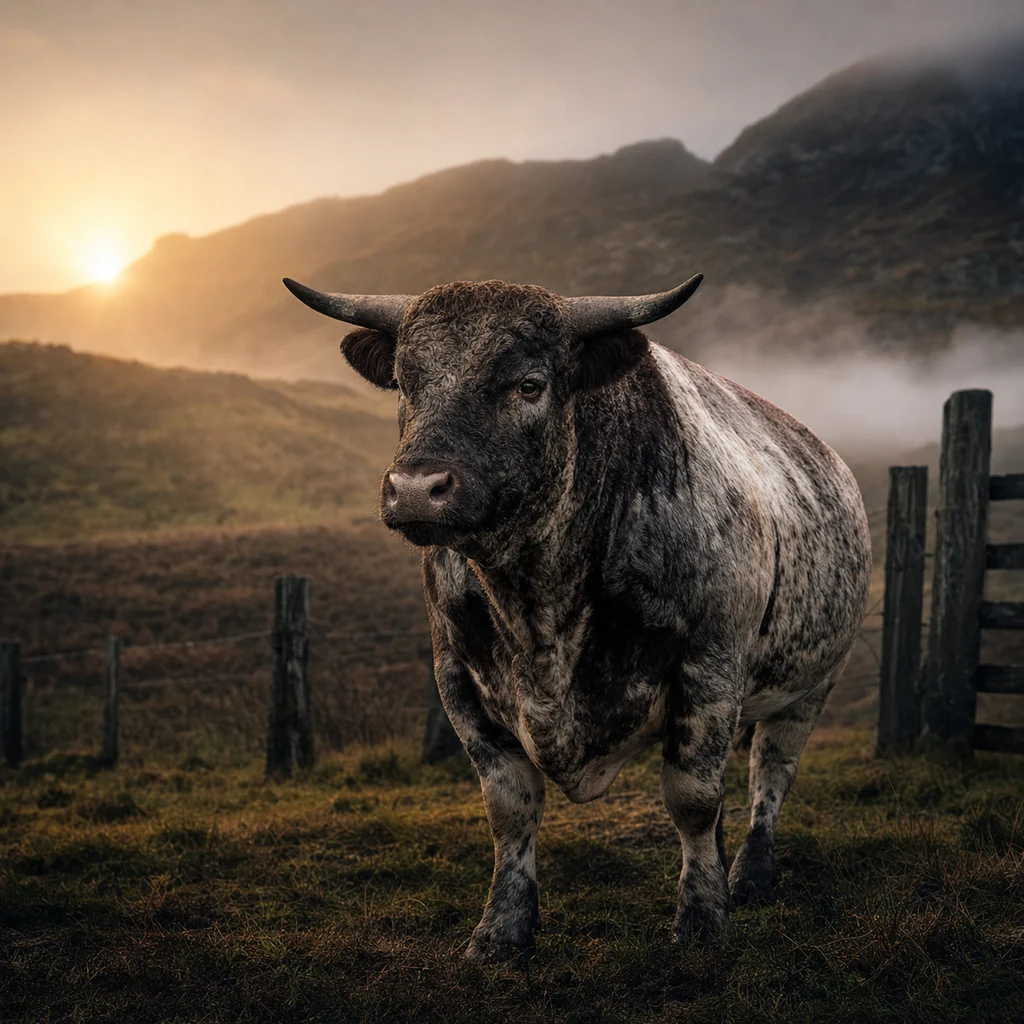
Shorthorn
Classic roan, red, or white coloring in distinctive patterns · Well-balanced marbling producing consistently flavorful, tender beef
Wales, United Kingdom; ancient Welsh cattle breed with over 1,000 years of history in the Celtic mountains
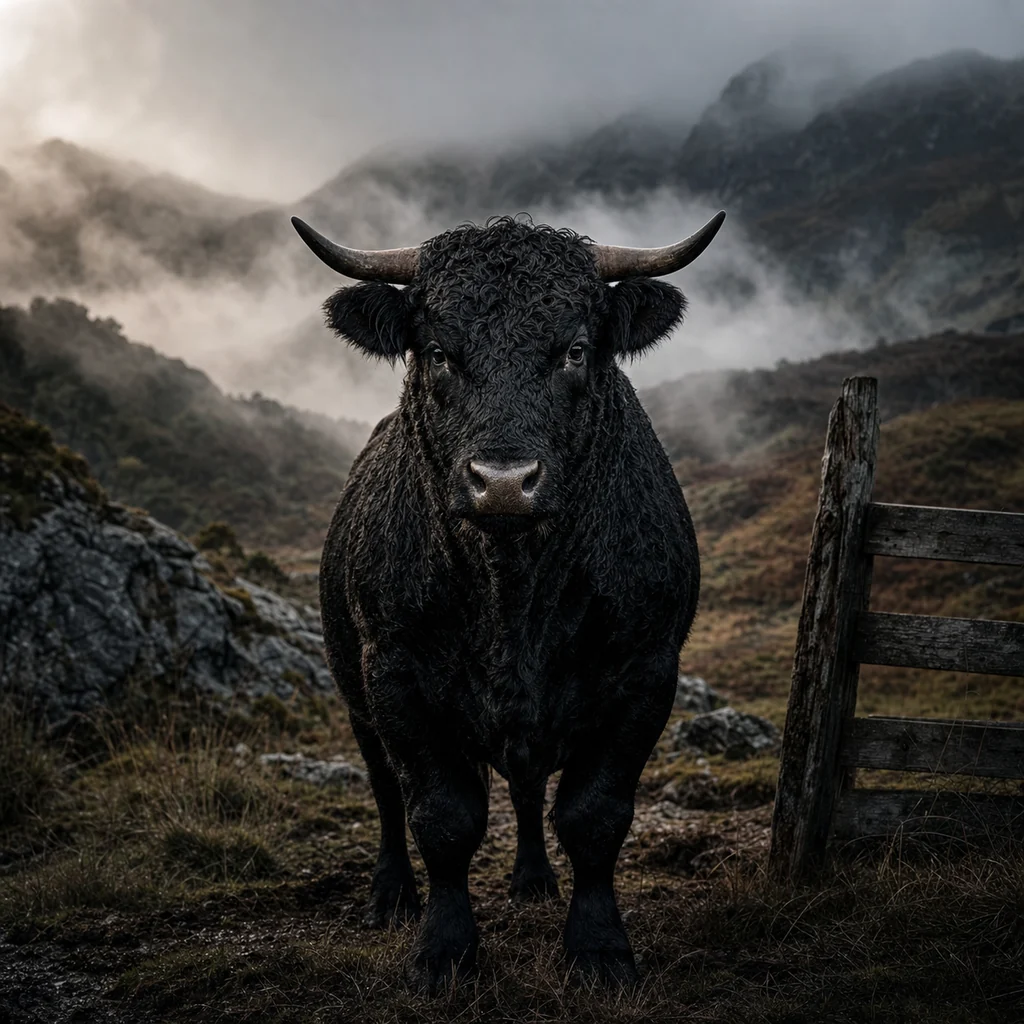
Welsh Black
Jet-black coat and compact, hardy frame bred for Welsh mountain terrain · Distinctively rich, mineral-forward flavor from a lifetime on wild Welsh highland pasture